Wood Fence Installation in Grand Rapids & West Michigan
The most popular fencing choice in West Michigan, with honest cost data, a cedar vs. pressure-treated comparison, and what local contractors say about wood's performance through Michigan winters.
What Is a Wood Fence?
Wood fencing encompasses several styles: board-on-board privacy panels, open split-rail borders, picket, and post-and-rail. All are built from natural lumber. In Grand Rapids and the surrounding metro, cedar and pressure-treated pine are the dominant materials. Both perform well in West Michigan's climate when properly installed.
Wood is the most requested fence material in Kent County for one straightforward reason: nothing else delivers the same combination of natural warmth, visual privacy, design flexibility, and relative affordability. A properly sealed cedar privacy fence looks at home in virtually every neighborhood, from historic Heritage Hill to new construction in Byron Center.
Common Wood Fence Styles
Board-on-Board Privacy
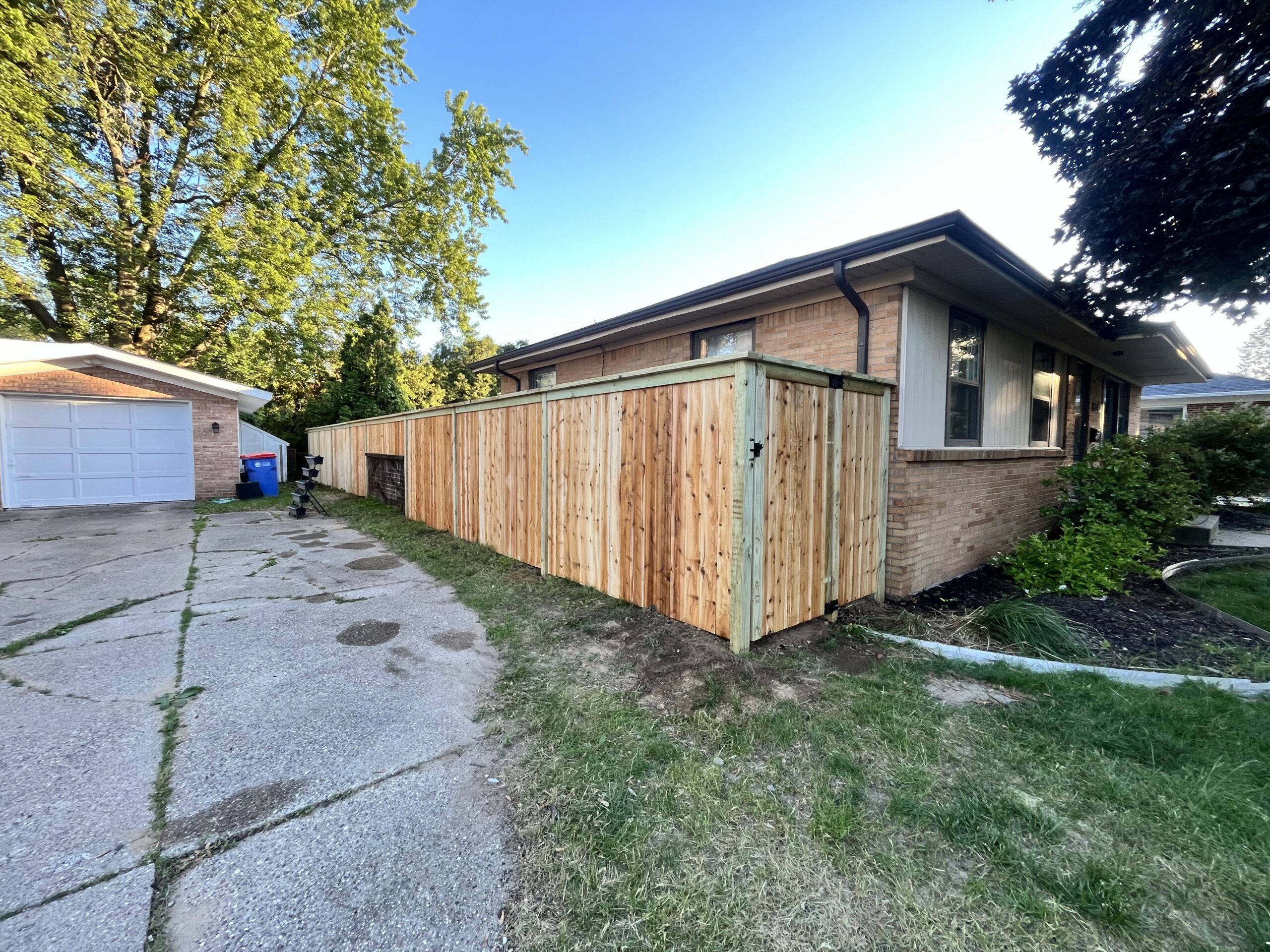
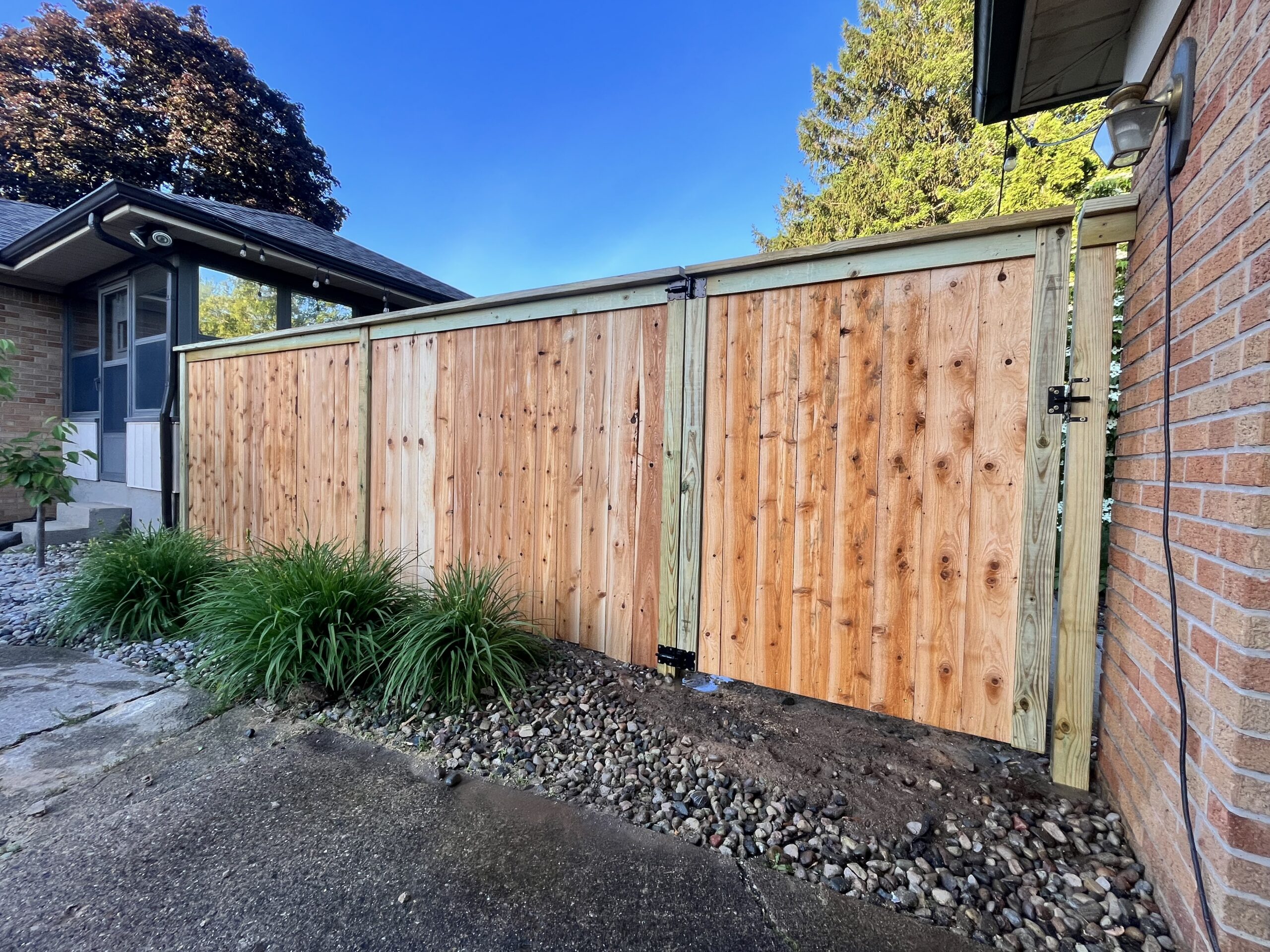
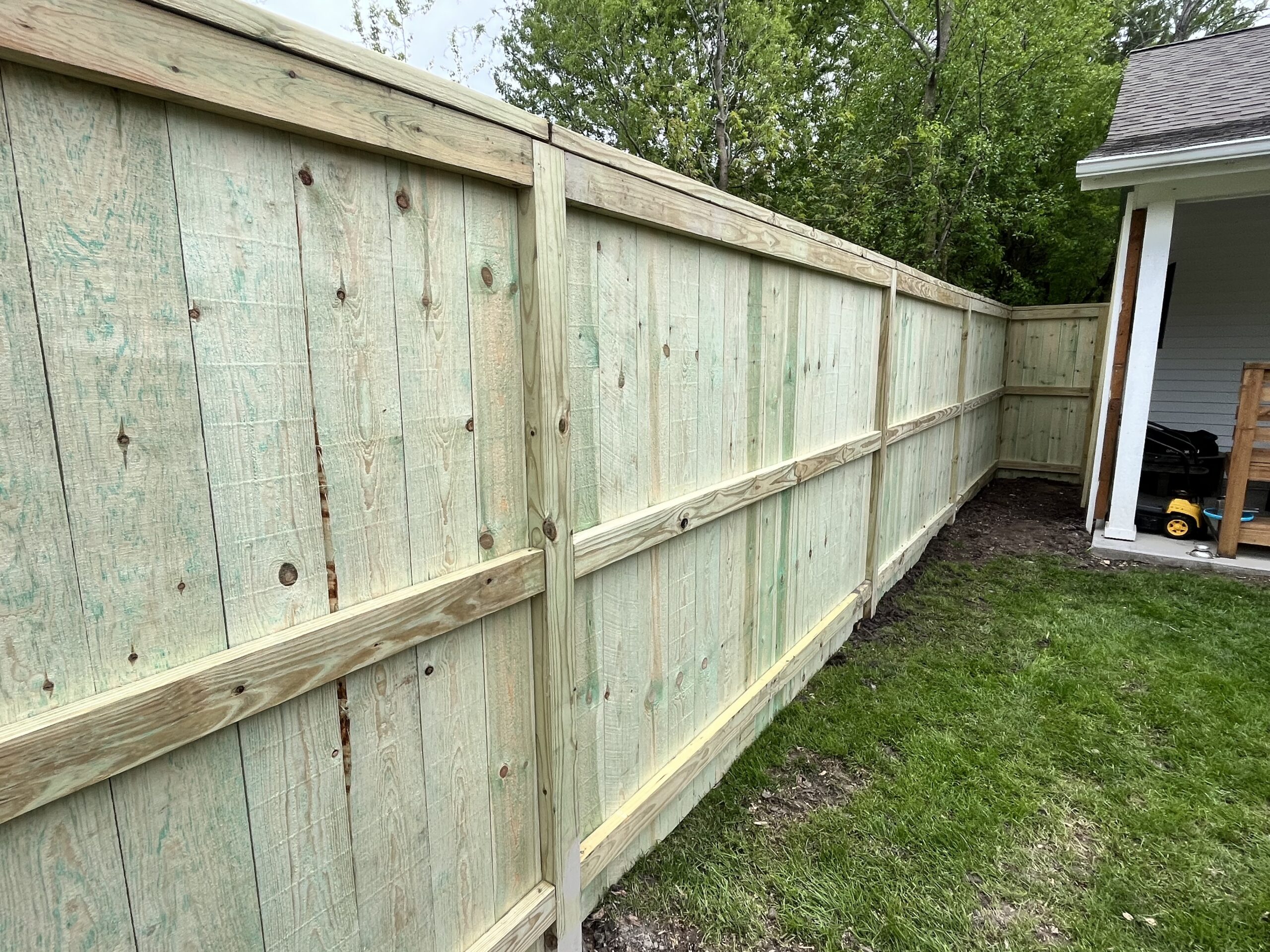
Alternating vertical boards overlap to create a solid visual barrier from both sides. The most common residential privacy fence style. Standard height is 6 feet.
Split Rail
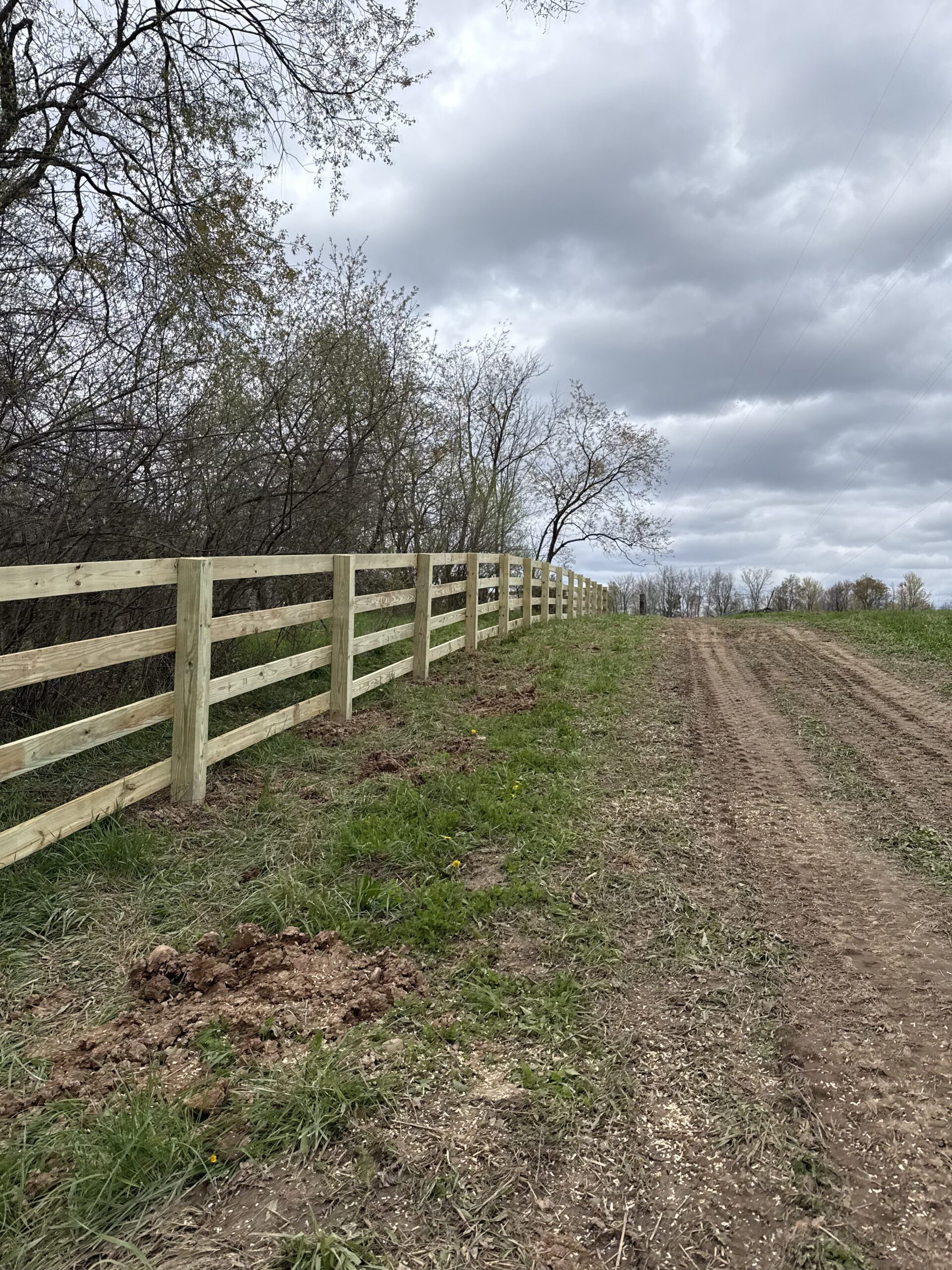
Horizontal rails mortised into round posts. Traditional look for property borders, acreage, and agricultural land. Not a privacy fence. Very common in rural Kent and Ottawa counties.
Picket Fence
Evenly spaced vertical pickets with decorative top profiles. Classic curb appeal for front yards. Typically 3–4 feet tall. Not designed for full privacy. Works best in painted or stained cedar.
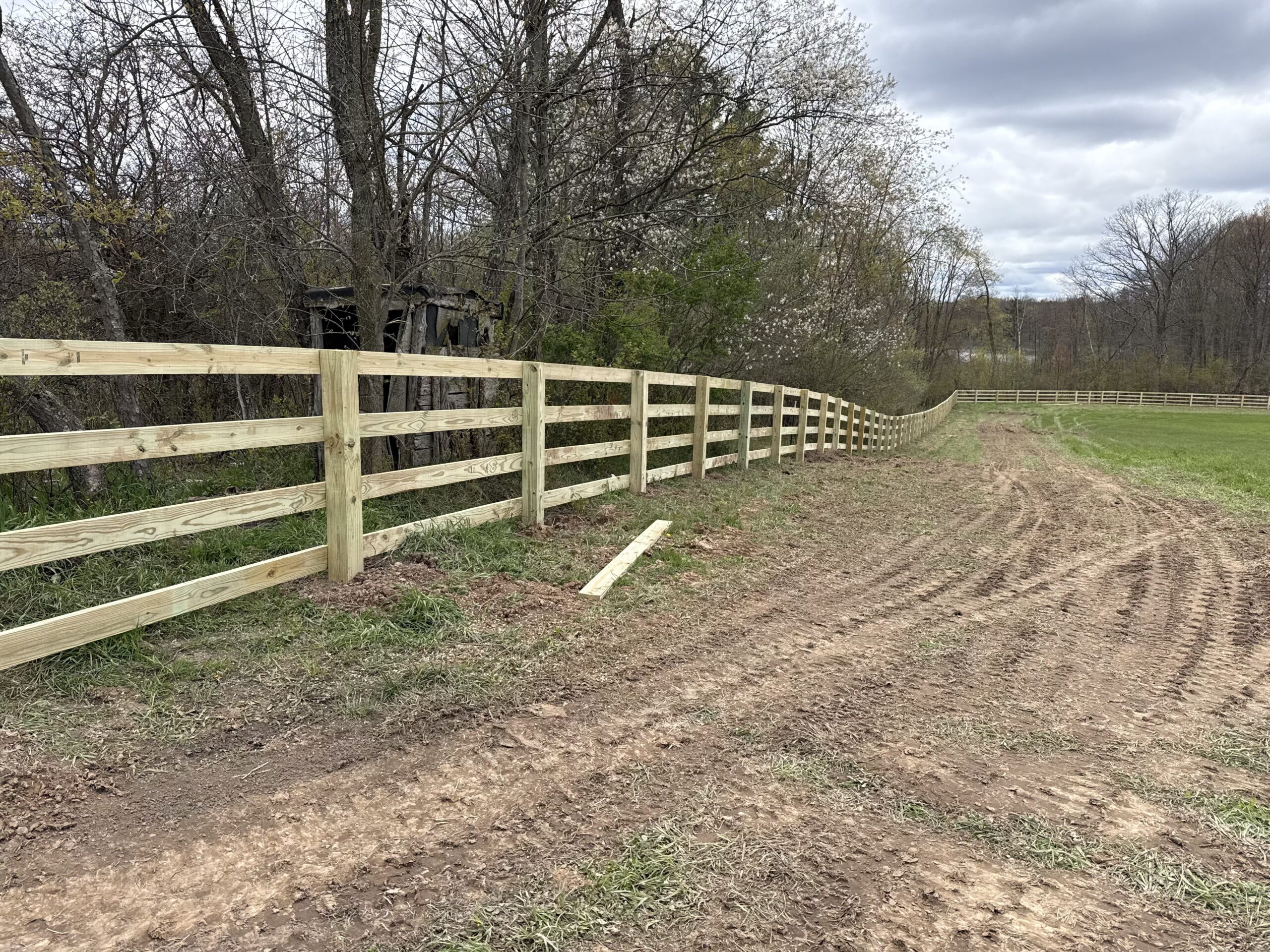
Freshly installed split-rail fence on West Michigan agricultural property. Pressure-treated posts set below the frost line.
What Is Wood Fencing Best For?
Wood's combination of privacy, curb appeal, and cost makes it the right choice for most residential applications in West Michigan.
Backyard Privacy
Board-on-board panels create a solid visual barrier from both sides. At 6 feet, a wood privacy fence blocks sightlines from neighboring yards and streets effectively.
Pet Containment
A solid 6' wood fence is the most effective small-to-medium dog containment option. No gaps at the bottom, no bars to jump. Add a concrete runner at the base for dogs that dig.
Garden Borders
Picket fencing at 3–4 feet defines garden beds and vegetable patches, keeps out rabbits, and adds classic charm. Cedar stains and paints well, making it easy to customize the color over time.
Curb Appeal & HOA Compliance
Cedar picket and privacy fences are broadly accepted by West Michigan HOAs. Natural grain and warm tones blend with established neighborhoods far better than vinyl or chain link.
Agricultural & Acreage Borders
Split-rail and post-and-rail fencing efficiently marks property lines, contains horses and livestock, and looks right on rural West Michigan properties at the lowest cost per linear foot of any wood style.
Moderate Budget
Wood privacy fence is 20–40% less expensive than vinyl and 35–50% less than aluminum for the same footage. It's the most accessible privacy fencing option for the average Grand Rapids homeowner.
Cedar vs. Pressure-Treated Pine: Which Is Right for Your Fence?
The single most important material decision for a West Michigan wood fence.
Western Red Cedar
- Naturally rot-resistant, no chemical treatment needed
- Dimensionally stable, less warping and twisting over time
- Accepts oil-based or water-based stain equally well
- Beautiful natural grain; weathers to silver-grey if left untreated
- Lighter weight, easier to work with and less stress on posts
- 20–30% more expensive than pressure-treated pine
- Lumber prices fluctuate. Get quotes from multiple suppliers
Best for: Residential privacy fences, picket fences, and any application where appearance, longevity, and low warping are priorities. The standard choice in established Grand Rapids neighborhoods.
Pressure-Treated Pine
- 20–30% lower material cost than cedar
- Chemically treated for rot and insect resistance
- Widely available, carried by most lumber yards
- The standard choice for fence posts regardless of panel material
- Must dry for 3–6 months before staining
- More prone to warping, checking, and twisting than cedar
- Requires oil-based stain; water-based doesn't penetrate well
Best for: All fence posts (always use PT posts regardless of panel material), split-rail fencing, large agricultural borders where cost per foot matters more than appearance.
Wood Fence Pros & Cons
Advantages
- Natural warmth and character. Nothing else looks quite like real wood
- Lower upfront cost than vinyl or aluminum for equivalent privacy
- Fully customizable: height, style, stain color, picket profiles
- Easy to repair individual boards without replacing whole sections
- Broadly accepted by HOAs and local neighborhood standards
- Widely available from local lumber yards and fence contractors
- Cedar is sustainably harvested in most supply chains
Considerations
- Requires staining or sealing every 2–3 years to maintain appearance and longevity
- Michigan freeze-thaw cycles accelerate wood movement. Boards can warp, check, or cup
- Posts are vulnerable to ground rot, especially in low-drainage areas
- Higher 15-year total cost than vinyl when maintenance is factored in
- Termites and carpenter ants are present in West Michigan
- Lumber price volatility can affect contractor quotes significantly
Wood Fence Cost in Grand Rapids
Installed prices for Kent County and the broader West Michigan metro, 2024–2025. These are contractor-installed all-in estimates: materials, labor, and standard post footings.
| Style | Material | Per Linear Foot (Installed) | Typical 150 LF Project |
|---|---|---|---|
| Privacy (6') | Cedar | $22 – $28 | $3,300 – $4,200 |
| Privacy (6') | Pressure-Treated Pine | $18 – $24 | $2,700 – $3,600 |
| Privacy (8') | Cedar | $28 – $36 | $4,200 – $5,400 |
| Split Rail (2-rail) | Pressure-Treated | $12 – $17 | $1,800 – $2,550 |
| Split Rail (3-rail) | Pressure-Treated | $15 – $22 | $2,250 – $3,300 |
| Picket (4') | Cedar | $18 – $26 | $2,700 – $3,900 |
Prices vary with lumber market conditions, site difficulty, and contractor overhead. Single walk gates add $200–$450. Old fence removal adds $3–$6 per linear foot.
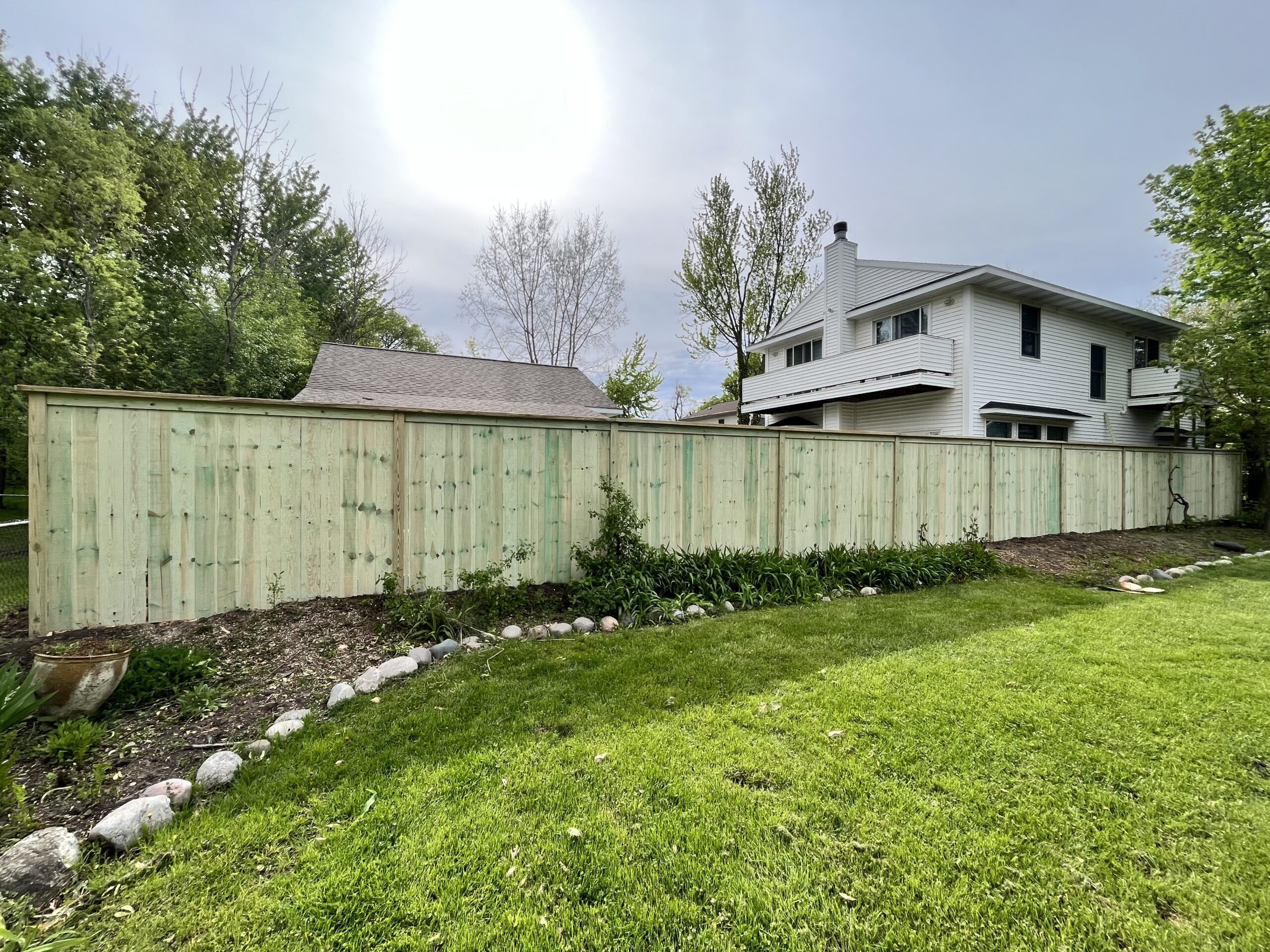
Board-on-board privacy fence wrapping a full residential backyard in West Michigan.
How Wood Fencing Performs in Michigan Winters
West Michigan's climate puts fencing through its paces. Grand Rapids averages 74 inches of snow per year, temperatures that drop well below zero in January, and a frost line approximately 42 inches below grade. Here's what that means for a wood fence.
Wood Fence Maintenance in Michigan
A realistic picture of what it takes to keep a wood fence in good condition through Michigan weather cycles.
Annual Inspection Checklist
- Spring: Walk the fence line after frost season. Look for posts that have shifted vertically or horizontally. Catching early frost heave before it gets worse saves real money.
- Check for rot: Probe posts at soil level with a screwdriver. Soft spots or the probe going in more than ¼" indicate rot. Post replacement is far less expensive than whole-fence replacement.
- Fasteners: Look for popped nails, loose screws, or corroded ring-shank nails. Stainless steel or hot-dipped galvanized hardware resists rust far better than standard nails.
- Boards: Check for split, warped, or cupped boards. Individual board replacement is inexpensive: a few dollars in material and 20 minutes of labor.
- Stain condition: Water should bead on sealed wood. If it soaks in, it's time to re-seal. Typically every 2–3 years depending on the product and sun exposure.
Staining & Sealing Schedule
New Cedar: Wait 6–12 months
Let new cedar weather and dry fully before applying stain. Applying too early traps moisture and causes peeling. The fence should look dry and slightly grey (not green-fresh) before first application.
New Pressure-Treated Pine: Wait 3–6 months
PT lumber holds more moisture from the treatment process. Apply the "water bead test": flick water on the board. If it beads, wait longer. If it soaks in, the lumber is dry enough to stain.
Ongoing: Every 2–3 Years
Use a penetrating oil-based stain with UV inhibitors for Michigan sun exposure. Clean the fence first with a wood cleaner or light pressure wash. Apply two thin coats rather than one thick one. Budget roughly $100–$250 in materials for a 150 LF fence.
How Wood Compares to Other Fence Materials
Wood isn't the right answer for every project. Here's a quick comparison against the three other major fence materials available in West Michigan.
Vinyl Fence
Higher upfront cost, far lower long-term maintenance. No staining, no rotting, no warping. Most popular in suburban HOA communities.
Aluminum Fence
Ornamental look with open sightlines. Rust-free and durable, but not a privacy option. The standard for pool enclosures.
Chain Link Fence
The most cost-effective option for large areas. Functional and durable but provides no privacy and limited curb appeal.
Related Fence Planning Guides
Wood vs Vinyl Fence for Michigan Homes
Compare maintenance schedules, cost factors, repairability, appearance, and Michigan weather performance for wood and vinyl side by side.
Read the GuideWhat Is the Best Fence for Dogs?
Compare wood, vinyl, aluminum, and chain link for dog containment. Covers fence height, digging prevention, visibility and reactivity, and gate requirements.
Read the GuideFence Post Depth in Michigan
Understand frost depth, soil conditions, utility marking, and permit requirements that affect post installation in the Grand Rapids area.
Read the GuideGuide: Privacy Fence Cost
All the line items that drive privacy fence cost in West Michigan — material, height, gates, terrain, access, and removal of an existing fence.
Read the GuideGuide: 6-Foot Privacy Fence Cost
A worked breakdown for a typical 6-foot wood privacy fence project, covering material, gates, terrain adjustments, and removal for a West Michigan yard.
Read the GuideFence Cost Calculator
Enter your footage, material, and gate count to get an instant cost estimate for your fence project.
Try the CalculatorGuide: Best Fence Material for Michigan Weather
Compare wood, vinyl, aluminum, and chain link across freeze-thaw, moisture, maintenance, and repairability criteria specific to Michigan conditions.
Read the GuideGuide: Which Fence Material Lasts the Longest?
Compare expected service life for wood, vinyl, aluminum, and chain link, with the installation and maintenance factors that determine where a fence falls in the range.
Read the GuideReady to Get Quotes for Your Wood Fence?
Tell us about your project (material, footage, timeline) and we'll connect you with local fence contractors serving Grand Rapids and Kent County.