Dogs and Backyard Safety
What Is the Best Fence for Dogs?
No single fence material is the best choice for every dog. The right fence depends on the dog's size, jumping ability, digging behavior, reactivity to outside stimulation, and how the yard is used. This guide compares wood, vinyl, aluminum, and chain link fencing for dog containment and explains the factors that matter most when planning a dog-safe yard.
Quick Answer
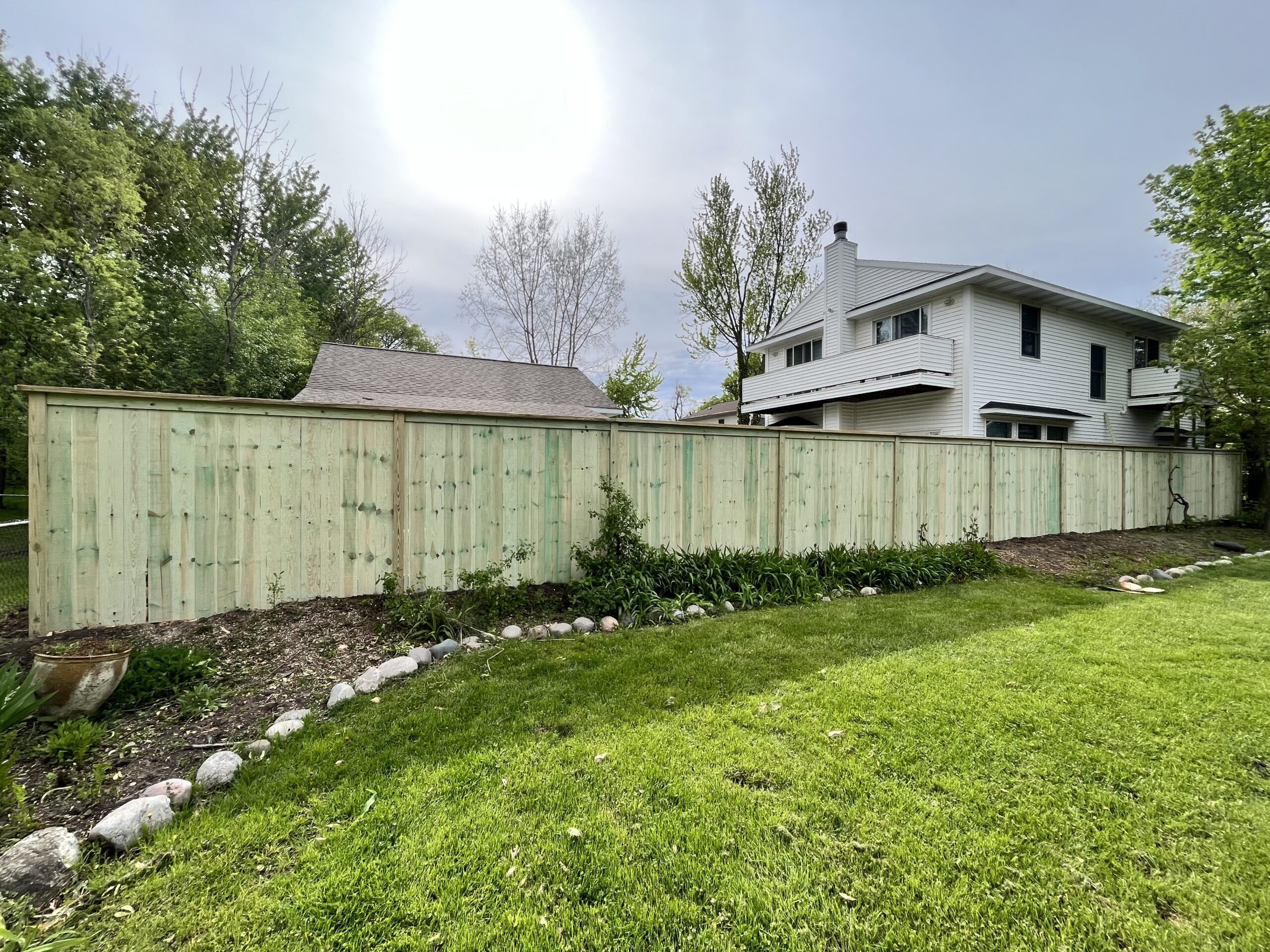
For most residential dogs in Grand Rapids, a 6-foot solid privacy fence in wood or vinyl provides reliable containment. Solid materials block the visual stimulation that contributes to fence reactivity, and 6 feet is sufficient height for most breeds that are not trained jumpers.[1] The specific material matters less than the fence height, gap size, post installation quality, and the measures taken to address digging.
For dogs with specific behavioral tendencies (jumping, climbing, digging, or high reactivity), additional considerations beyond material choice apply. The sections below address each factor separately.
Dog Fence Decision Table
Grand Rapids Fence comparison based on dog size, behavior, visibility needs, yard size, and maintenance preference. Individual dogs vary and may require assessment beyond these general categories. Data last reviewed August 2026.
| Dog Profile | Better Option | Notes |
|---|---|---|
| Small dog, calm, low fence-testing | 4 ft wood or vinyl privacy; chain link with small mesh | Verify mesh opening size is smaller than dog's head for chain link |
| Medium to large dog, low jumping tendency | 5-6 ft wood or vinyl privacy | 6 ft preferred for peace of mind; check local height rules[4] |
| Athletic or high-jumping dog | 6 ft solid privacy; consider coyote rollers or additional height | Solid materials remove visual motivation to jump at the fence line |
| Dog that digs | Any solid material with a concrete base or buried mesh | Material above ground is less important than below-grade treatment |
| Dog that climbs chain link | Solid privacy fence (wood or vinyl) to remove footholds | Chain link provides a ladder; smooth solid panels do not |
| Reactive dog (barks at fence line) | 6 ft solid privacy fence (wood or vinyl) | Blocking visibility reduces triggers; aluminum and chain link allow full sightlines[3] |
| Multiple dogs, large yard | Chain link or welded wire for large perimeter; privacy fence near high-traffic areas | Chain link is more economical over large areas |
| Yard with coyote activity | 6 ft solid privacy; coyote rollers on top if needed | Coyotes are present throughout Michigan, including suburban areas[2] |
Key Factors for Dog Fencing
The most important factors for dog containment are fence height relative to the dog's jumping ability, gap and mesh size relative to the dog's body size, the presence or absence of footholds for climbing, and the visual openness of the fence. Material choice (wood, vinyl, aluminum, chain link) affects some of these factors more than others.
Gate quality and latch security are as important as the fence itself. A dog can escape through an unlatched gate as easily as over or under a fence. Gate and latch requirements are covered in a separate section below.
Dog behavior varies considerably by individual animal, training history, motivation, and environment. Breed tendencies are generalizations. A professional dog trainer or veterinarian can provide guidance specific to an individual dog when behavioral factors complicate the containment question.
Fence Height by Dog Size and Behavior
There is no single correct fence height for all dogs. General guidance from veterinary and breed organizations suggests that most small and medium dogs can be contained by a 4-foot fence, while larger or more athletic breeds often benefit from 5 or 6 feet.[1] Dogs that are highly motivated to reach activity outside the fence, such as other dogs, wildlife, or moving vehicles, may attempt to clear fences that would contain a less motivated animal of the same size.
Local permit rules also apply. The City of Grand Rapids requires permits for residential fences and specifies height limits that vary by yard location (front yard, side yard, backyard).[4] Confirm current height allowances with the city's building safety department before specifying fence height, particularly for front yards where lower limits commonly apply.
For dogs with documented jumping ability or escape history, the fence height may need to exceed standard residential heights, and additional deterrents such as coyote rollers (rotating cylinders along the fence top that prevent animals from getting a grip when attempting to scale the fence) are an option.
Best Fence Materials for Dogs
Each of the four major fence materials has specific advantages and limitations for dog containment. The sections below address each.
Wood Fence for Dogs
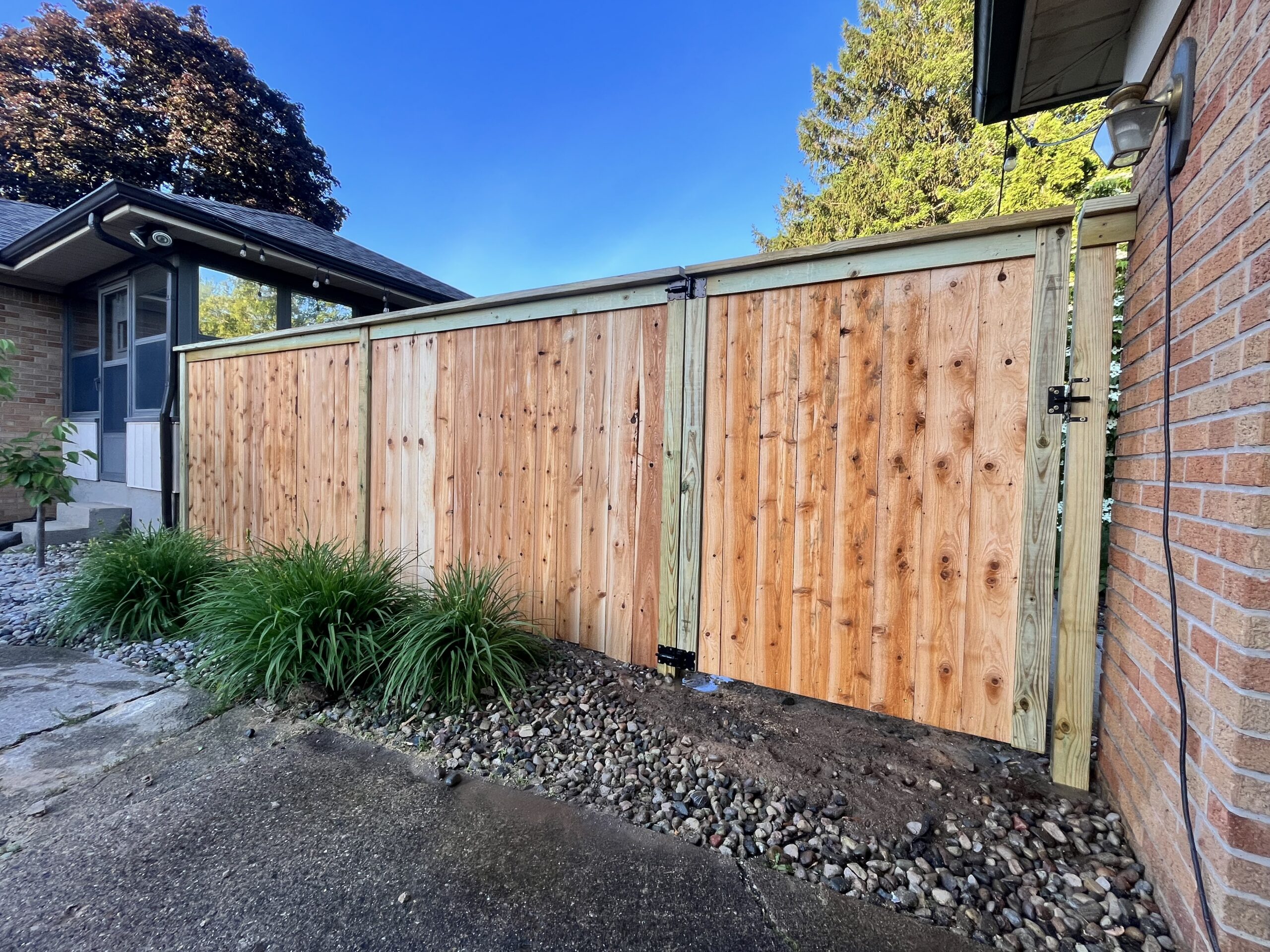
A 6-foot solid wood privacy fence is a common choice for dog owners in Grand Rapids. Solid boards provide no visibility through the fence, which reduces the visual stimulation that drives fence reactivity in some dogs. Wood does not provide footholds for climbing the way chain link does. Individual boards can be replaced if a dog damages them, making repairs straightforward.
Wood privacy fences have small gaps between boards in most standard construction styles. While these gaps are typically too small for a medium or large dog to fit through, they may be a concern for very small dogs or puppies. Board-on-board and tight-board construction styles minimize gaps. The base of a wood fence requires attention if the dog digs: gaps develop over time as the ground settles, and a dog motivated to dig can widen them.
Vinyl Fence for Dogs
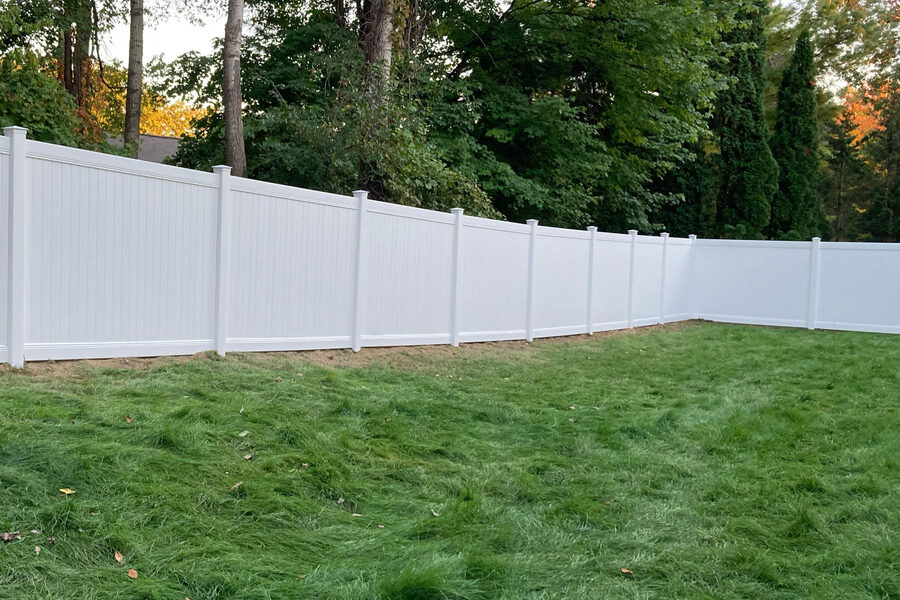
Vinyl privacy fencing offers similar containment characteristics to wood privacy fencing. Interlocking vinyl panels often provide tighter panel-to-panel joints than standard wood board-on-board construction, which can be an advantage for small dogs. Vinyl does not rot at the base, which reduces the risk of a gap developing from post-base deterioration over time.
Like wood, vinyl provides no footholds and blocks sightlines when built as a solid privacy fence. Vinyl posts are hollow and may be reinforced with steel or aluminum inserts in higher-load situations such as gate posts. For most dog containment applications, quality vinyl privacy fence is comparable to wood privacy fence in performance.
Aluminum Fence for Dogs
Ornamental aluminum fence is a durable, rust-resistant material that is often used for pool enclosures and decorative yard boundaries. For dog containment, its open picket design has limitations: dogs can see through it completely, which can increase reactivity in fence-sensitive dogs, and athletic dogs may attempt to squeeze between or jump over the open pickets.
Aluminum fence can be an acceptable choice for calm, medium-sized dogs where visual openness is desired and the dog does not show fence-testing behavior. The picket spacing should be checked against the dog's size. Aluminum gates are available with self-closing, self-latching hinges, which are required for pool enclosures and useful for dog yards. See the aluminum fence guide for more on this material.
Chain Link Fence for Dogs
Chain link is an economical and functional dog fence for many applications, particularly for large yard perimeters where cost is a primary consideration. However, it has specific limitations for dog containment. The mesh provides complete visibility, which can increase fence reactivity in dogs that respond to visual stimulation. The mesh also provides footholds that make climbing easier for athletic or motivated dogs.[1]
Small dogs and puppies can push through or fit between standard chain link mesh. Mesh with smaller openings (1-inch or 1.5-inch diamond) reduces this risk. Adding privacy slats reduces visibility but does not eliminate footholds. Chain link is generally better suited to calm, medium-sized dogs or large outdoor enclosures where the dog has enough space that the fence line itself is not a constant source of stimulation. See the chain link fence guide for more detail.
Preventing Digging
Digging under fences is a common escape method for dogs and is a behavioral tendency in many breeds. No fence material alone reliably stops a determined digger. Addressing the base of the fence is necessary for dogs that dig.
Common approaches include installing a concrete footing along the base of the fence at ground level (which removes soil for the dog to dig through), burying hardware cloth or welded wire mesh below grade along the interior fence line extending 12 to 18 inches horizontally into the yard (dogs typically dig at the base and then back into the yard rather than straight down, so horizontal mesh is effective), or placing large rocks or pavers along the interior base. Consult with your fence installer about what is feasible with the fence design and soil conditions.
Preventing Jumping and Climbing
Dogs that jump or climb fences are usually motivated by something visible or audible on the other side: other animals, people, or vehicles. Removing or reducing the visual stimulus by using a solid privacy fence is a first step for reactive jumpers, as it reduces the incentive at the fence line.
For dogs that jump despite not having direct sightlines, increasing fence height is the most direct response. Coyote rollers, rotating pipe or cylinder devices that mount along the fence top and spin when an animal tries to grip them, can be added to most fence types to prevent an animal from getting a purchase over the top. Some homeowners also use inward-angling extensions at the top of the fence on the interior side. These are passive physical deterrents that do not involve electricity or discomfort for the dog.
Visibility and Reactivity
Dogs that can see constant movement through a fence, such as pedestrians, cyclists, other dogs, and vehicles, may develop fence reactivity: heightened alert behavior, barking, lunging, and anxiety at the fence line.[3] This behavior is more common with open-material fences (chain link, open aluminum pickets) than with solid privacy fences that block the sightline.
Solid privacy fencing (wood or vinyl) is often recommended by animal behavior professionals as a first step for dogs that show fence reactivity, because it removes the visual trigger.[3] The fence does not address the underlying behavior, but it reduces the daily reinforcement that maintains and intensifies it. For dogs with significant reactivity issues, consultation with a trainer or veterinary behaviorist is worth considering alongside the fencing decision.
Gates and Latches
A fence with poor gates provides incomplete containment. Gates should close and latch automatically, without requiring manual re-latching, particularly in households with children or multiple adults who may leave gates open. Self-closing gate hinges (spring-loaded or gravity hinges) close the gate after each use. Self-latching latches engage automatically when the gate closes without requiring a separate action.
For dog yards, latches should require a deliberate two-step action to open (such as lifting a lever and then pushing), which reduces the chance of accidental release by a visitor or child and makes it more difficult for an intelligent dog to work the latch. Double-gated entries (two gates with a small air-lock space between) prevent a dog from bolting through the gate when a person enters. Gate and latch hardware is covered in more detail on the gate installation and repair page.
Temporary and No-Dig Options
Portable and no-dig fence panels are available for temporary containment or for defining a section of a yard. These products use ground anchors or weighted bases rather than concrete footings and posts. They can be effective for dogs that do not actively test their boundaries and are used in supervised settings.
Temporary fence systems are generally not reliable for unsupervised containment of dogs that push against, jump over, or dig under fencing. For dogs with any fence-testing tendency, or for yards that will be used without constant supervision, a properly installed permanent fence provides more dependable containment. Temporary options may be appropriate during a transition period while a permanent fence is being planned or built.
Invisible or electric fence systems that use an underground wire and receiver collar are sometimes used for dog containment. These systems do not prevent other animals from entering the yard, do not provide a visual boundary, and rely on the dog consistently responding to a correction signal. Their use is discussed with these limitations in mind, not as a primary recommendation for yard containment.[3]
Coyotes and Outside-Animal Concerns
Coyotes are present throughout Michigan, including in suburban and urban areas in and around Grand Rapids.[2] The Michigan Department of Natural Resources documents coyote presence in all 83 Michigan counties and notes that coyotes have adapted to suburban environments and are often active near residential areas.[2]
Coyotes are capable climbers and can scale fences under some circumstances. A 6-foot solid privacy fence reduces the visual cues that attract coyotes to a yard and provides a physical barrier, but does not guarantee that a motivated coyote cannot enter. Small dogs and cats are most at risk from coyote predation. For households with small dogs in areas with documented coyote activity, supervised outdoor time and coyote deterrents (rollers, extended fence height, motion-activated lights) provide additional protection beyond the fence itself.[2]
More Dog Fence Questions
These focused guides expand on dog size, escape points, digging, and fence height while keeping this page as the broad dog-fence selection guide.
Frequently Asked Questions
What is the best fence height for dogs?
There is no single correct height for all dogs. Most small to medium dogs are contained by a 4-foot fence; larger or more athletic breeds typically benefit from 5 or 6 feet.[1] Dogs that are highly motivated by activity outside the fence may attempt heights they would not normally clear. Confirm local height allowances with the City of Grand Rapids before specifying a height, particularly for front yards.[4]
What fence is best for dogs that dig?
No fence material alone stops a determined digger. The most effective approaches address the base of the fence: a concrete footing along the fence base, hardware cloth buried horizontally below grade along the interior fence line, or large rocks placed along the inside base. The fence material above ground is less important than what is done to address the soil at the base.
Do no-dig or temporary dog fences work?
Temporary and no-dig fence systems can work for calm dogs under supervision. They are not reliable for dogs that push against, jump over, or dig under fencing. For unsupervised outdoor time, a properly installed permanent fence provides more dependable containment.
Can coyotes get over a 6-foot fence?
Coyotes are capable climbers and can scale fences in some circumstances.[2] A 6-foot solid privacy fence reduces the visual attraction of the yard and provides a meaningful physical barrier, but does not provide a guarantee. Small dogs are at greatest risk. Supervised outdoor time, coyote rollers, and motion-activated deterrents provide additional protection in high-risk areas.
Is a chain link fence safe for dogs?
Chain link can work well for calm dogs in large enclosures where fence-line stimulation is low. Its limitations include full visibility (which can worsen reactivity), the presence of footholds that athletic dogs can use to climb, and mesh openings that small dogs or puppies can push through.[1] For dogs with climbing tendency or significant fence reactivity, a solid privacy fence is a better choice.
Sources
Sources were selected for relevance, authority, and practical homeowner use. Requirements and recommendations may change, so confirm current local rules before beginning a project.
- American Kennel Club (AKC). "Dog Fencing and Containment." Veterinary and Breed Organization. https://www.akc.org/. Accessed August 2026.
- Michigan Department of Natural Resources. "Coyote in Michigan." Government. https://www.michigan.gov/dnr/things-to-do/wildlife-viewing/mammals/coyote. Accessed August 2026.
- Humane Society of the United States. "Fencing Options to Keep Your Dog Safely Home." Animal Welfare Organization. https://www.humanesociety.org/. Accessed August 2026.
- City of Grand Rapids. "Fence Permit." Government. https://www.grandrapidsmi.gov/Government/Departments/Community-Development/Building-Safety/Permits/Fence-Permit. Accessed August 2026.
Related Guides
Materials and Comparisons
Wood vs Vinyl Fence for Michigan Homes
Compare appearance, maintenance, repairability, and cost factors for the two most popular residential fence materials.
Read Guide
Repair and Maintenance
Should You Repair or Replace Your Fence?
Understand when to repair versus replace based on damage type, material age, and post condition.
Read Guide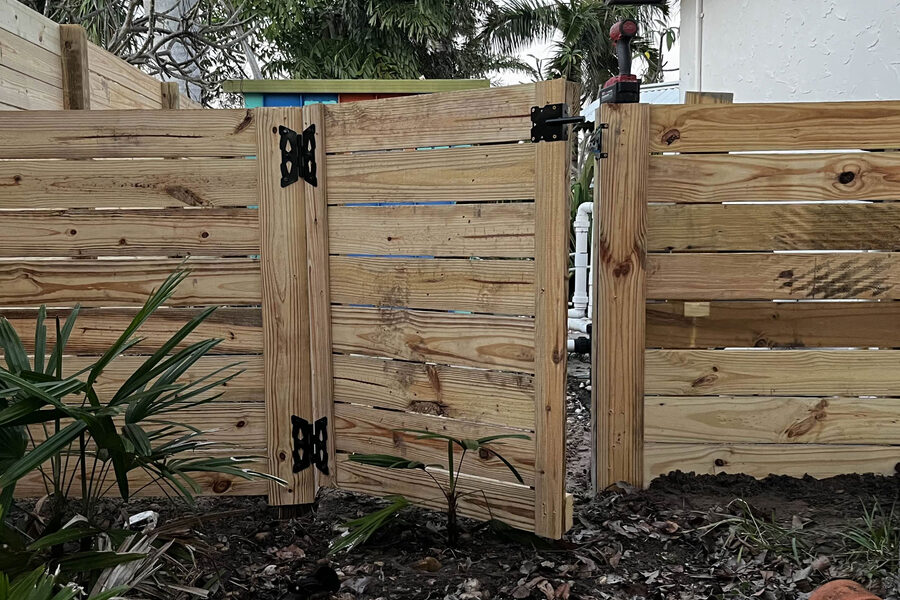
Installation and Michigan Conditions
How Deep Should Fence Posts Be in Michigan?
Learn the factors that affect post depth in Michigan, from frost movement to permit requirements.
Read GuideReady to Plan Your Fence Project?
Compare your options, then request quotes from available fence contractors serving Grand Rapids and West Michigan.