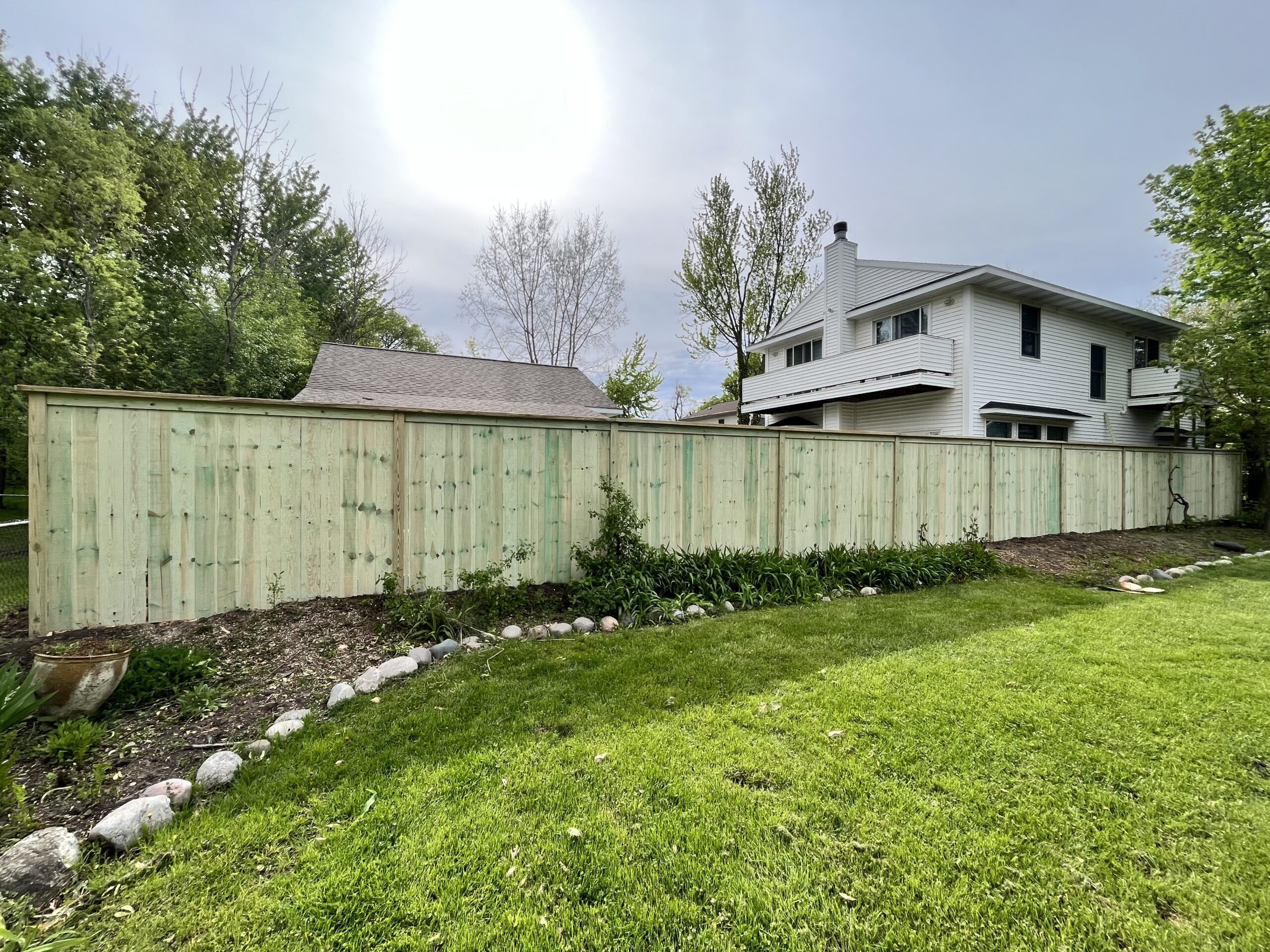
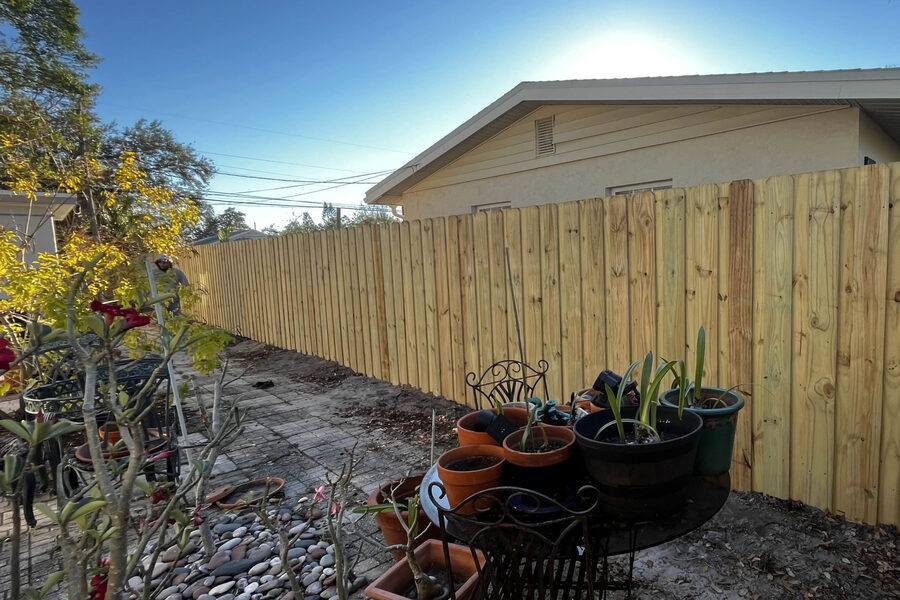
Cost and Budgeting
How Much Does a Privacy Fence Cost?
Understand all the factors that affect privacy fence cost, including material, height, gates, terrain, and removal.
Read GuideInteractive Tool
Estimate a planning range for your fence project based on material, linear footage, height, gates, terrain, site access, and removal needs. Designed for early budgeting — not a contractor quote.
Enter your project details and select Calculate Estimate to see your planning range.
Planning Estimate
—
This calculator provides a planning estimate, not a binding quote. Property conditions, material specifications, permits, labor availability, gates, grading, demolition, and contractor requirements can change the final price.
Material and height: The baseline installed cost range for your material and height selection comes from contractor quotes collected in Kent County and the broader West Michigan metro, 2024–2025.
Linear footage: The baseline per-foot range is multiplied by the number of linear feet you enter.
Terrain adjustment: Some slope adds approximately 10–15% to labor cost. Steep or difficult terrain adds approximately 20–30%, reflecting additional grading and post-setting complexity.
Site access adjustment: Limited backyard access adds approximately 5–10% and difficult equipment access adds approximately 10–20%, reflecting increased labor time when machinery cannot reach the installation area.
Gates: Walk gates and driveway gates are added as separate fixed costs rather than averaged into the per-foot rate, because gate cost does not scale proportionally with footage.
Removal: Existing fence removal and disposal is added as a per-linear-foot cost on top of the installation range.
Rounding: Totals are rounded to the nearest $50 to avoid false precision.
Why quotes differ: Contractors price based on real material costs at time of purchase, their labor rates, current demand, site-specific conditions, and overhead. A planning estimate cannot replicate this.
Data last reviewed: August 2026. Geographic scope: West Michigan (Kent County and surrounding metro area).
Fence project cost depends on far more than the material you select. These are the factors this calculator accounts for, and why each one matters. For a deeper explanation of each component, see the Fence Installation Cost guide.
These per-linear-foot ranges reflect installed costs from contractor quotes collected in Kent County and the broader West Michigan metro, 2024–2025. Actual costs depend on height, site conditions, and other factors in the calculator above.
$15 – $34 / lf installed
Range covers 4-foot picket through 8-foot privacy fence. Cedar and treated pine are the most common species in West Michigan. Height, wood species, and panel style are the main price variables.
$20 – $44 / lf installed
Range covers 4-foot picket through 8-foot privacy. Vinyl costs more upfront than wood but requires no staining or sealing. Panel grade and profile affect where projects fall in the range.
$28 – $56 / lf installed
Range covers 4-foot to 8-foot ornamental aluminum. Used primarily for decorative, pool, and property-line applications. Does not provide full privacy in standard configurations.
$8 – $24 / lf installed
The most cost-effective fencing per enclosed foot. Range covers standard galvanized and vinyl-coated chain link, 4-foot through 8-foot. Provides security and containment without privacy.
A planning calculator and a contractor quote are not the same thing, and the gap between them is normal. Here is why the numbers often differ.
Material pricing is not fixed. Lumber prices fluctuate with commodity markets. Vinyl and aluminum pricing varies by manufacturer and distributor. A calculator uses historical ranges; a contractor quotes at today's actual material cost.
Labor rates vary by contractor. West Michigan fence contractors have different overhead, equipment, and crew structures. A single project can produce quotes that vary by 20 to 30 percent between contractors, and that spread is expected rather than a sign of error.
Site conditions require direct assessment. Rocky soil, buried utilities, irregular grades, mature trees, or existing concrete affect scope in ways a calculator cannot measure from inputs alone. Contractors visit the site before providing a final number.
Permit costs are not included. Kent County and most West Michigan municipalities require a permit for residential fences over 4 feet. Permit fees typically run $50 to $150. Your contractor normally pulls the permit, and the cost may or may not appear as a separate line item in their quote.
Use the calculator for planning, not comparison shopping. Early in a project, a planning range helps you understand whether a budget is realistic and which material options are within reach. Once you are ready to move forward, request quotes from multiple contractors for accurate pricing on your specific project.
Linear footage is one of the most commonly misunderstood inputs in fence estimates. Here is how to measure correctly.
Measure the perimeter, not the area. A 40-by-60-foot backyard has an area of 2,400 square feet, but a perimeter of 200 linear feet. Use the perimeter number, not the area, when estimating fence cost.
Walk each run separately. Use a 100-foot measuring tape or a measuring wheel. Measure each straight segment of your fence line independently. For irregular lots, break them into straight segments and add them together.
Account for openings. If you do not plan to fence a segment — such as the front of a property, a portion bordering a structure, or a driveway — subtract that segment from your perimeter. Add gates separately in the calculator; the gate hardware cost is separate from the fence panel footage.
Add a small buffer for layout variation. Property lines and installed fence lines do not always match exactly. A small overage of 5 to 10 feet accounts for layout adjustments without significantly skewing the estimate.
Use a rough estimate if you are still in the planning phase. The calculator is designed for early budgeting. A rough footage is more useful than paralysis over perfect measurement at this stage. You can refine the number once you are ready to get contractor quotes.
These are the most frequent ways homeowners miscalculate fence project cost before requesting contractor quotes.
Frost depth affects post cost. Michigan frost depth averages 42 inches in the southern Lower Peninsula, including Kent County. Fence posts must be set below the frost line to prevent heaving in winter. This requires deeper holes and more concrete than states with shallower frost lines. The calculator uses installed cost ranges that account for standard Michigan post depth.
Permit requirements in Kent County. The City of Grand Rapids and most Kent County municipalities require a permit for fences over 4 feet. Homeowners typically rely on their contractor to pull the permit, but confirming this is part of the quote review process. Permit fees in Kent County typically run $50 to $150 depending on the municipality.
Seasonal demand in West Michigan. Spring and early summer are peak booking seasons for West Michigan fence contractors. Projects initiated in April through June may face longer lead times and, in some cases, higher pricing. Fall projects often have better contractor availability. Winter installations are possible for vinyl and chain link but more challenging for wood due to frozen ground affecting post depth.
Rocky and clay soils. Parts of Kent County have rocky glacial soils or heavy clay that affect post-setting time and method. Contractors sometimes add a surcharge for difficult digging conditions. A site assessment is the only way to know whether this applies to your property.
A fence cost calculator provides a planning estimate based on typical installed cost ranges for a given market. It does not account for every site condition, current material pricing, or individual contractor rates. Use it for early budgeting before contacting contractors for actual quotes.
Walk the perimeter where you plan to install the fence and measure each straight run in linear feet. Add the runs together. Do not use square footage. For a rectangular yard that is 80 feet long and 60 feet wide, the perimeter is 80 + 80 + 60 + 60 = 280 linear feet. Note gate openings separately — the calculator adds gate costs as a separate line item.
Yes. Gates require additional posts, hardware, and labor beyond the standard per-foot fence installation cost. Walk gates and driveway gates are typically quoted as separate line items rather than averaged into the per-foot rate. The calculator adds gate costs separately from linear footage.
Yes. Existing fence removal and disposal is typically a separate line item on contractor quotes. The calculator includes an option to add removal cost to your estimate. Removal scope depends on how the existing posts were set and what materials need to be hauled away.
Yes. Taller fences require more material per post and per span. Moving from a 6-foot to an 8-foot privacy fence adds cost per linear foot for both wood and vinyl. The calculator adjusts the baseline range based on the height you select.
No. This calculator provides a planning estimate for early budgeting. Actual contractor quotes will reflect your specific site conditions, current material pricing, labor rates, permit requirements, and the contractor's own cost structure. Request local quotes to get accurate pricing for your project.
Cost ranges used in this calculator are based on the sources below. Pricing reflects installed costs in the West Michigan market. National databases were used for plausibility comparison only. All prices are subject to market conditions and contractor variation.
Cost and Budgeting
Understand all the factors that affect privacy fence cost, including material, height, gates, terrain, and removal.
Read Guide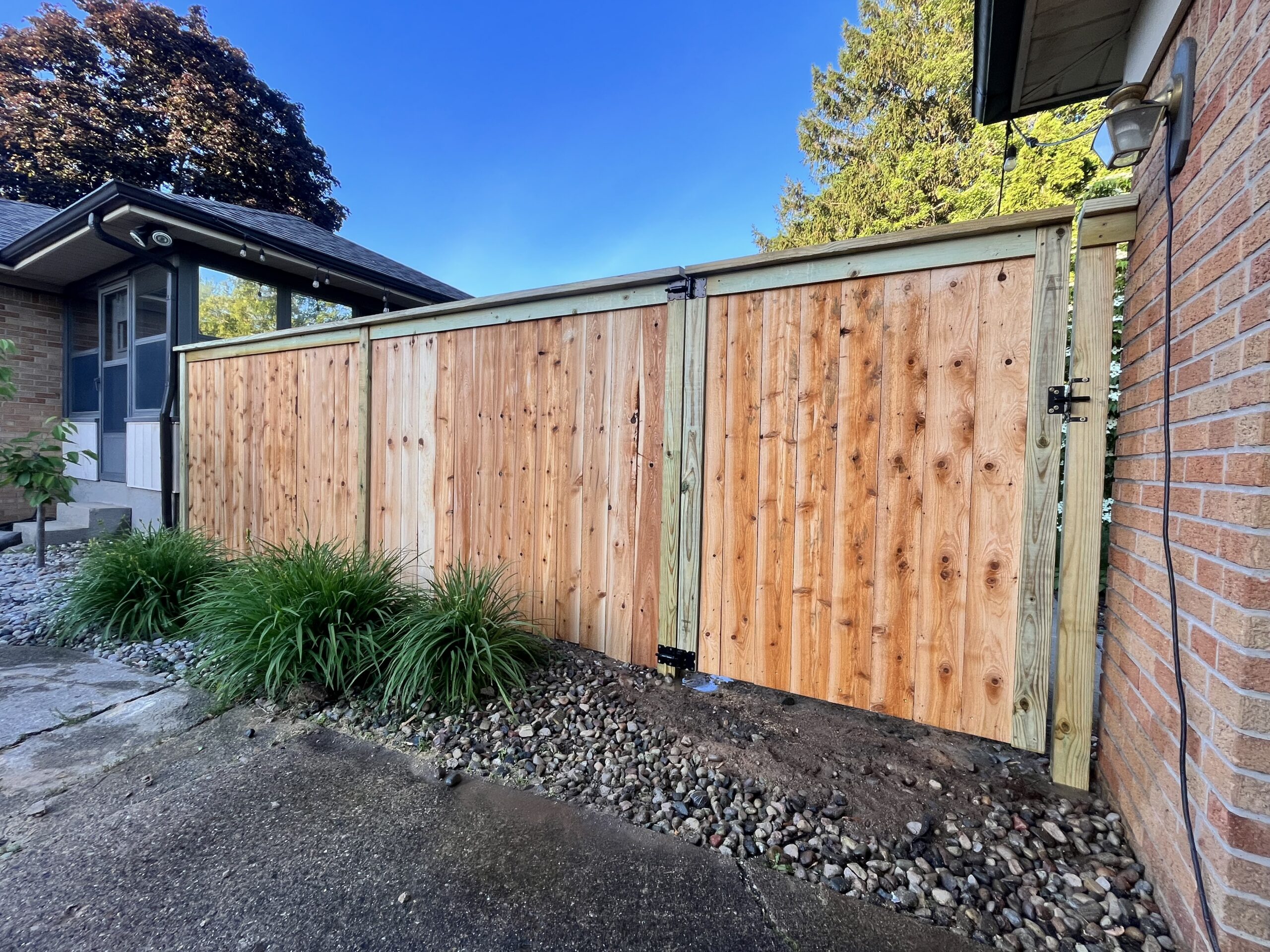
Materials and Comparisons
Compare wood and vinyl on appearance, maintenance, cost factors, durability, and Michigan winter performance.
Read Guide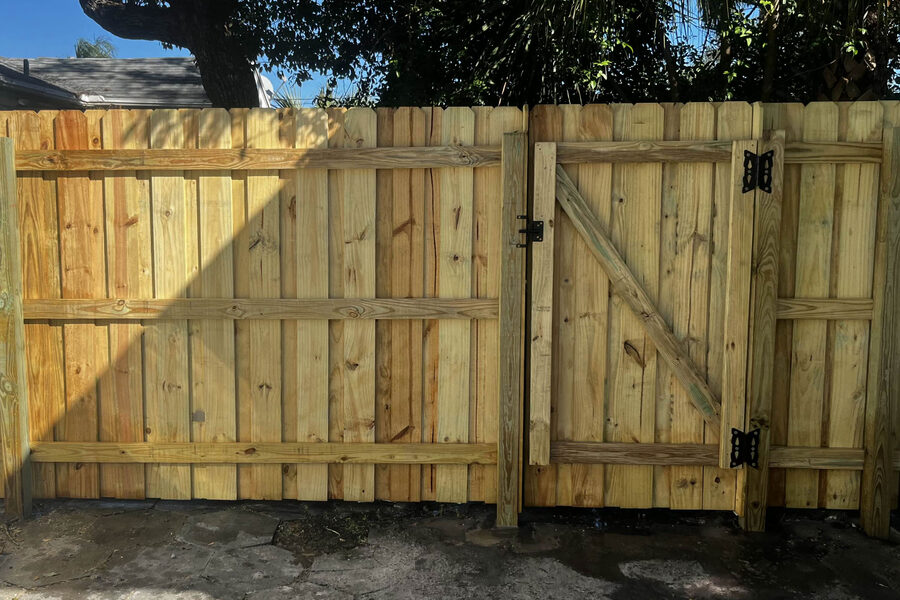
Repair and Maintenance
A structured decision framework to help determine whether repairing or replacing your fence is the better financial choice.
Read GuideThe calculator gives you a planning range. Contractors give you a real number. Submit your project details and we can connect you with fence contractors serving Grand Rapids and West Michigan.