Materials and Comparisons
Wood vs Vinyl Fence for Michigan Homes
Wood and vinyl are the two most common residential fence materials in Grand Rapids and West Michigan. Both offer full privacy options, hold up reasonably well in Michigan winters when installed correctly, and suit a range of property types. The better choice depends on your priorities: appearance, maintenance expectations, budget, and how long you plan to stay in your home.
Quick Comparison
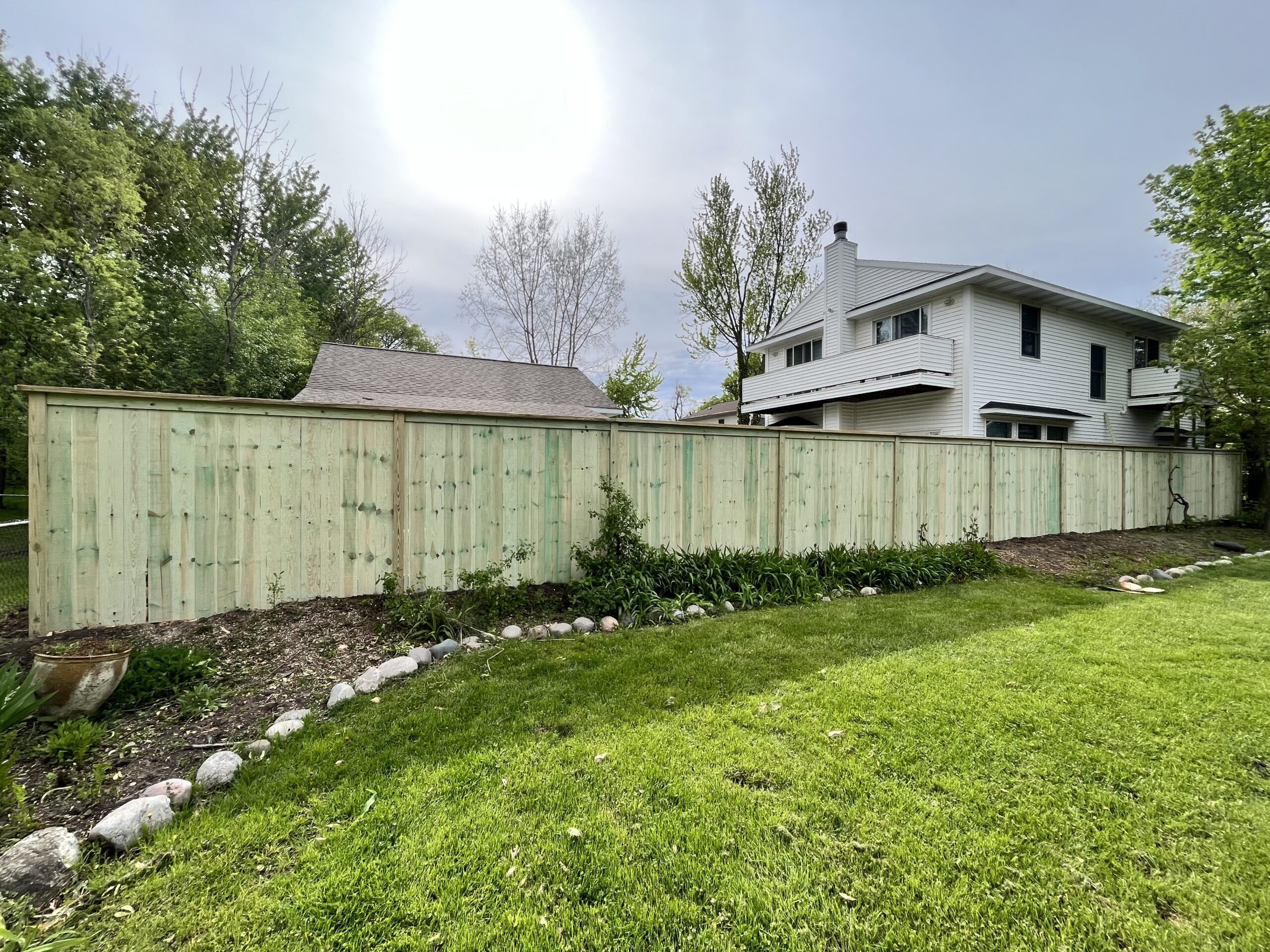
Wood fencing, most often cedar or pressure-treated pine in Michigan, is a natural material with a warm visual quality. Individual boards can be replaced when they rot or crack, and the fence can be painted or stained any color. It requires periodic maintenance: most manufacturers and care guides recommend cleaning, sealing, or staining every two to three years.[1]
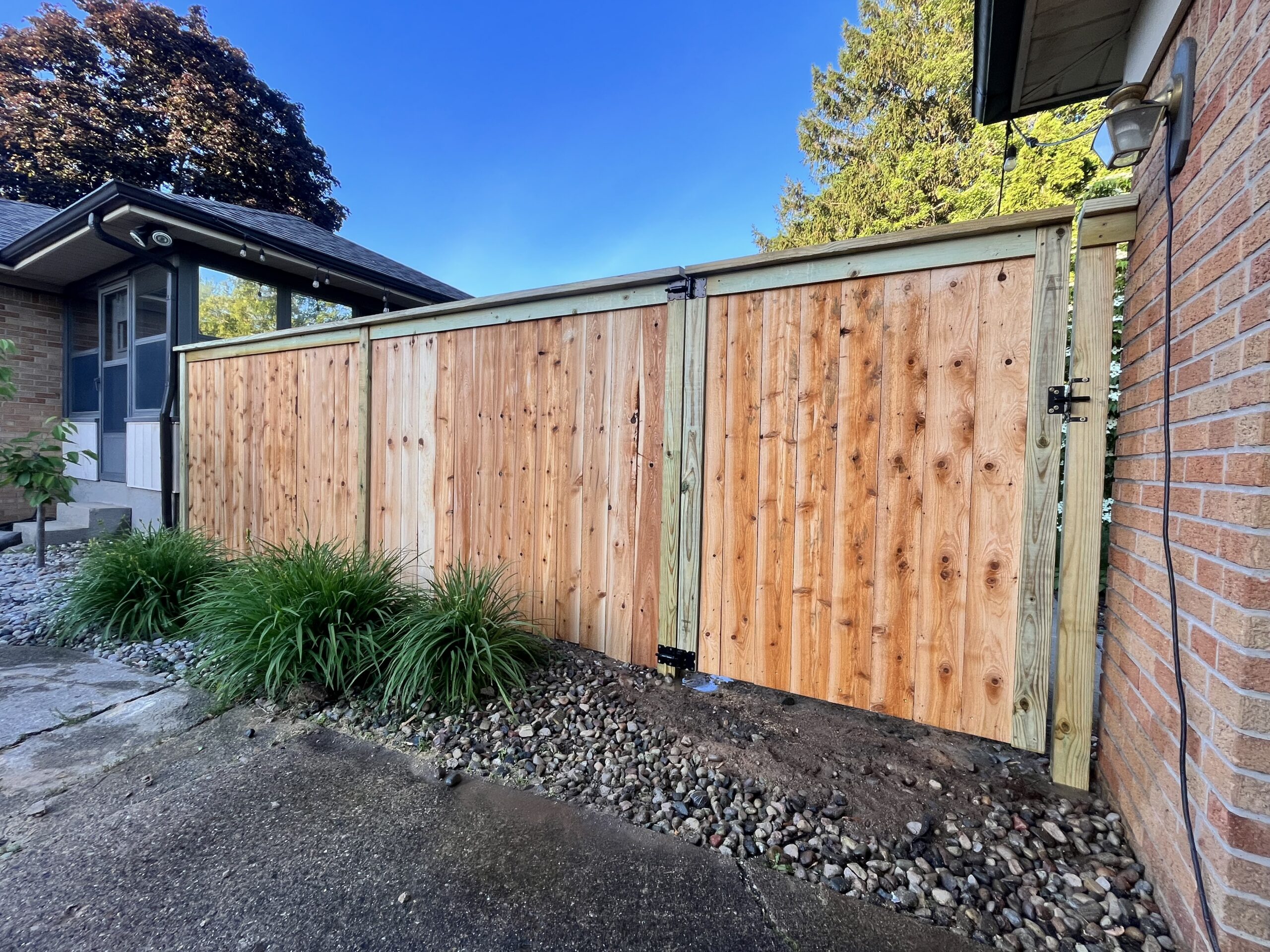
Vinyl fencing is made from polyvinyl chloride (PVC). It does not require painting, staining, or sealing, and PVC does not rot or rust.[4] Vinyl costs more upfront for comparable styles, and repairs typically require matching panel sections exactly, which can be difficult as the fence ages and weathers.
Both materials can be installed with proper post depth and concrete footings to perform well in Michigan's freeze-thaw climate. The fence posts, not the above-ground material, are the most common point of failure for either type.[3]
Comparison Table
Grand Rapids Fence comparison based on appearance, maintenance, repairability, moisture behavior, color options, installation factors, upfront costs, long-term ownership, and Michigan climate performance. Data last reviewed August 2026.
| Factor | Wood Fence | Vinyl Fence |
|---|---|---|
| Appearance | Natural grain and texture; warm visual quality; accepts paint or stain | Uniform molded panels; clean, consistent finish; limited natural variation |
| Privacy | Full privacy available in solid-board styles; slight gaps common between boards | Full privacy available; interlocking panel designs can minimize gaps between panels |
| Maintenance | Requires cleaning, sealing, or staining every 2-3 years[1] | Periodic washing; no painting or sealing required[4] |
| Repairability | Individual boards, rails, and pickets can be replaced independently | Panel replacements must match color and profile; aged vinyl may not match new panels |
| Moisture exposure | Susceptible to rot without maintenance; cedar contains natural oils that improve resistance[1] | PVC does not absorb moisture and does not rot |
| Color and finish | Can be painted or stained any color; color can be changed at next maintenance cycle | Factory-colored; repainting not recommended by most manufacturers |
| Installation | Posts set in concrete below frost line; boards nailed or screwed to rails | Posts set in concrete; panels and pickets clip or slide into post channels |
| Upfront cost factors | Generally lower material cost than comparable vinyl; varies by wood species and design | Generally higher upfront cost than wood for comparable styles; varies by manufacturer |
| Long-term ownership | Maintenance costs accumulate; individual repairs are typically straightforward | Lower routine maintenance expense; larger panel replacements when damage occurs |
| Michigan winter | Cedar handles freeze-thaw cycles well; wood expands and contracts with moisture[3] | PVC expands with heat and can become more brittle in extreme cold; tolerates normal Michigan winters |
Wood Fence Overview
Cedar
Western red cedar is the most commonly specified wood fence material in Michigan. Cedar contains natural oils and resins that resist rot, moisture absorption, and insect activity, making it a practical choice for the state's humid climate.[1] Cedar is dimensionally stable across temperature changes, holds stain and sealant well, and has a warm visual appearance that suits most residential settings.
Cedar fences should be cleaned and recoated with a water-repellent sealant or stain on a schedule recommended by the product manufacturer, typically every two to three years depending on sun exposure and weather conditions.[1] Neglected cedar will gray and eventually check and crack, particularly at board ends where moisture enters most easily.
Pressure-Treated Pine
Pressure-treated pine is a common budget alternative to cedar. It is treated with preservatives that resist rot and insects, but it does not contain cedar's natural oils. Pressure-treated lumber tends to warp and cup more than cedar as it dries after installation, and it requires oil-based stain rather than water-based finishes for best adhesion. For agricultural, utility, or budget-sensitive projects, pressure-treated pine can be a practical choice. For residential privacy fencing where appearance and long-term stability matter, cedar is generally preferred by Michigan contractors.[3]
Vinyl Fence Overview
Vinyl fencing uses polyvinyl chloride (PVC) panels, posts, and pickets manufactured with color throughout the material. Unlike wood, vinyl does not rot, absorb moisture, or rust. It does not require painting or sealing, and most manufacturers offer extended warranties on their products.[4]
Vinyl is manufactured in several grades. Thicker-walled panels and posts are more resistant to impact and temperature-related stress than thinner grades. When comparing vinyl products, wall thickness and manufacturer warranty terms are useful indicators of quality. Most residential privacy vinyl fence panels are available in white, almond, tan, and gray as standard colors.
Vinyl requires minimal routine maintenance but is not indestructible. Physical impact, particularly from heavy equipment or falling tree limbs, can crack or shatter panels. UV exposure over many years can cause some discoloration or surface chalking in lower-grade products. Cleaning vinyl with mild soap and water typically restores its appearance.
Appearance and Style
Wood and vinyl are both available in privacy, picket, split-rail, and decorative styles. Wood has a natural grain texture and visual warmth that many homeowners prefer. It can be painted any color, stained to enhance the grain, or left to weather naturally to a silver-gray tone. This flexibility appeals to homeowners who want to coordinate their fence with their home's color scheme or change the look over time.
Vinyl provides a clean, uniform appearance with no visible wood grain. Its factory finish is consistent across all panels, which can look precise and modern. The color range is more limited than what is achievable with paint on wood, and the appearance does not change over time unless the surface weathers or chalks. Both materials age differently, and viewing installed examples in person can help in making a decision.
For more detail on individual material styles, see the wood fence guide and the vinyl fence guide.
Privacy
Both wood and vinyl are available as full privacy fences with 6-foot solid panels. Wood privacy fences are built by nailing boards to horizontal rails between posts. Small gaps are common between boards in board-on-board and shadowbox styles; tight-board or tongue-and-groove styles minimize gaps. Vinyl privacy fences use panels that interlock or overlap, which can reduce gaps between pickets.
For most residential backyard applications, either material provides adequate visual privacy. The difference in gap size between well-built wood and quality vinyl is minor and typically unnoticeable from a distance. Height and post depth are more important factors for privacy than material choice. See the privacy fence guide for height rules and style options in Grand Rapids.
Upfront Cost Factors
Vinyl fence typically costs more to install than comparable wood designs. The price difference varies by product quality, fence style, yard dimensions, and contractor. Wood fence materials (especially pressure-treated pine) have lower per-linear-foot costs than vinyl for basic privacy styles, though custom wood designs with decorative tops or premium cedar can approach vinyl pricing.
Total project cost for either material depends on linear footage, number of gates, site conditions (slopes, rocky soil, tree roots), and local contractor rates. For current installed price ranges in the Grand Rapids area, see the fence cost guide. Comparing quotes from multiple contractors for the same specifications is the most reliable way to understand actual local costs.
Long-Term Maintenance
Cedar and pressure-treated pine both require periodic cleaning, inspection, and protective coating. Cedar is typically cleaned and recoated with a penetrating oil-based stain or sealant every two to three years.[1] Skipping maintenance cycles allows moisture to penetrate the wood, accelerating checking and cracking at board ends and at ground contact points. Posts are the most moisture-vulnerable part of a wood fence and deserve close inspection during each maintenance cycle.
Vinyl requires considerably less routine maintenance. Periodic washing with mild soap and water removes mold, mildew staining, and environmental deposits. Inspection of post caps, rail brackets, and gate hardware is still worthwhile annually. While vinyl does not need staining or sealing, scratches and scuffs are more visible on vinyl than on stained wood, and deep scratches cannot be touched up the way wood can be sanded and restained.
Over a 20-year period, maintenance costs for a wood fence (materials and labor or time for periodic staining) can be significant. Vinyl's lower routine maintenance comes with the tradeoff of higher repair costs if sections are damaged and require replacement.
Durability and Expected Lifespan
Industry sources and manufacturers generally suggest that well-maintained cedar fences can last 15 to 25 years or longer, with the range depending on installation quality, post depth and footings, site drainage, maintenance frequency, and local climate conditions.[1] Posts, which are in contact with soil and subject to freeze-thaw movement, are the most common point of early failure. Posts set below Michigan's frost line with proper concrete footings tend to outlast those set shallower.[3]
Vinyl fence manufacturers often provide warranties of 20 years or more on their products, though warranty coverage and conditions vary by manufacturer and product line.[4] Actual service life depends on installation quality, UV exposure, and whether the fence sustains physical damage over time. Vinyl posts and panels that are damaged by impact may need to be replaced sooner than the warranty period suggests.
For both materials, the installer's workmanship and post installation quality are as important as the above-ground material in determining how long the fence lasts. A poorly installed vinyl fence can fail sooner than a well-built and maintained wood fence, and vice versa.
Michigan Weather Considerations
Michigan's climate presents specific challenges for exterior building materials. The Grand Rapids area experiences significant freeze-thaw cycling through the winter months, with temperatures moving above and below freezing repeatedly. Soil frost depth in Kent County reaches approximately 42 inches below grade, and fence posts that are not set below this depth risk frost heave, which pushes posts upward and out of alignment.[3]
Cedar handles Michigan's moisture and temperature variation better than most other wood species used in fencing. Its natural oils reduce moisture absorption, and it is dimensionally stable enough to perform through freeze-thaw cycles without excessive warping when properly maintained.[1] Pressure-treated pine is adequate but may warp more noticeably during its first few seasons as the preservative treatment dries out.
Vinyl PVC expands and contracts with temperature changes more than wood does. This is generally accommodated in the panel design, with posts providing the structural anchoring and panels floating slightly within channels. In extreme cold, PVC becomes more brittle than at moderate temperatures. Most quality vinyl fence products are engineered to tolerate Michigan's temperature range under normal conditions, though sharp physical impacts in very cold weather carry more risk of cracking than in warm weather.
Repairs
Wood fence repairs are generally straightforward. Individual boards that rot or crack can be removed and replaced without disturbing the surrounding fence. New boards can be stained or painted to blend with the aged fence, though a perfect color match is difficult when the existing fence has been weathering for several years. Post replacement requires more work, including breaking out old concrete, but remains a manageable repair for most residential fence contractors.
Vinyl repairs require finding panels, pickets, and posts that match the original product exactly in color, profile, and wall thickness. The original manufacturer's product may have been discontinued, or the existing panels may have weathered slightly differently than new replacement stock. This mismatch is a known limitation of vinyl fence repairs and is most visible on privacy panels where new and old sections meet. Aluminum or steel inserts are sometimes used inside vinyl posts at repair points to reinforce sections that experience stress.
For more information on repair costs and decision criteria, see the fence repair vs. replacement guide.
Property Value and Curb Appeal
Neither wood nor vinyl fence provides a guaranteed increase in property value. Home buyer preferences vary, and a fence that one buyer considers an asset may be viewed as a maintenance obligation by another. Well-maintained fencing in good condition generally contributes to curb appeal, which can be a factor in real estate transactions, but quantifying the effect is difficult and property-specific.
Fencing that is rotting, visibly damaged, or in poor condition is more likely to reduce perceived property value than increase it. For homeowners considering a fence primarily as an investment, consulting a local real estate professional about what buyers in a specific neighborhood expect or prefer may be more useful than comparing materials on that basis alone.
Which Is Better for Dogs?
Both wood and vinyl privacy fences can serve as effective dog containment, provided the fence is tall enough for the specific dog, is free of footholds for climbing, and has latched gates. A 6-foot solid privacy fence in either material is a common choice for medium and large dog breeds. Neither material on its own prevents digging, and additional measures such as concrete footings along the base or buried wire mesh may be needed for dogs that dig.
For a full comparison of all four fence materials for dog containment, including height guidance, digging prevention, visibility and reactivity, and gate requirements, see the best fence for dogs guide.
Which Is Better for Privacy?
Both materials provide comparable privacy in solid 6-foot panel designs. The practical difference between well-built wood and quality vinyl for visual privacy is minimal. Vinyl interlocking panels may provide slightly tighter panel-to-panel gaps than standard wood board-on-board construction, but the difference is not significant for most residential backyards.
Privacy fence choice is usually driven by appearance preferences, maintenance tolerance, and budget rather than meaningful differences in privacy performance between the two materials. See the privacy fence page for local height rules and installation options.
For Michigan Homeowners
Cedar privacy fencing remains the most common residential fence choice in West Michigan for good reason. It performs well in Michigan's climate, can be repaired board by board, allows color and stain flexibility, and has a lower upfront cost than comparable vinyl. The tradeoff is ongoing maintenance: a cedar fence that is not regularly stained and sealed will deteriorate faster than one that is properly cared for.
Vinyl is a strong choice for homeowners who want minimal ongoing maintenance and are comfortable with the higher upfront investment. It suits buyers who prefer a consistent, clean appearance and do not want to schedule periodic staining or recoating. The primary limitations to consider are the higher initial cost, the difficulty of matching replacement panels as the fence ages, and the risk of cracking under impact during extreme cold.
Both materials require proper post installation below the frost line to perform well in Michigan winters. The choice between them is largely a question of how you want to spend your time and money over the life of the fence. Compare quotes from local contractors for both materials before deciding, and ask specifically about post depth, footing specifications, and what the installer's warranty covers.
Frequently Asked Questions
Does vinyl fence need painting?
No. Vinyl fencing is manufactured with color throughout the material and does not require painting, staining, or sealing under normal conditions. The factory finish is intended to be permanent. Periodic washing with mild soap and water keeps it looking clean.
How long does a cedar fence last in Michigan?
Industry sources generally suggest that well-maintained cedar fences can last 15 to 25 years or more, though outcomes depend heavily on installation quality, post depth, site drainage, and maintenance frequency.[1] Posts set below the frost line with proper concrete footings and cedar fence boards cleaned and recoated on a regular schedule tend to last longer than those that are neglected or improperly installed.
Can I change the color of my vinyl fence?
Vinyl is difficult to paint reliably. Most standard paints do not adhere well to PVC surfaces without specialized adhesion primers, and the flexibility of vinyl fence panels can cause paint to crack and peel. Most manufacturers do not recommend repainting their vinyl fence products, and doing so may void the warranty.
Which is typically less expensive, wood or vinyl fence?
Wood fence typically has lower upfront material and installation costs than comparable vinyl. Vinyl tends to cost more to install initially. Over time, wood's maintenance costs (staining, sealing, and periodic board replacements) can offset some of the initial savings, while vinyl's lower ongoing maintenance needs can offset some of its higher upfront cost. The total cost of ownership depends on how well each fence is maintained and how long it remains in service.
Can a vinyl fence crack in Michigan winters?
PVC becomes more brittle at very low temperatures and may crack under physical impact during extreme cold. Quality vinyl fence products are engineered to tolerate normal Michigan temperature ranges, but sharp impacts during cold snaps carry more risk than they would in warmer weather. Normal wind and temperature cycling, without physical impact, should not cause cracking in quality vinyl fence products.
Does a wood or vinyl fence increase home value?
Neither material provides a guaranteed increase in property value. Well-maintained fencing in good condition can support curb appeal and may be a positive factor for potential buyers, but outcomes vary by property, neighborhood, and individual buyer preferences. Fencing in poor condition can reduce perceived value rather than increase it.
Sources
Sources were selected for relevance, authority, and practical homeowner use. Requirements and recommendations may change, so confirm current local rules before beginning a project.
- Western Red Cedar Lumber Association (WRCLA). "Caring for Your Cedar Products." Trade Association. https://www.wrcla.org/. Accessed August 2026.
- City of Grand Rapids. "Fence Permit." Government. https://www.grandrapidsmi.gov/Government/Departments/Community-Development/Building-Safety/Permits/Fence-Permit. Accessed August 2026.
- Michigan State University Extension. "Michigan Building and Landscape Resources." University Extension. https://www.canr.msu.edu/. Accessed August 2026.
- American Fence Association. "Fence Industry Resources." Trade Association. https://www.americanfenceassociation.com/. Accessed August 2026.
Related Guides
Dogs and Backyard Safety
What Is the Best Fence for Dogs?
Compare wood, vinyl, aluminum, and chain link fences for dog containment and backyard safety.
Read Guide
Repair and Maintenance
Should You Repair or Replace Your Fence?
Understand when to repair versus replace based on damage type, material age, and post condition.
Read Guide
Installation and Michigan Conditions
How Deep Should Fence Posts Be in Michigan?
Learn the factors that affect post depth in Michigan, from frost movement to permit requirements.
Read GuideReady to Plan Your Fence Project?
Compare your options, then request quotes from available fence contractors serving Grand Rapids and West Michigan.