Cost and Budgeting
How Much Does a 6-Foot Privacy Fence Cost Per Foot?
What "Per Linear Foot" Means
When a fence contractor quotes a per-linear-foot price, that number typically includes materials and labor for a standard installation: posts set to appropriate depth, rails attached, fence panels or boards installed, and standard post concrete. What it usually excludes are gates, permits, removal of an existing fence, unusual terrain conditions, and access surcharges.
Understanding what is in and out of the per-foot number is important because those excluded items can add significantly to the final project cost. A project quoted at $24 per linear foot for 120 feet of fence is $2,880 in panels and labor — but if it also requires a walk gate, a driveway gate, and removal of an old wood fence, the actual total is considerably higher.
This guide focuses specifically on 6-foot privacy fence because it is the most common residential privacy fence height in West Michigan, and because per-foot estimates for 6-foot fence are widely searched and frequently misapplied.
Wood 6-Foot Privacy Fence: Cost Per Foot
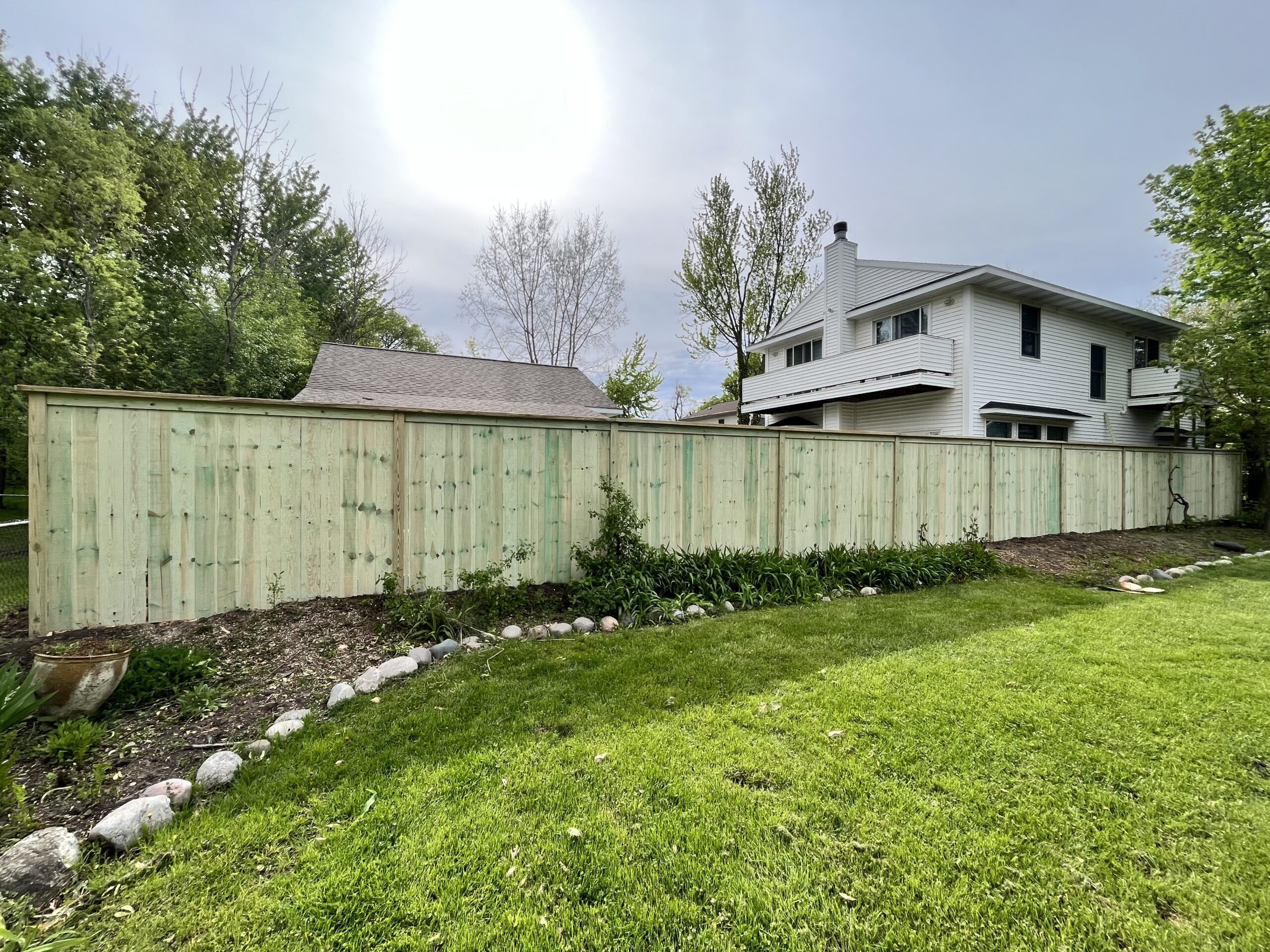
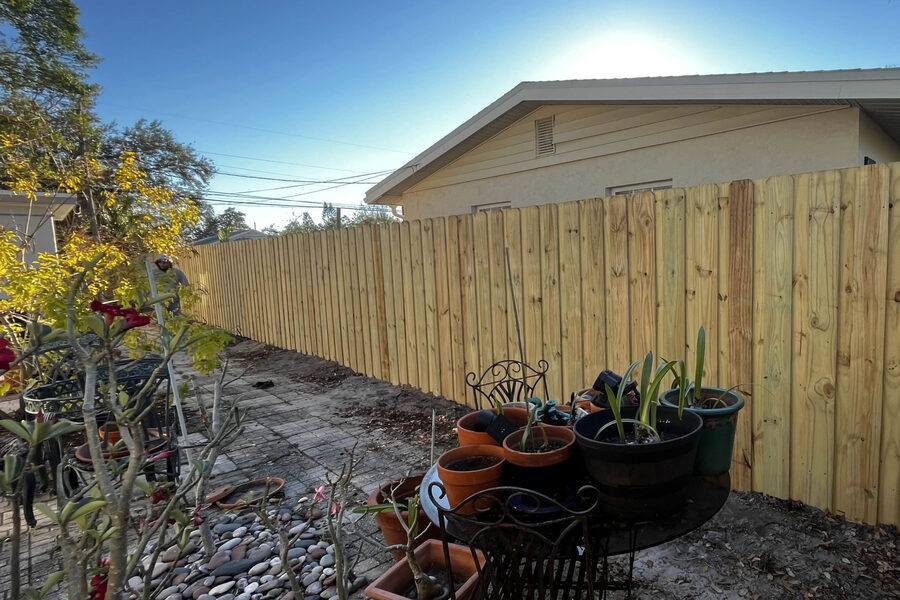
Six-foot wood privacy fence in West Michigan typically runs $18 to $28 per linear foot installed. [1] That range reflects contractor quotes collected in Kent County and the broader West Michigan metro in 2024–2025, and covers cedar and pressure-treated pine at standard residential installation.
Where a specific project falls within that range depends on several variables:
- Wood species and grade. Clear cedar boards cost more than #2 pressure-treated pine. Premium-grade lumber with fewer knots and consistent color commands a higher price.
- Post material. Cedar or pressure-treated pine posts are standard. Concrete setting depth in Michigan requires longer posts than in warmer states due to frost line requirements.
- Panel style. Dog-ear, flat-top, and board-on-board styles have slightly different material costs. Board-on-board uses more material per linear foot than a standard privacy panel and typically lands at the higher end of the range.
- Contractor rates. Labor rates vary between contractors depending on crew size, equipment, and overhead. A West Michigan contractor with high demand and quality references may quote closer to the top of the range even for a straightforward project.
Vinyl 6-Foot Privacy Fence: Cost Per Foot
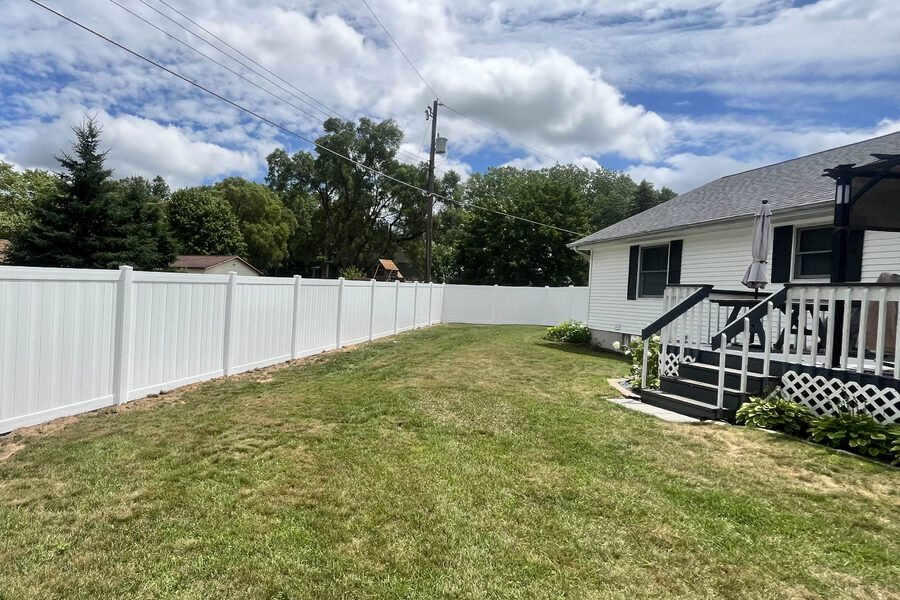
Six-foot vinyl privacy fence in West Michigan typically runs $24 to $38 per linear foot installed. [1] The higher upfront cost compared to wood reflects the material cost of vinyl panels and posts, which are more expensive to produce than wood alternatives.
Within that range, the main variables are:
- Panel grade. Economy vinyl uses thinner profiles and less UV stabilizer. Premium vinyl uses thicker walls and more stabilizer, which extends color retention and reduces brittleness in cold weather. Grade differences are visible in the product specifications, not just the price.
- Profile style. Shadowbox, tongue-and-groove, and solid privacy panels have different material costs. Shadowbox profiles allow air flow and use slightly less material than solid panels.
- Post spacing and footing. Vinyl fence posts in Michigan require deeper concrete footings than in warmer climates to prevent frost heave. Contractors set vinyl posts below the 42-inch frost line for the southern Lower Peninsula. [4] Post depth affects material and labor cost.
Vinyl costs more than wood at installation but requires no staining, sealing, or painting over its life. For a comparison of long-term cost between the two materials, see the Wood vs Vinyl guide.
Why Per-Foot Figures Are Incomplete
A per-linear-foot number is a useful starting point, but it answers only one part of the question: what is the cost of the fence panels and their installation? It does not tell you what the project will cost, because every project includes elements that do not scale linearly with footage.
Gates are the most significant example. A walk gate requires two posts, hardware, and more precise installation than a standard fence panel. That gate costs what it costs regardless of whether the project is 80 feet or 300 feet. The gate does not cost $24 per foot just because the fence does. It might add $250 to $400 to the project — a number that looks trivial on a large project but is a meaningful addition to a small one.
Removal is another example. At $3 to $6 per linear foot, removal scales with footage — but it is still a separate cost on top of the installation rate, not included in it. [2]
Terrain adjustments are non-linear as well. A 50-foot slope crossing costs proportionally more per foot to install than the flat 100-foot runs on either side, because the grade transition takes extra setup time regardless of how short it is.
Per-foot figures are most useful for comparing materials (wood vs. vinyl) and for getting a rough scale of project cost before committing to site assessment and quotes. Use them as an input to the planning estimate, not as the final answer.
Gate Cost Impact
Gates are the most frequently overlooked line item in privacy fence estimates. Most homeowners budget for panels and forget to price the openings.
Walk gates — single-person openings, typically 3 to 4 feet wide — add approximately $200 to $450 per gate installed. [2] That covers the two posts required on either side of the opening, the gate frame, hinges, and a latch.
Driveway or double gates — wide enough for a vehicle — add approximately $500 to $900 per gate installed. [2] Double gates require heavier posts, a center drop rod or removable middle post, and heavier hardware than walk gates.
On a 120-linear-foot project with one walk gate and one driveway gate, gate costs alone add $700 to $1,350 to the base panel installation estimate. That is a meaningful portion of the total and should be included in any planning estimate from the beginning.
Corners, Slopes, and Site Conditions
Two physical features of a fence line that do not show up in the per-foot rate are corners and grade transitions.
Corners require a post set precisely at the turn point. Each corner is also a potential stress point where panels must be cut or fitted to angle. The additional time is modest for straightforward 90-degree corners but more significant for irregular angles. Most standard per-foot pricing assumes a manageable number of corners; properties with many direction changes may land higher within the range or prompt a site-specific quote.
Grade transitions — points where the fence line moves from level to sloped, or crosses a significant elevation change — add time to layout, post setting, and panel installation. Stepped installation and racked installation both require different setup than a straight level run. Some slope adds approximately 10 to 15 percent to base material and labor cost. Steep or difficult terrain adds approximately 20 to 30 percent. [2]
Demolition and Removal
If you are replacing an existing fence, removal and disposal is typically a separate line item in the contractor quote. In the West Michigan market, removal adds approximately $3 to $6 per linear foot to the project cost. [2]
Scope affects the actual cost. A wood fence with deteriorated posts that break off at ground level is harder to remove than a fence where posts are still structurally sound and can be pulled cleanly. Posts set in concrete require removal of the concrete footing or cutting at ground level, which takes longer.
On a 120-foot project, removal adds approximately $360 to $720. Include it in your planning estimate if you have an existing fence to take down.
Site Access
Equipment access directly affects labor cost and, in some cases, whether a contractor will take a project at a standard rate.
Fence contractors typically use a compact excavator or skid steer for post setting on residential projects. These machines require clearance to enter the property and maneuver along the fence line. A property with a 36-inch gate as the only backyard access means equipment cannot enter, and posts must be hand-dug. Hand digging is slower and adds cost per post.
Limited access typically adds 5 to 10 percent to labor cost. Very difficult access — hand digging required throughout, cramped quarters, or multiple areas of the fence line that are unreachable except on foot — can add 10 to 20 percent or more. Some contractors will decline difficult-access projects or add a project-specific surcharge.
If your property has access constraints, mention them when requesting quotes. Contractors who assess the site accurately upfront produce more reliable quotes than those who discover access issues after the job starts.
Sample Calculation Example
The following is a worked example of how a planning estimate is constructed for a 6-foot wood privacy fence project. This is a planning estimate, not a contractor quote.
Inputs:
- Material: Wood, 6-foot privacy
- Linear footage: 120 feet
- Gates: 1 walk gate
- Terrain: Mostly flat
- Access: Easy
- Removal: No existing fence
Base fence cost:
120 linear feet x $18 (low) = $2,160 low base
120 linear feet x $28 (high) = $3,360 high base
Source: West Michigan contractor quotes 2024–2025 [1]
Gate cost:
1 walk gate: $200 (low) to $450 (high) [2]
Terrain and access adjustments:
Flat terrain, easy access: no adjustment
Planning range (rounded to nearest $50):
Low: $2,160 + $200 = $2,360, rounded to $2,350
High: $3,360 + $450 = $3,810, rounded to $3,800
Planning range: approximately $2,350 to $3,800
This is an early-stage planning estimate. A contractor quote on this same project could fall anywhere within or outside this range depending on current material pricing, site conditions identified during a site visit, and the contractor's own labor rate. Request multiple quotes to understand actual market pricing for your specific project.
Total Project vs Per-Foot Thinking
Per-foot thinking is useful for comparing materials and getting a rough scale of project cost early in planning. Total project thinking is more useful once you are ready to evaluate contractor quotes and make a decision.
A contractor quoting $26 per foot for 120 feet of vinyl and another quoting $22 per foot for wood looks like a simple comparison — vinyl is $480 more. But if the vinyl quote includes removal and the wood quote excludes it, the wood quote may be higher total once removal is added. Material specifications also matter: a lower per-foot number that reflects a thinner, lower-grade vinyl panel is not the same product as a higher-per-foot number for a premium-grade panel.
When comparing quotes, ask for the full project scope in writing: fence material and grade, post size and material, installation method, gate specifications, inclusion or exclusion of removal, permit handling, and payment terms. Per-foot comparisons that do not specify these details can be misleading.
Use the Fence Calculator
The Fence Cost Calculator builds a planning estimate based on your specific inputs: material, linear footage, height, gate count, terrain, access level, and whether removal is needed. It uses per-foot ranges from the West Michigan market and adds adjustments for gates, terrain, and removal as separate line items.
Use it to generate a planning range for your project, compare material options, and understand how terrain or access adjustments affect the estimate before contacting contractors. The calculator is a planning tool, not a substitute for actual quotes.
Frequently Asked Questions
Is per linear foot the full installed cost?
Not always. Per-linear-foot pricing typically covers panels, posts, rails, and standard labor for fence installation. It usually excludes gates, removal of existing fence, permits, terrain surcharges, and access surcharges. Always confirm what is included when comparing contractor quotes.
How do I measure linear footage for a 6-foot privacy fence?
Measure the perimeter of the fence line — the actual path the fence will follow — in linear feet. Walk each straight segment separately and add them together. Do not use the area of your yard. For a rectangular backyard 50 feet wide and 80 feet deep where you need three sides fenced, the fence line is 50 + 80 + 80 = 210 linear feet. Subtract any segments you are not fencing and note gate openings separately.
Do gates change the per-foot price?
Gates add a fixed cost per opening rather than a per-foot addition. A walk gate adds approximately $200 to $450 per gate and a driveway gate adds approximately $500 to $900. [2] These costs are separate from the per-foot fence installation rate and do not change based on the total footage of the project.
Is wood or vinyl better value at 6 feet?
Wood has a lower upfront cost per foot ($18 to $28 for 6-foot) compared to vinyl ($24 to $38 for 6-foot). [1] Vinyl has lower long-term maintenance cost because it does not require staining or sealing. The better value depends on your upfront budget, how long you plan to stay in the home, and how much maintenance you want to manage. See the Wood vs Vinyl guide for a detailed comparison.
Is the Fence Calculator a contractor quote?
No. The Fence Calculator is a planning estimate for early budgeting. It uses market range data from the West Michigan area and adjusts for the inputs you provide. Actual contractor quotes reflect current material pricing, your specific site conditions, and individual contractor labor rates. Use the calculator for planning, then request quotes for actual pricing.
Sources
Sources were selected for relevance, authority, and practical homeowner use. Requirements and recommendations may change, so confirm current local rules before beginning a project.
- Grand Rapids Michigan Fence. "Fence Cost Guide — West Michigan." https://grandrapidsmichiganfence.com/fence-cost-grand-rapids-mi/. Accessed August 2026.
- American Fence Association. "Consumer Resources." Trade Association. https://www.americanfenceassociation.com/. Accessed August 2026.
- City of Grand Rapids. "Fence Permit." Government. https://www.grandrapidsmi.gov/Government/Departments/Community-Development/Building-Safety/Permits/Fence-Permit. Accessed August 2026.
- Michigan State University Extension. "Michigan Building and Landscape Resources." University Extension. https://www.canr.msu.edu/. Accessed August 2026.
Related Guides
Cost and Budgeting
How Much Does a Privacy Fence Cost?
All the factors that affect privacy fence cost, from material to gates, terrain, and removal.
Read Guide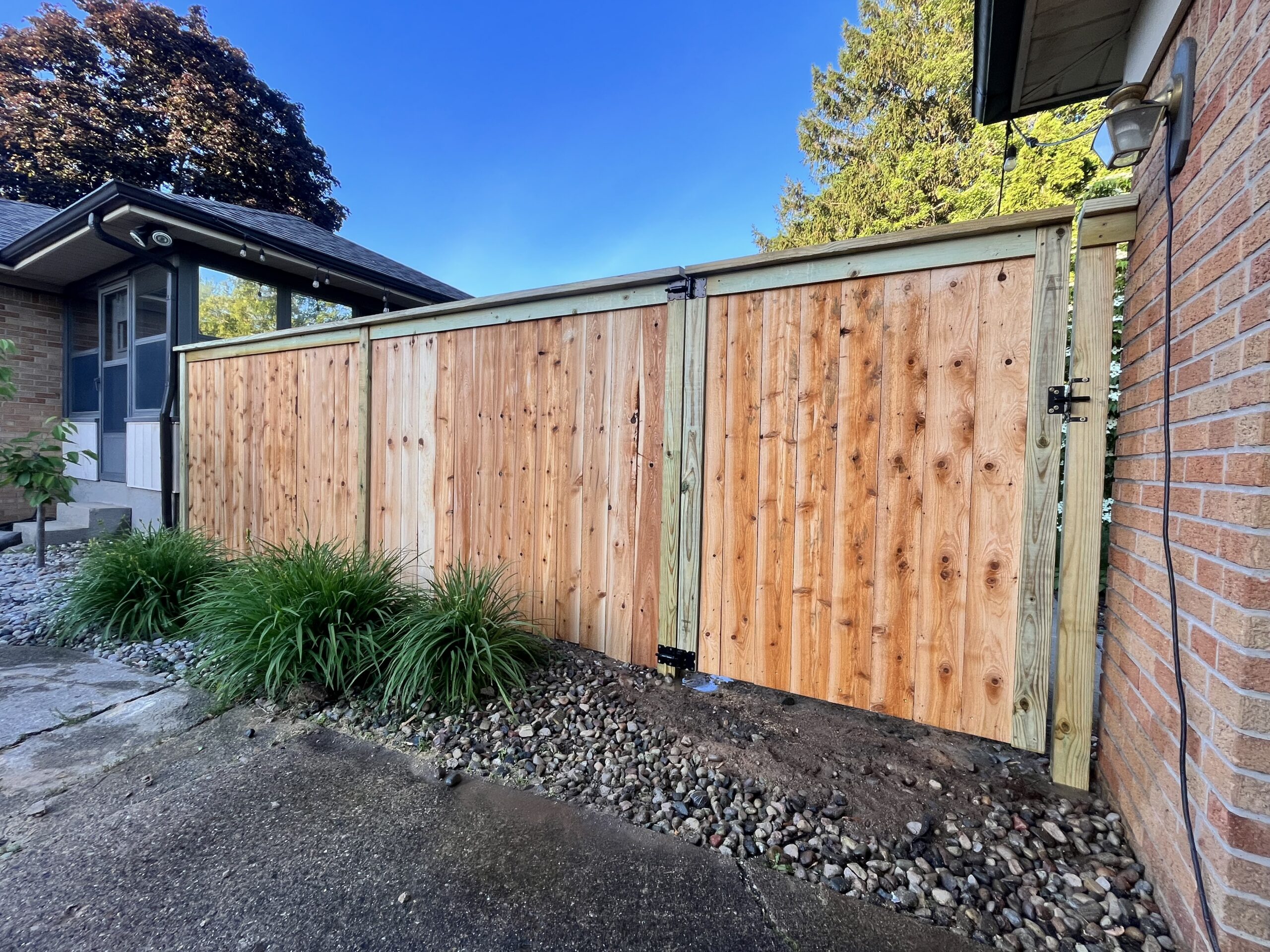
Materials and Comparisons
Wood vs Vinyl Fence for Michigan Homes
Compare wood and vinyl on appearance, maintenance, cost, durability, and Michigan winter performance.
Read Guide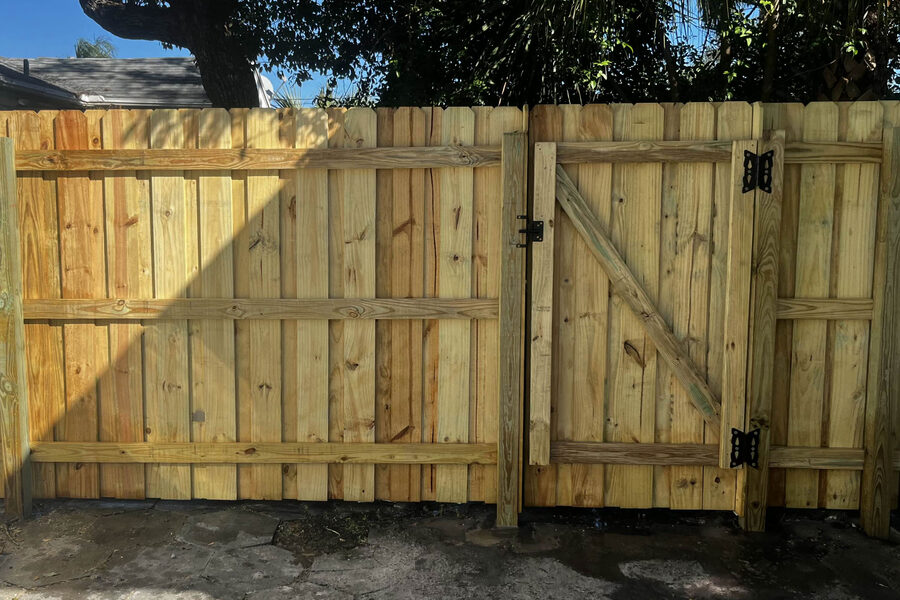
Repair and Maintenance
Fence Repair vs Replacement: Which Makes More Sense?
A structured decision framework for deciding whether repairing or replacing your fence is the better choice.
Read GuideReady to Plan Your Fence Project?
Compare your options, then request quotes from available fence contractors serving Grand Rapids and West Michigan.