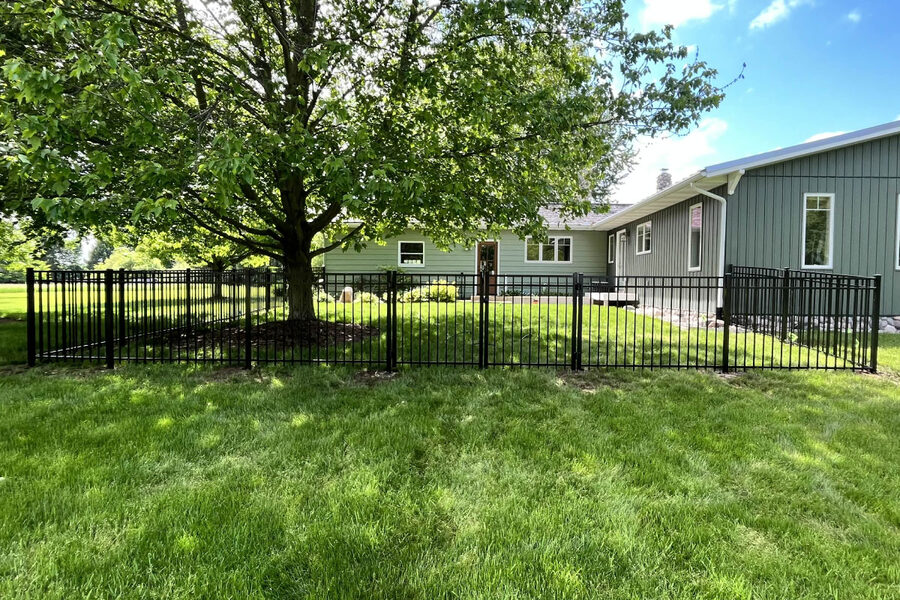
Fence Installation in Grand Rapids & West Michigan
Planning a new fence? Compare material options, understand what drives installation costs in Kent County, and request quotes from available local installers.
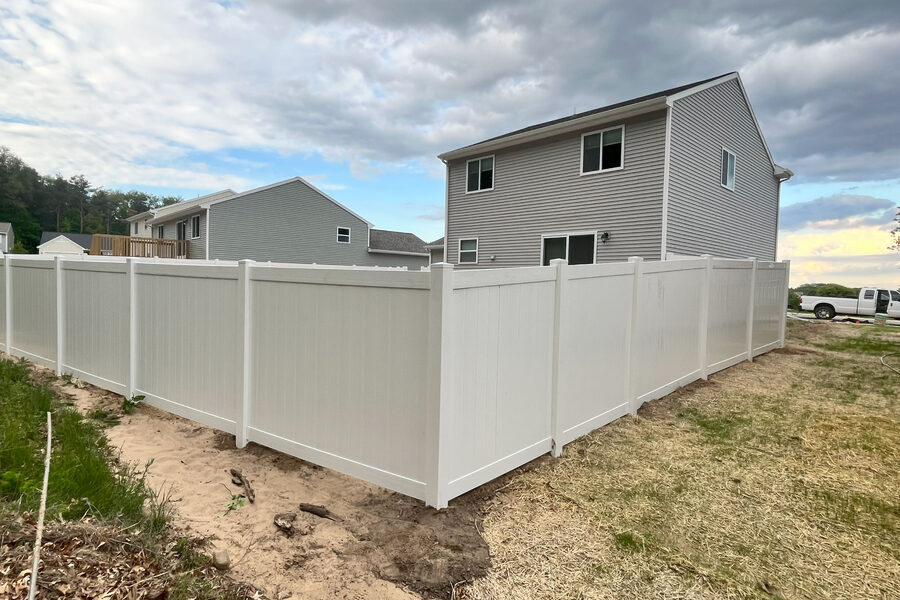
What Fence Installation Involves
A new fence installation covers everything from layout and permitting to post setting, panel or rail assembly, and gate hardware. The process varies by material, yard size, and site conditions, but most residential projects in Grand Rapids follow a predictable sequence.
Grand Rapids Fence connects homeowners with local installers serving Kent County and surrounding West Michigan communities. We help you understand your options so you can request informed quotes and compare proposals with confidence.
Whether you are enclosing a backyard for privacy, containing pets, defining a property line, or adding security around a commercial property, the right material and a properly installed post depth make the difference between a fence that lasts 20 years and one that requires repair within five.
Who Commonly Requests Installation
Privacy and Backyard Use
Homeowners who want to screen out neighbors, create an outdoor living space, or establish a clear visual boundary between yards.
Pet and Child Safety
Families who need a secure perimeter for dogs, children, or backyard pools. Height, gap spacing, and gate hardware all matter for containment reliability.
New Construction and Renovations
New-build homeowners adding a fence for the first time, and existing homeowners replacing aging fences that have rotted, leaned, or reached end of life.
Commercial Properties
Businesses, rental properties, and commercial facilities that need perimeter fencing for security, liability management, or code compliance.
Agricultural and Rural Properties
Landowners in Kent, Ottawa, and Allegan counties who need split-rail, post-and-rail, or high-tensile fencing for property borders and livestock containment.
Pool Enclosures
Michigan law requires secure pool enclosures. Aluminum is the most common pool fence material due to its rust resistance and the open look that preserves sightlines to the water.
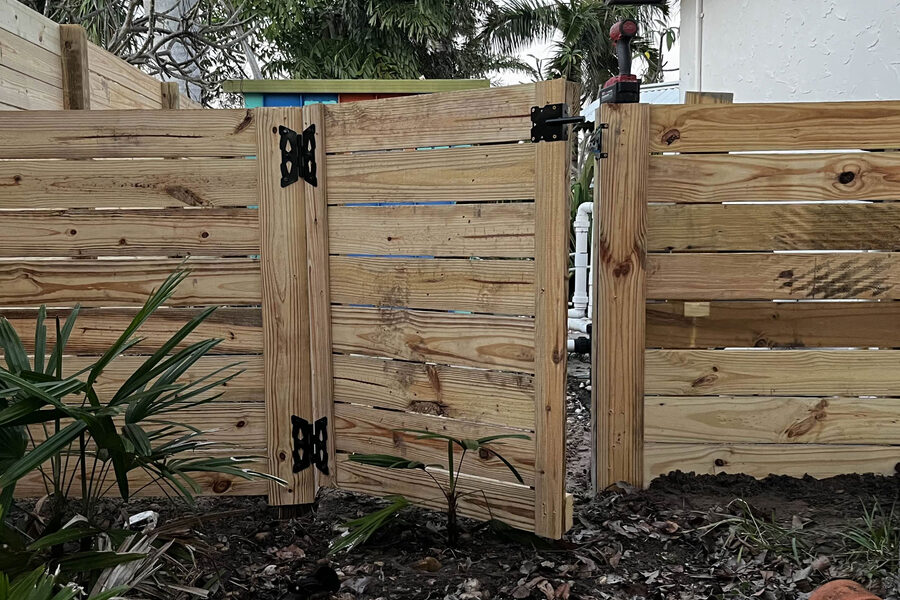
Residential wood privacy fence installation in West Michigan. Proper post depth is critical in Michigan's freeze-thaw climate.
Common Fence Installation Projects
From full-yard residential installs to commercial perimeter fencing, local contractors in West Michigan handle a broad range of projects.
Full-Yard Privacy Fence
The most common residential project. Typically 100 to 250 linear feet of 6-foot privacy fencing enclosing the rear or side yard. Wood and vinyl are the most requested materials.
Pool Enclosure
Code-compliant pool fencing typically requires at least 48 inches of height, self-closing gates, and no toe-holds. Aluminum is the standard choice for pool surrounds in West Michigan.
Commercial Perimeter Fencing
Chain link and heavy-gauge aluminum are common for commercial and industrial perimeters. Projects often include slide gates, swing gates, and access control integration.
Front Yard and Curb Appeal Fence
Decorative picket, low aluminum rail, or split-rail fencing to define the front yard. Typically 3 to 4 feet tall. Focus is on appearance and neighborhood compatibility rather than privacy.
Agricultural and Property Border
Split-rail, post-and-rail, or high-tensile wire fencing for acreage and rural properties in Kent, Ottawa, Allegan, and Ionia counties. Priced by the roll or the post count rather than linear footage.
Fence Replacement
Removing and replacing an existing fence that has reached end of life. Includes post removal, concrete footer extraction or cutting, and a complete new installation. Costs are higher than new installs on open ground.
What Affects Fence Installation Cost in Grand Rapids
Installation pricing varies significantly based on material, linear footage, site conditions, and project complexity. These are the primary cost drivers local contractors use when pricing projects.
| Cost Factor | Lower End | Higher End |
|---|---|---|
| Material | Chain link, split-rail wood | Aluminum, vinyl, cedar |
| Linear Footage | Under 100 LF | Over 300 LF (but per-foot cost often drops) |
| Post Depth | Standard 42-inch posts | Deep footings or rocky/sandy soil requiring extra work |
| Gates | One walk gate | Multiple gates, driveway gates, or automatic openers |
| Terrain | Flat, accessible yard | Sloped grade, utilities nearby, limited equipment access |
| Removal | No existing fence | Full removal of old fence and concrete footers |
- Lower-End Impact
- Chain link, split-rail wood
- Higher-End Impact
- Aluminum, vinyl, cedar
- Lower-End Impact
- Under 100 LF
- Higher-End Impact
- Over 300 LF (but per-foot cost often drops)
- Lower-End Impact
- Standard 42-inch posts
- Higher-End Impact
- Rocky or sandy soil requiring extra work
- Lower-End Impact
- One walk gate
- Higher-End Impact
- Multiple gates, driveway gates, or automatic openers
- Lower-End Impact
- Flat, accessible yard
- Higher-End Impact
- Sloped grade or limited equipment access
- Lower-End Impact
- No existing fence
- Higher-End Impact
- Full removal of old fence and concrete footers
Michigan-Specific Installation Considerations
West Michigan's climate and soil conditions create specific requirements that affect fence installation quality and longevity.
Frost Depth and Post Setting
The frost line in Kent County is approximately 42 inches. Posts set shallower than the frost line will heave upward during freeze-thaw cycles, causing lean and panel separation. Professional installers set posts 42 to 48 inches deep depending on fence height. Ask any contractor you interview how deep they set posts and whether they use concrete footings.
Sandy Soil in West Michigan
Many areas of Grand Rapids and Kent County have sandy soils that do not grip post footings as firmly as clay. Contractors working in sandy areas often use larger-diameter concrete footings or deeper post holes to compensate. This is especially important for gate posts, which carry the most load and need superior anchoring.
Drainage and Yard Grading
Poor drainage accelerates wood rot and undermines post footings. If your yard holds standing water after rain, address grading or drainage before installing a fence. Wood posts in consistently wet soil fail significantly faster, even if pressure-treated. Vinyl and aluminum are more tolerant of wet conditions but still require solid post footings.
Wind and Snow Load
West Michigan sees significant winter wind off Lake Michigan. A 6-foot solid privacy fence acts as a sail during strong winds and puts substantial load on posts. Proper concrete footings and correct post spacing (typically 8 feet maximum on center) are essential for wind resistance. Contractors who space posts wider to reduce material cost are increasing long-term failure risk.
Permits and Property Lines
The City of Grand Rapids requires zoning permits for most fence installations. Surrounding townships vary. Permit requirements typically include height limits, setback distances from property lines, and front-yard restrictions. Confirm your property lines with a survey before installation. Installing on a neighbor's property, even by inches, can create legal problems.
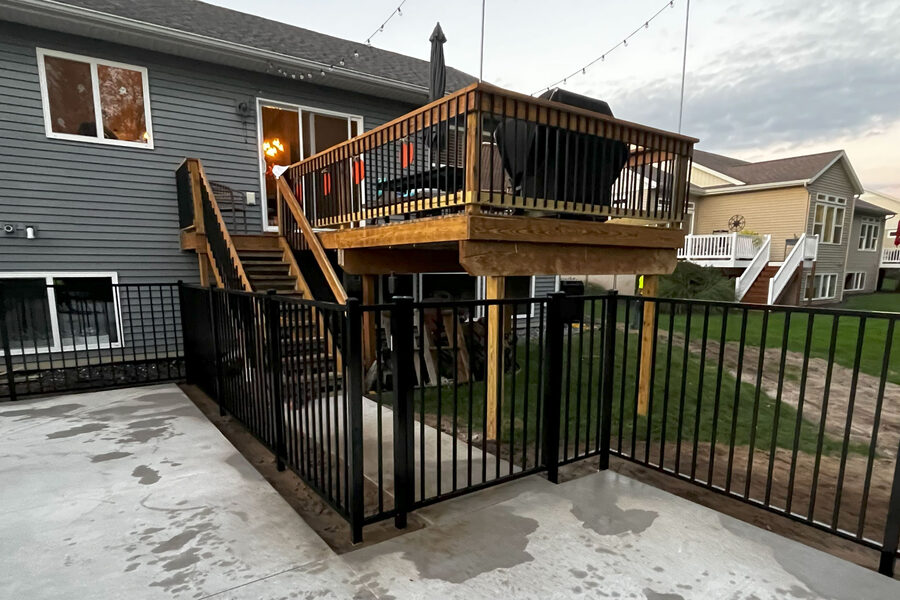
The Fence Installation Process
Most residential fence installations in West Michigan follow this sequence from first contact through project completion.
Planning and Site Assessment
Before requesting quotes, confirm your property lines, note any slopes or drainage issues, identify utility locations, and check local permit requirements. Knowing your linear footage and gate locations in advance speeds up the quoting process.
Material Selection
Choose a material based on your priority mix of privacy, maintenance tolerance, budget, and visual preference. Wood, vinyl, aluminum, and chain link each have distinct tradeoffs in cost, longevity, and appearance.
Getting and Comparing Quotes
Request quotes from two or three local contractors. Compare price per linear foot, post depth specifications, concrete footing size, and gate hardware quality. The lowest bid is not always the best value.
Utility Locates and Permitting
Your contractor should call 811 before any digging. If your municipality requires a zoning permit, it must be obtained before work begins. Permit processing typically takes a few business days to two weeks depending on the jurisdiction.
Post Setting
Posts are set first, with concrete poured around each footing. Concrete cures for 24 to 48 hours before panels or rails are attached. This curing step is not optional. Projects where panels are hung immediately often develop lean within the first winter.
Panel, Rail, and Gate Installation
Once posts are cured, panels or rails are attached and gates are hung and adjusted. Gate posts require deeper footings and larger concrete collars than line posts because they carry active load from opening and closing.
Final Walkthrough
Walk the finished fence with your contractor before signing off. Check gate operation, panel alignment, post plumb, and any site cleanup. Document anything that needs adjustment before making final payment.
Fence Materials for Grand Rapids Installations
Each material has distinct cost, maintenance, and performance characteristics in West Michigan's climate.
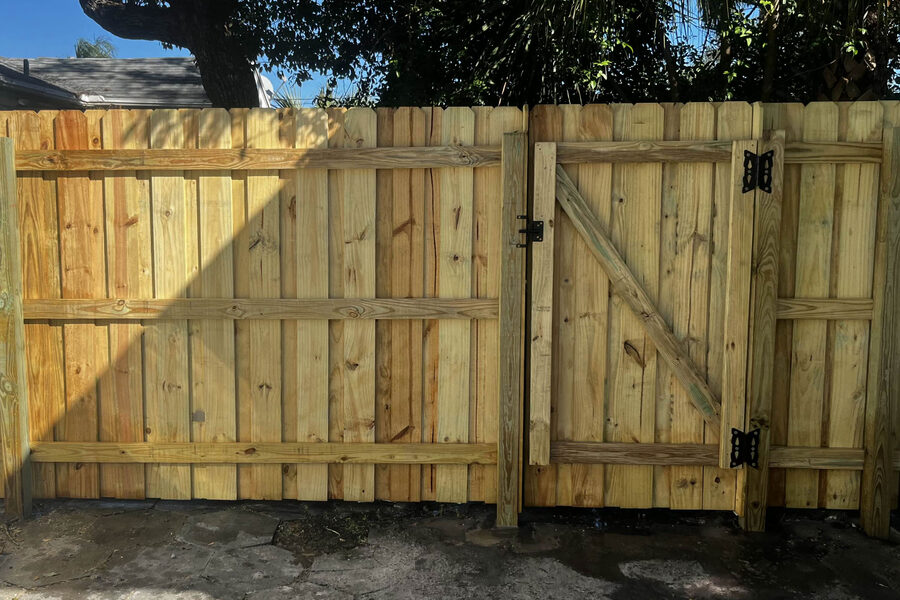
Wood Fence
Cedar and pressure-treated pine. The most popular choice in Kent County for privacy and curb appeal. Installed cost roughly $18 to $28 per linear foot for privacy panels.
Explore Wood Fence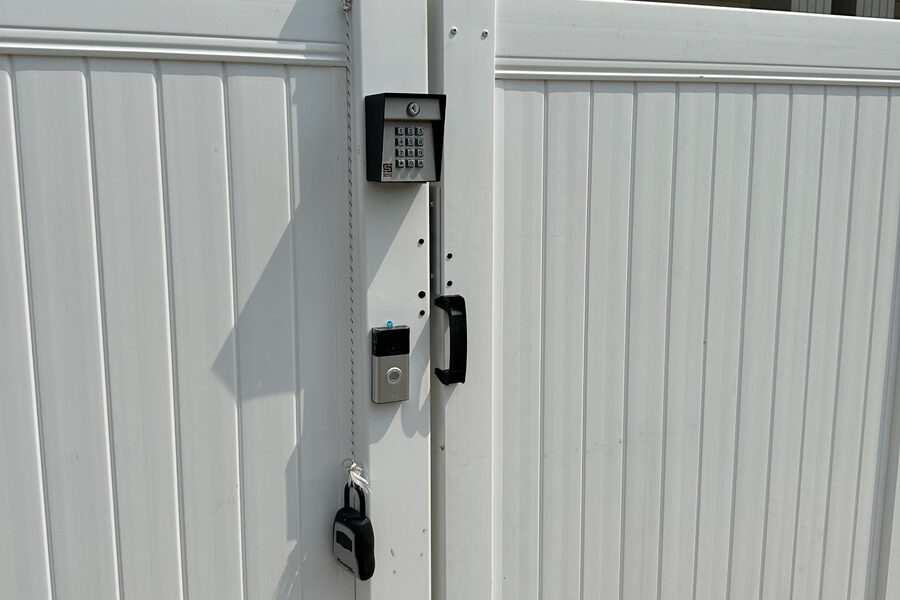
Vinyl Fence
Low-maintenance, no painting or staining required. Holds up well through Michigan winters. Installed cost $24 to $38 per linear foot.
Explore Vinyl Fence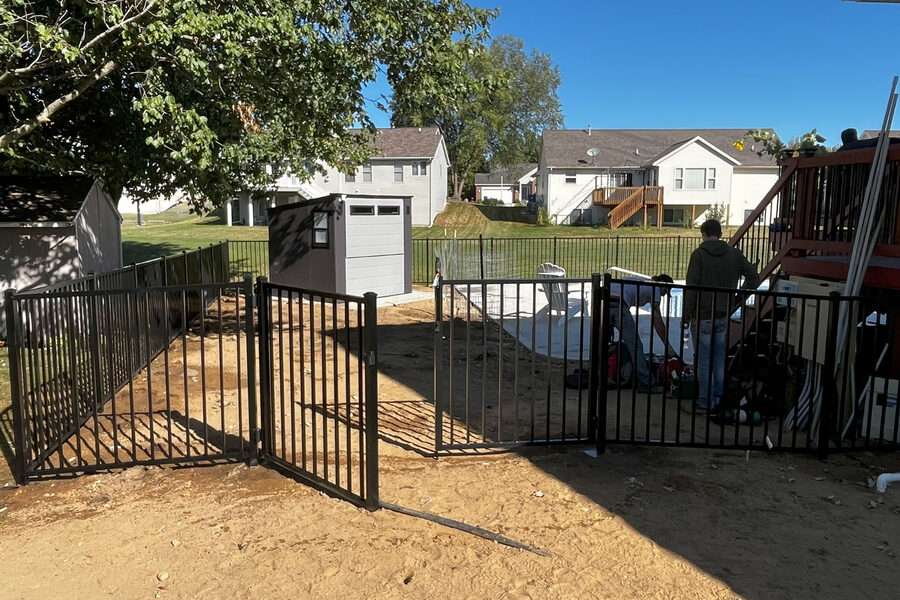
Aluminum Fence
Rust-free and low maintenance. Preferred for pool enclosures, front yards, and decorative applications. Installed cost $28 to $42 per linear foot.
Explore Aluminum Fence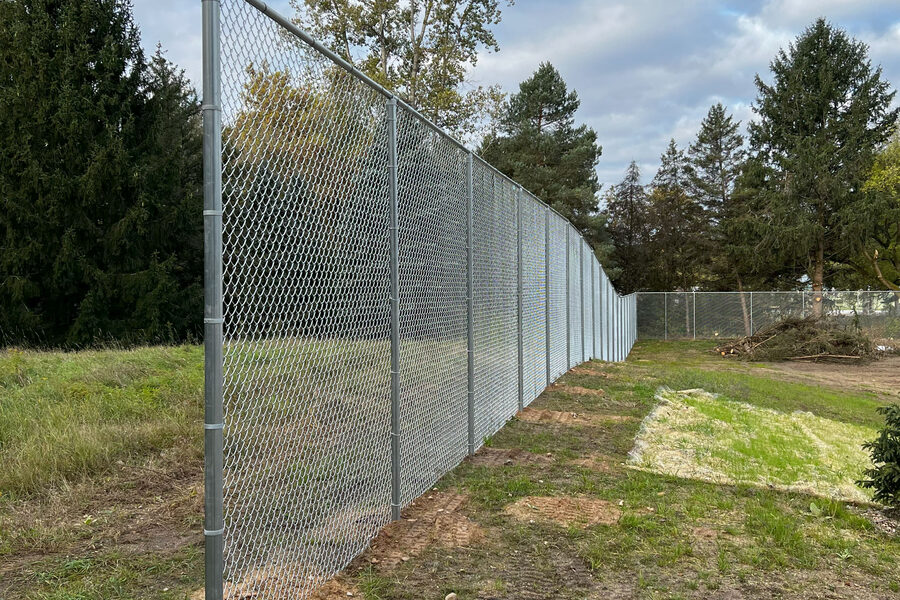
Chain Link Fence
The most budget-friendly option for large perimeters and utility areas. Does not provide visual privacy. Installed cost $8 to $18 per linear foot.
Explore Chain Link FenceFence Installation Questions
How long does fence installation take in Grand Rapids?
Most residential fence installations take one to three days depending on linear footage, material, and site conditions. A standard 150-foot privacy fence typically takes one day for post setting and one to two days for panel installation. Post concrete must cure 24 to 48 hours before panels are attached, so some projects span two separate visits.
Do I need a permit to install a fence in Grand Rapids?
Grand Rapids requires a zoning permit for most fence installations. Height limits typically allow up to 4 feet in front yards and 6 feet in side and rear yards. Requirements vary by neighborhood and zoning district. Check with the City of Grand Rapids Building Safety Department before work begins. Many surrounding townships have their own rules.
How deep do fence posts need to be in Michigan?
Posts in the Grand Rapids area should be set at least 42 to 48 inches below grade. Michigan's frost line is approximately 42 inches in Kent County. Posts set shallower than the frost line are vulnerable to frost heave, which pushes posts upward during winter freeze-thaw cycles and causes lean, rail separation, and premature failure.
What is the best time of year to install a fence in West Michigan?
Late spring through early fall is the most practical installation window. Frozen ground prevents post-hole digging in winter, and early spring soil is often saturated. Contractors are typically busiest May through August, so scheduling in April or September can mean better availability and faster project timelines.
Should I call 811 before fence installation?
Yes. Michigan law requires calling 811 before any digging. MISS DIG will mark underground utility locations including gas, electric, water, and cable within three business days. Most professional fence contractors handle the 811 call as part of their pre-installation process, but confirm this with whoever you hire.
How do I know where my property line is before installing a fence?
Your property survey is the most accurate source. Survey stakes may still be visible on newer properties. If you do not have a current survey, contact your county assessor for recorded plat maps or hire a licensed surveyor. Installing even a few inches onto a neighbor's property can trigger disputes and removal costs.
Ready to Get Installation Quotes?
Tell us about your fence project and we will connect you with available local installers serving Kent County and West Michigan.