Fence Repair in Grand Rapids & West Michigan
Leaning posts, rotted panels, sagging gates, and storm damage are common in West Michigan. Understand your repair options and request quotes from available local contractors.
What Fence Repair Covers
Fence repair addresses isolated damage without requiring a full replacement. Common repair work includes resetting or replacing leaning or rotted posts, replacing damaged boards or panels, rehinging sagging gates, replacing worn hardware, and reinforcing sections that have shifted due to frost heave.
West Michigan's freeze-thaw climate accelerates fence wear more than warmer regions. Posts set without deep concrete footings, yards with poor drainage, and wood that goes several seasons without sealing all contribute to premature failure. Many fence repairs in Grand Rapids are preventable with early attention and basic maintenance.
Grand Rapids Fence helps homeowners understand repair options and connect with local contractors who handle both residential and commercial fence repair projects across Kent County and surrounding West Michigan communities.
Common Signs Your Fence Needs Repair
Leaning or Tilted Posts
Posts that lean inward or outward indicate frost heave, footing failure, or post rot below the soil line. A leaning post puts stress on adjacent rails and panels and will worsen over time without intervention.
Rotted or Cracked Boards
Individual boards that show soft spots, cracks, or visible rot can usually be replaced without disturbing adjacent panels. Board replacement is among the most cost-effective fence repairs available.
Sagging or Binding Gate
Gates that drag on the ground, fail to latch, or bind when opening are often repairable by adjusting hinges, replacing hardware, or resetting the gate posts. A sagging gate is one of the most common fence repair calls in West Michigan.
Storm or Impact Damage
Fallen trees, high winds, and vehicle impacts can damage sections of fence while leaving the rest structurally sound. Isolated section repair is typically far less expensive than full replacement.
Rail Separation
Horizontal rails that have pulled away from posts are a common result of frost heave or original installation with undersized fasteners. Re-securing rails is a straightforward repair if the posts themselves are sound.
Vinyl Cracking or Panel Separation
Vinyl fence panels that have cracked in cold weather or separated at the channel connection points can often be replaced section by section. Color matching is easier on newer fences; older vinyl may have faded and be difficult to match exactly.
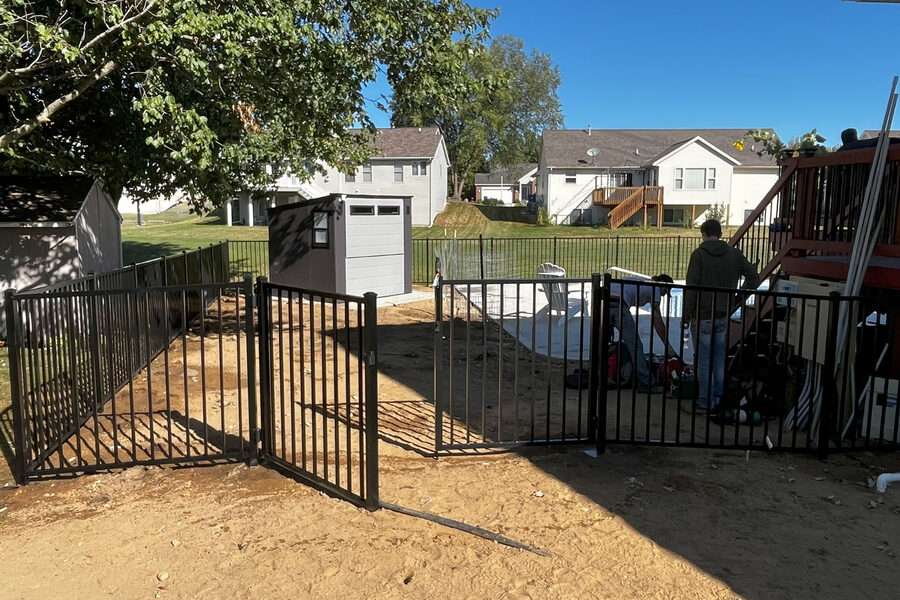
Aluminum fence after section repair and hardware replacement at a West Michigan residential property.
Repair vs. Full Replacement
The right answer depends on the extent of the damage, the age of the fence, and the cost comparison between targeted repair and full replacement.
| Situation | Lean Toward Repair | Lean Toward Replacement |
|---|---|---|
| Fence Age | Under 10 years | 15+ years, especially wood |
| Damage Extent | Isolated: one or two posts, a few boards | Multiple sections or widespread rot |
| Post Condition | Posts are plumb and structurally sound | Posts rotting along multiple spans |
| Cost Comparison | Repair costs less than 40% of replacement | Repair costs more than 50% of replacement |
| Material Matching | Replacement material available in matching color | Faded vinyl or discontinued style, no match available |
- Lean Toward Repair
- Under 10 years
- Lean Toward Replacement
- 15+ years, especially wood
- Lean Toward Repair
- Isolated: one or two posts, a few boards
- Lean Toward Replacement
- Multiple sections or widespread rot
- Lean Toward Repair
- Posts are plumb and structurally sound
- Lean Toward Replacement
- Posts rotting along multiple spans
- Lean Toward Repair
- Repair costs less than 40% of replacement
- Lean Toward Replacement
- Repair costs more than 50% of replacement
- Lean Toward Repair
- Replacement material available in matching color
- Lean Toward Replacement
- Faded vinyl or discontinued style, no match available
Common Fence Repair Types in West Michigan
Most fence repair requests fall into a small number of recurring categories. Understanding the type helps you communicate clearly with contractors and evaluate quotes.
Post Reset or Replacement
Leaning or heaved posts are either reset in new concrete or replaced entirely if the post has rotted at the ground line. New concrete footings are poured and must cure before rails and panels are reattached.
Board and Panel Replacement
Individual rotted or broken boards are removed and replaced with matching material. For wood, cedar boards can be stained to blend. Vinyl panel sections can usually be replaced if the matching style is still manufactured.
Gate Rehinging and Hardware
Sagging gates are often fixed by replacing worn hinges, adjusting hinge positions, or resetting the gate post. Latch and keeper replacement is a low-cost fix that restores reliable gate closure without full gate replacement.
Rail Repair and Reattachment
Horizontal rails that have separated from posts are reattached with structural screws or carriage bolts. Rotted rails are replaced in kind. Rail repairs are typically priced by the linear foot or per-span depending on the contractor.
Section Replacement After Storm Damage
When a tree or high wind destroys a section of fence, the affected span is removed and rebuilt while the rest of the fence remains intact. For insurance claims, document all damage before any work begins.
Chain Link Patching and Tension Repair
Damaged chain link mesh can be patched or replaced in sections. Fence fabric that has gone slack over time can be re-tensioned with a come-along tool. Top rail and post repairs are straightforward for most contractors.
What Fence Repair Costs in Grand Rapids
Repair pricing varies by material, damage type, and contractor. The ranges below reflect common residential repair projects in Kent County.
| Repair Type | Typical Range | Notes |
|---|---|---|
| Single post reset | $150 to $350 | Includes concrete and labor; more for deep rocky soil |
| Post replacement (rotted) | $200 to $450 per post | Includes concrete footer removal and new footing |
| Board replacement (wood) | $8 to $20 per board | Varies by cedar vs. pine and board width |
| Gate rehinging and hardware | $100 to $350 | More if gate post needs resetting |
| Section replacement (6 to 8 feet) | $300 to $800 | Includes post and panels; material dependent |
| Service call / minimum charge | $100 to $200 | Many contractors have a minimum repair visit charge |
- Typical Range
- $150 to $350
- Notes
- Includes concrete and labor; more for rocky soil
- Typical Range
- $200 to $450 per post
- Notes
- Includes concrete footer removal and new footing
- Typical Range
- $8 to $20 per board
- Notes
- Varies by cedar vs. pine and board width
- Typical Range
- $100 to $350
- Notes
- More if gate post needs resetting
- Typical Range
- $300 to $800
- Notes
- Includes post and panels; material dependent
Why West Michigan Fences Fail
Climate, soil, and installation quality are the three primary drivers of premature fence failure in the Grand Rapids area.
Frost Heave and Post Footing Failure
The most common cause of fence failure in West Michigan is posts set above or near the frost line without adequate concrete footings. As soil freezes and expands, it pushes posts upward. Each spring thaw lowers them slightly but not fully, creating cumulative lean. Posts must be set below 42 inches in Kent County to avoid heave. Many older fences were not built to this standard.
Wood Rot at the Soil Line
Rot in fence posts occurs fastest at the zone where wood transitions from soil to air. This area stays moist longer than the sections above or below it. Even pressure-treated posts eventually fail here, especially in yards with poor drainage. Look for soft spots or discoloration just at or below grade level as an early warning sign.
Sandy Soil and Loose Footings
Sandy soils common in parts of Kent and Ottawa counties provide less grip on concrete footings than clay. Posts in sandy soil require larger-diameter footings and deeper setting. If your fence was installed with small-diameter footings in sandy ground, it is more likely to heave or lean over time and may need post repair earlier than fences in denser soils.
Wind Load on Privacy Panels
West Michigan sees significant sustained wind speeds, especially during winter storms off Lake Michigan. A 6-foot solid privacy fence creates substantial wind resistance. Fences with posts spaced wider than 8 feet or with undersized footings are at increased risk of failure during high-wind events. Wind damage to fence sections is sometimes covered by homeowners insurance.
Moisture and Improper Staining
Wood fences that were never sealed or that lost their protective coating absorb moisture through Michigan's wet springs and freeze-thaw winters. Swelling and contraction over multiple seasons cracks boards and loosens fasteners. Re-staining or sealing a neglected wood fence before boards become structurally compromised is far less expensive than board replacement.
The Fence Repair Process
Understanding what to expect makes it easier to get accurate quotes and evaluate contractor proposals.
Document the Damage
Before calling contractors, photograph all damage clearly. If a storm or other covered event caused the damage, documentation supports an insurance claim. Note which posts are affected, which rails or boards are compromised, and whether gates are involved.
Get Two or Three Repair Quotes
Request quotes from local fence contractors. Ask each one whether they recommend repair or replacement, why, and what warranty they offer on repair work. Some contractors specialize in new installation and are less interested in small repairs; others actively take on repair work.
Assess Post Condition Before Committing
A good contractor will probe each post to check for ground-line rot before pricing the job. Ask whether the quote covers post replacement if one fails during the repair. Agreeing on this scope in advance prevents surprise charges during the work.
Post Setting and Curing
If posts are being reset or replaced, new concrete must be poured and allowed to cure for 24 to 48 hours before rails and panels are reattached. Contractors who skip curing time are setting you up for a repeat repair.
Panel and Hardware Repair
Boards, rails, panels, and gate hardware are replaced or reattached after posts are set and cured. Matching material to existing fence color and style is reviewed at this stage.
Final Inspection
Walk the repaired sections with your contractor. Check that posts are plumb, rails are secure, boards are flush, and gates open, close, and latch correctly. Confirm cleanup of debris and old materials before final payment.
Fence Maintenance & Repair Guides
Use these guides to compare upkeep requirements, identify common problems, and understand when focused repair may be practical.
What Type of Fence Has the Least Maintenance?
Compare routine cleaning, finish care, corrosion checks, hardware upkeep, and repair needs across common fence materials.
Read the GuideHow Much Maintenance Does Vinyl Fencing Need?
Learn what low-maintenance vinyl still needs, including cleaning, inspections, gate hardware checks, and attention after storms.
Read the GuideWhat Are Common Vinyl Fence Problems?
Review leaning posts, cracked components, loose rails, staining, gate trouble, and installation-related movement.
Read the GuideCan an Old Wood Fence Be Restored?
Distinguish cosmetic aging from structural deterioration and compare restoration with targeted or full replacement.
Read the GuideHow Do You Fix the Rotten Bottom of a Wood Fence?
Identify whether boards, rails, or posts are affected and learn which moisture and drainage problems may need attention.
Read the GuideFence Repair Questions
How do I know if my fence needs repair or full replacement?
Repair is generally the right choice when damage is isolated: a single leaning post, a few rotted boards, or a gate that needs rehinging. Full replacement makes more sense when posts are failing along multiple sections, panels are extensively rotted or cracked, the fence is more than 15 to 20 years old, or repair costs exceed roughly 50 percent of a full replacement estimate.
Can a leaning wood fence be repaired without replacing the whole fence?
Yes, in many cases. If the post is leaning due to frost heave or a damaged footing but the post itself is structurally sound, a contractor can reset the post with a new concrete footing. If the post has rotted at the ground line, it needs to be replaced. Post replacement on an otherwise sound fence is a straightforward repair most contractors can complete in a few hours per post.
How much does fence repair cost in Grand Rapids?
Minor repairs typically range from $150 to $500 for single-post or panel work. Gate rehinging and hardware replacement runs $100 to $350. More extensive repairs involving multiple posts or significant panel replacement can run $500 to $1,500 or more depending on linear footage and material.
Does homeowners insurance cover fence damage in Michigan?
Michigan homeowners policies typically cover fence damage caused by windstorm, fire, falling trees, or vehicle impact. Gradual deterioration and rot are generally not covered. If a storm damages your fence, document all damage with photos before any repairs and contact your insurer to understand your deductible and coverage limits before committing to contractor work.
What causes fence posts to rot in Michigan?
Post rot is driven by moisture trapped at or just below the soil line, combined with freeze-thaw cycling. Even pressure-treated posts will rot eventually, especially in yards with poor drainage or low spots that hold water. Posts set without concrete footings in direct soil contact fail fastest.
How do I find a fence repair contractor in Grand Rapids?
Many full-service fence companies in Grand Rapids handle both installation and repair work. When comparing quotes, ask whether they will reset existing concrete footings or dig new ones, what warranty they provide on repair work, and whether they can assess the rest of your fence for developing issues during the same visit.
Ready to Get Repair Quotes?
Describe your fence damage and we will connect you with available local contractors who handle repair work in Kent County and West Michigan.