Materials and Comparisons
Which Fence Material Lasts the Longest?
Service life comparisons for fence materials are useful for planning but must be read carefully. Expected service life is not the same as a manufacturer warranty, and both differ from how long a specific fence at a specific property will actually last. This guide explains what cited service-life ranges mean, what determines where a fence falls within those ranges, and how installation quality and maintenance affect longevity more than material category alone.
Quick Answer
Based on cited industry sources, aluminum ornamental fence has the longest potential service life among the four major materials, with estimates of 20 to 50 years or more commonly cited for well-installed aluminum in residential applications. [1] Vinyl fence is often cited at 20 to 30 years or more for premium-grade products installed correctly. [3] Wood privacy fence with regular maintenance typically lasts 15 to 20 years in West Michigan conditions. [2] Galvanized chain link fence typically lasts 15 to 20 years before significant rust or structural degradation occurs. [1]
These ranges describe expected performance, not guarantees. Installation quality and ongoing maintenance determine where a specific fence falls within those ranges. A well-installed, well-maintained wood fence can outlast a poorly installed vinyl fence. Material category is one input in service-life expectations, not the whole picture.
What "Lasting the Longest" Really Means
When homeowners ask which fence lasts the longest, they are typically asking one or more of the following distinct questions, which have different answers:
Structural integrity. How long before the fence leans, shifts, or fails structurally? Post depth, soil conditions, frost heave, and footing quality drive this dimension of longevity for every material. A fence with compromised posts has failed structurally regardless of the panel material.
Appearance. How long before the fence looks worn, faded, or visually degraded? Wood changes color and develops weathering if not maintained. Vinyl can yellow or chalk over time from UV exposure. Aluminum powder-coat fades gradually. These are separate from structural failure.
Maintenance burden. How much work does the fence require to remain in good condition? Wood requires the most ongoing maintenance. Vinyl and aluminum require the least. Chain link falls in between.
Repairability. When components fail, how easily and affordably can they be repaired without replacing the entire fence? Wood is the easiest to repair with widely available materials. Vinyl becomes harder to repair as it ages because profiles may be discontinued.
These dimensions do not always align. A material that "lasts longest" in one dimension may not lead in another. Understanding which dimension matters most for your situation leads to a better material decision than a single ranked list.
Lifespan Comparison Table
Grand Rapids Fence comparison based on cited sources. Service-life ranges are industry estimates for properly installed, maintained fences. Actual performance depends on installation quality, maintenance schedule, and site-specific conditions. All ranges attributed. Data reviewed August 2026.
| Material | Cited Service-Life Range | Maintenance Needed | Common Failure Points | Repairability | Michigan Weather Note | Typical Warranty |
|---|---|---|---|---|---|---|
| Wood | 15 to 20 years with maintenance [2] | Staining or sealing every 3 to 5 years [2] | Post rot at ground line; rail decay; board splitting | High; standard lumber available; individual replacement | Frost heave risk; moisture accelerates decay without maintenance [5] | Typically none or limited contractor warranty |
| Vinyl | 20 to 30 years or more for premium-grade [3] | Periodic washing; no staining or sealing [3] | Post heave if too shallow; cracking from cold-temp impact; UV yellowing | Moderate; profile matching harder on older fences [1] | Frost heave risk; more brittle in cold; premium grade performs better than economy [3] | Limited lifetime or 30-year limited; excludes impact damage and improper installation [3] |
| Aluminum | 20 to 50 years or more [1] | Very low; touch-up powder coat if damaged | Denting from impact; post heave if too shallow; powder-coat chips | Moderate; panel sections replaceable; manufacturer matching needed | Frost heave risk; panels unaffected by cold; no rust or rot | Varies by manufacturer; often limited lifetime on panels |
| Chain Link | 15 to 20 years (galvanized) [1] | Low; inspect for rust at cut ends and fittings annually | Rust at cut wire ends; post corrosion at base; fitting failure | High; mesh sections and hardware are standardized and interchangeable [1] | Frost heave risk; open mesh not affected by cold or snow load | Varies; typically limited on galvanized coating |
Wood Fence Lifespan
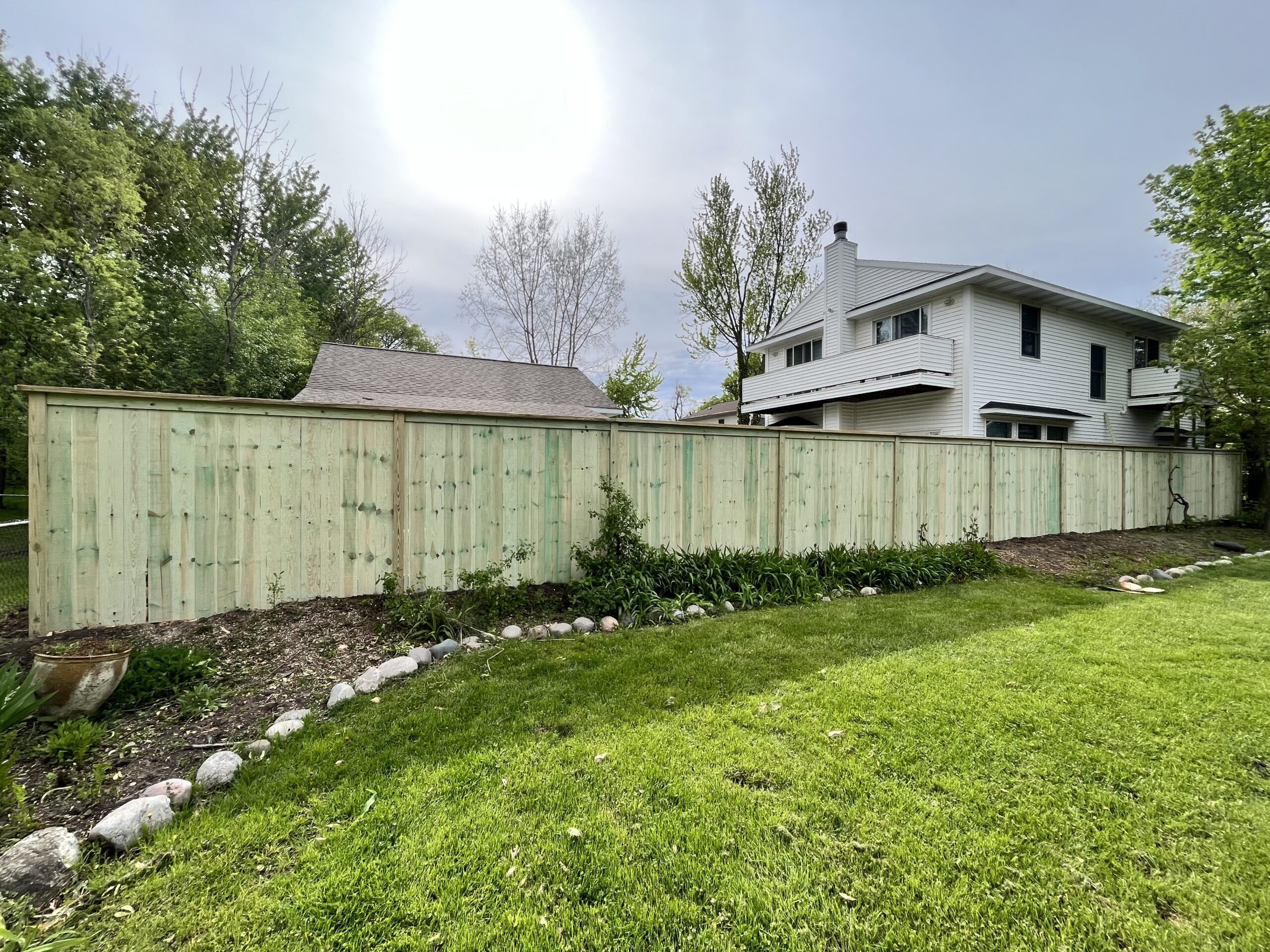
Wood privacy fence in West Michigan typically lasts 15 to 20 years when maintained with regular staining or sealing every 3 to 5 years. [2] Cedar has natural oils that provide inherent decay resistance, giving it a longevity advantage over untreated pine in ground-contact and wet-climate applications. The Western Red Cedar Lumber Association notes that cedar's natural preservative oils make it resistant to decay and insects, though periodic finishing is still required to maintain surface appearance and moisture resistance in Michigan's climate.
Post rot at the ground line is the most common first failure point for wood fence. Wood posts in sustained contact with wet soil experience fungal decay from the outside in, beginning at the ground line where moisture content is highest. [4] The USDA Forest Products Laboratory's research on wood decay documents that fungi responsible for wood rot require moisture, oxygen, and temperatures above freezing to be active. Michigan's combination of high annual precipitation and seasonal temperature range creates conditions where untreated wood at the ground line is consistently at risk during the non-frozen months.
Cedar and pressure-treated wood are not immune to decay; they are more resistant to it. Consistent maintenance that keeps moisture from penetrating the wood surface extends service life significantly beyond what unmaintained fence achieves. Skipping maintenance cycles shortens the time to post and rail failure noticeably in Michigan's climate. Well-maintained cedar fence can reach 20 years or more in West Michigan. Unmaintained fence may show structural failure in 8 to 12 years.
Vinyl Fence Lifespan
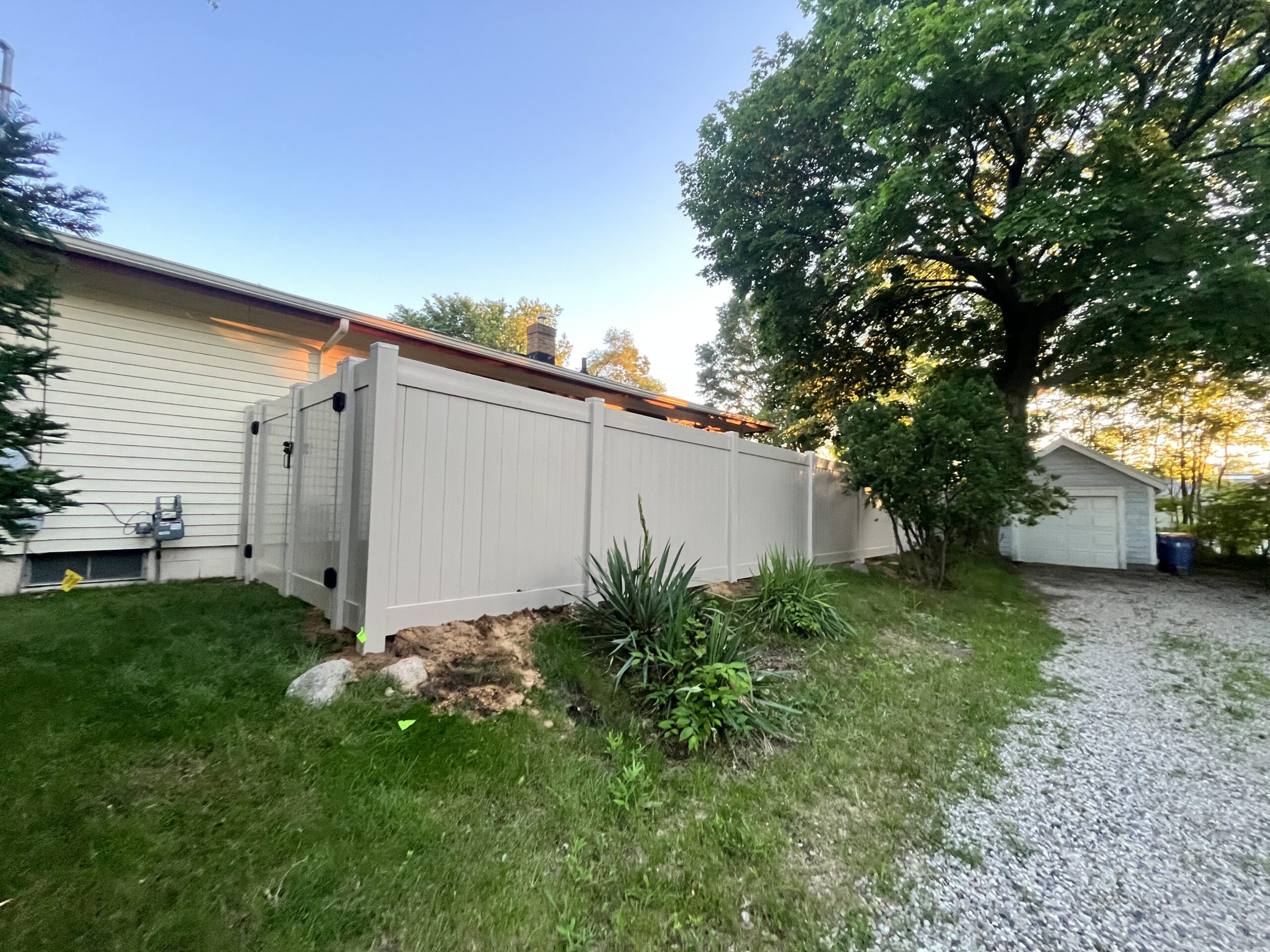
Vinyl fence is often marketed as lasting 20 to 30 years or more. [3] This range reflects real-world performance on well-installed fences made from premium-grade material in typical conditions. Whether a specific vinyl fence installed in West Michigan reaches or exceeds that range depends on material grade, installation quality, and how Michigan-specific weather conditions affect it over time.
Material grade is a meaningful variable. Economy-grade vinyl uses thinner profile walls and less UV stabilizer than premium-grade products. Thinner walls crack more easily under cold-temperature impact and become more brittle faster. Premium-grade vinyl with thicker profiles and more UV inhibitor resists both mechanical damage and sun-driven degradation more effectively. [3] The marketed lifespan of 20 to 30 years or more applies more accurately to premium-grade material than to economy-grade products.
A manufacturer warranty is not a guarantee of service life. CertainTeed's Bufftech line, as one example among several manufacturers, offers a limited lifetime warranty on their residential vinyl products. [3] That warranty covers manufacturing defects under specified conditions. It does not cover impact damage, improper installation, normal weathering, or damage from acts of nature. A fence can develop problems not covered by the warranty before its expected service life ends, or it can outlast the warranty period with no covered issues at all. Warranty length is not a proxy for service life.
For more detail on vinyl fence lifespan specifically, including warranty terms, UV behavior, and repair considerations, see the How Long Does a Vinyl Fence Last guide.
Aluminum Fence Lifespan
Aluminum ornamental fence has the longest potential service life of the four major materials, with industry sources citing 20 to 50 years or more for well-installed aluminum fence. [1] This longevity advantage comes primarily from aluminum's resistance to corrosion. Aluminum does not rust, and unlike steel, it does not require an intact surface coating to resist corrosion: aluminum forms a stable oxide layer that protects the base metal from further degradation even where the surface is scratched.
The main failure modes for aluminum fence are not the metal itself but components adjacent to it: the powder-coat finish degrades over time from UV exposure, chips from impact, and scratches from contact. Chips in the powder coat expose the aluminum to surface oxidation, which is primarily an appearance concern rather than a structural one, but should be touched up to maintain finish integrity. Post footings and the concrete around them are subject to the same frost-heave forces as any other fence material.
Because aluminum is an open ornamental style, it does not accumulate snow load, has minimal wind resistance, and is not subject to the moisture-trapping conditions that accelerate wood decay. These characteristics help aluminum last longer structurally than closed-panel materials under similar site conditions. The limitation is that aluminum does not provide privacy, which restricts its use to applications where open sightlines are acceptable.
Chain Link Fence Lifespan
Galvanized chain link fence typically lasts 15 to 20 years before rust or structural degradation reaches a point requiring replacement. [1] Vinyl-coated chain link, which adds a polymer coating over the galvanized mesh, extends this range by providing additional protection at cut wire ends and fittings where the galvanized coating is thinnest.
Rust at cut wire ends is the most common early degradation sign for chain link. When chain link mesh is cut at installation, the cut ends expose bare steel at the wire tips. In Michigan's wet climate, these exposed points are the first places rust appears. Regular inspection and early treatment with rust-inhibiting primer can slow this progression. Where rust has progressed to the point of structural compromise, individual mesh sections can be replaced relatively inexpensively.
Posts are the structural backbone of chain link fence and must be set below the frost line in Michigan. Steel posts in concrete footings are subject to the same frost-heave risk as wood or vinyl fence posts. Chain link's open mesh means no wind or snow load on the panels, which reduces lateral force on posts compared to solid privacy fence. Terminal posts (end posts, corner posts, and gate posts) carry more load than line posts and require deeper, wider footings.
How Installation Quality Affects Lifespan
Installation quality affects fence service life more than most homeowners realize when comparing material options. A premium-grade vinyl fence installed with posts set at 24 inches will fail structurally from frost heave within a few Michigan winters. A standard-grade wood fence installed with posts below the frost line in proper concrete footings will outlast it.
Key installation factors that affect service life across all materials:
- Post depth. Must be below the frost line (approximately 42 inches in Kent County) to prevent frost heave. [5] This is the single most important installation variable for Michigan fence longevity.
- Concrete footing quality. Proper concrete coverage around the post and adequate cure time before panel loading affect long-term post stability.
- Gate post specifications. Gate posts carry additional load and should be set deeper in wider footings than line posts.
- Vinyl expansion gaps. Vinyl panels installed without adequate expansion room stress connections as the material expands and contracts seasonally, shortening the life of panel joints. [3]
- Post plumb. Posts set out of plumb from the start create uneven loads on rails and panels that increase over time.
When comparing contractor quotes, asking about post depth specification, concrete footing practice, and gate post details is a reasonable due diligence step. The answers reveal whether the installation will support the material's expected service life.
Posts and Footings
The post and footing system is the structural foundation of any fence. When posts fail, the fence fails structurally regardless of how good the panels are. In Michigan, frost heave is the dominant post-failure mechanism for improperly installed fences. [5]
For wood fence, the post is also the most vulnerable component to decay. Wood posts set in concrete that traps moisture at the ground line are subject to sustained wet contact at the most vulnerable point of the wood structure. Post failure from rot typically precedes panel failure by several years in a wood fence that has not been regularly maintained.
For vinyl fence, the post is typically made from the same vinyl material as the panels. Vinyl posts do not rot, but they are subject to the same frost-heave forces as other posts if set above the frost line. They also transfer wind load from panels to the footing system. Manufacturer installation manuals specify post sizes and footing dimensions for each fence height; these specifications must be followed for the warranty to remain valid. [3]
For aluminum and chain link, posts are typically steel. Steel posts are subject to rust at the base if the protective coating is damaged or if the footing concentrates moisture at the post-concrete interface. Proper concrete placement and drainage reduce this risk.
Maintenance and Service Life
The gap between the upper and lower ends of any material's service-life range is primarily explained by maintenance. A wood fence at the top of its 15-to-20-year range has been consistently stained or sealed every 3 to 5 years and inspected annually for developing issues. A wood fence that fails structurally at year 10 was likely never maintained after installation, or had posts that were not properly set from the start.
Wood requires the highest maintenance investment of the four materials. Regular staining or sealing protects against moisture penetration, which drives the decay process that ultimately shortens wood fence service life. [2] Skipping a maintenance cycle does not produce an immediate visible failure, but each skipped cycle leaves the wood more vulnerable to the next one, and the cumulative effect shortens the fence's life.
Vinyl and aluminum require significantly less maintenance. For vinyl, periodic washing and an annual post-plumb inspection are the primary tasks. For aluminum, the main maintenance task is inspecting and touching up the powder-coat finish at any chipped points. Neither material requires periodic refinishing the way wood does. [3]
Chain link requires less maintenance than wood but more attention than aluminum. Annual inspection of cut wire ends, fittings, and tension wire for rust is the primary task. Gate hardware, including hinges, latches, and closure mechanisms, benefits from annual lubrication and inspection for wear.
Moisture and Corrosion
Moisture is the primary environmental factor that shortens fence service life in Michigan. It affects each material differently.
For wood, moisture drives the decay process by creating conditions for fungal organisms that break down wood cell walls. The USDA Forest Products Laboratory documents that wood decay fungi require moisture content above the fiber saturation point, which typically corresponds to wood in sustained outdoor contact in a wet climate without surface protection. [4] Ground-contact applications, such as fence posts, are the highest-risk locations because moisture exposure is sustained and difficult to interrupt through surface treatments.
For vinyl, moisture does not cause rot or corrosion of the panel material itself. Moisture at the post base can saturate soil around the footing and increase frost-heave risk during freeze cycles. The primary moisture-related concern for vinyl is not the panel but the soil conditions around the post footing. [3]
For aluminum, moisture does not cause rust. Aluminum oxide, which forms naturally on aluminum surfaces, is stable and protective. Moisture that contacts aluminum fence does not cause progressive structural degradation the way it does with steel components or wood.
For chain link, moisture causes rust at points where the galvanized coating is thin or absent, particularly cut wire ends and fittings. This is a progressive corrosion concern rather than a catastrophic failure mode; early rust can be addressed before it compromises the mesh structurally.
Impact and Storm Damage
Storm damage, from wind, falling branches, ice, or other events, is an event-driven failure mode rather than a progressive degradation mode. Any fence material can be damaged by a significant storm event. The relevant question for longevity is how repairable the damage is.
Wood is the most repairable after storm impact. Individual boards, rails, and even posts can be replaced without disturbing the rest of the fence. Lumber is widely available, can be cut to size, and matches the existing material without needing a specific manufacturer's product.
Vinyl, when cold, is more brittle than wood and more prone to cracking or shattering under impact from falling branches. A vinyl panel that cracks from an impact event must be replaced rather than repaired. If the profile and color match current production, this is a manageable repair. If the profile has been discontinued, finding a matching replacement becomes more difficult. [1]
Aluminum dents under sufficient impact but does not shatter the way cold vinyl can. Dented aluminum panel sections are typically replaced rather than straightened. Matching panel sections from the original manufacturer is the most reliable approach.
Chain link deforms under impact rather than breaking. Mesh sections can be repaired by cutting out the damaged portion and weaving in new mesh, which is a relatively straightforward repair using standardized materials. [1]
Repair vs Replacement
Service life expectations and the repair-versus-replacement decision are connected. A fence that is easy to repair extends its effective service life beyond what a fence that must be fully replaced at first significant damage can achieve.
Wood fence supports the longest repair history because its materials are standard commodities. A 15-year-old wood fence with a rotted post can have just that post replaced. A 15-year-old vinyl fence with a post that has heaved may require tracking down matching panel sections from a product line that may have changed significantly.
The point at which repair stops making economic sense and full replacement becomes the better choice is different for each material and each fence. See the Fence Repair vs Replacement guide for a structured framework covering when repair is the right call and when it is not.
Long-Term Value Considerations
Service life is one input in the long-term value calculation, but it is not the only one. A material with a longer expected service life does not automatically represent better value if its installation cost is significantly higher or if its performance depends on installation quality that is difficult to verify.
Consider these factors alongside service-life ranges when making a material decision:
Total cost of ownership. Installation cost plus maintenance cost over the fence's service life. A wood fence at $20 per linear foot installed plus $500 in maintenance every 4 years over 20 years has a different total cost than a vinyl fence at $30 per linear foot installed with minimal maintenance over 25 years. The comparison depends on your specific costs and timeline.
How long you plan to stay. If you are planning to sell the home within 5 years, a material's 25-year expected service life is less relevant than its curb appeal and the upfront cost. If you are planning to stay 20 or more years, service life and maintenance burden matter more.
Installation quality you can verify. The benefit of a material's potential service life is only realized with quality installation. Asking contractors about post depth specification, concrete practice, and material grade is a practical way to assess whether the installation will support the expected lifespan.
Use the Fence Cost Calculator to compare upfront cost ranges by material. For a side-by-side comparison of wood and vinyl on lifespan, maintenance, and Michigan performance, see the Wood vs Vinyl Fence guide. To review all material options for West Michigan conditions, see the Best Fence Material for Michigan Weather guide. To connect with local contractors for quotes, use the Find a Contractor page.
Frequently Asked Questions
What type of fence lasts the longest?
Aluminum ornamental fence is often cited as having the longest potential service life, with estimates of 20 to 50 years or more for well-installed products. [1] This is because aluminum does not rust, rot, or require periodic finishing the way wood does. However, in all cases installation quality and maintenance affect actual service life more than material category alone. A well-maintained wood fence can outlast a poorly installed aluminum fence.
How long does a wood fence last in Michigan?
Wood privacy fence in West Michigan typically lasts 15 to 20 years with regular maintenance, including staining or sealing every 3 to 5 years. [2] Cedar, with its natural decay resistance, tends to outperform untreated pine in Michigan's wet climate. [4] Unmaintained wood fence, or fence with posts set above the frost line, may fail structurally in 8 to 12 years. Posts are typically the first failure point.
How long does vinyl fence last?
Vinyl fence is often marketed as lasting 20 to 30 years or more. [3] This range applies to premium-grade products installed with posts below Michigan's frost line (approximately 42 inches in Kent County). Economy-grade vinyl and vinyl fence with improperly set posts underperform this range significantly. Manufacturer warranties cover defects, not service life; the warranty period is not a prediction of how long the fence will last.
Is vinyl fence more durable than wood?
Vinyl typically lasts longer than wood with less ongoing maintenance. Wood fence in West Michigan with regular maintenance typically lasts 15 to 20 years. [2] Premium vinyl installed correctly is often marketed as lasting 20 to 30 years or more without the same maintenance burden. [3] However, the comparison depends on both installation quality and maintenance practices for the specific fence. A well-maintained wood fence can outlast a poorly installed vinyl fence.
What is the most low-maintenance fence for Michigan?
Aluminum and vinyl require the least ongoing maintenance in Michigan. Aluminum needs only periodic inspection and finish touch-up when the powder coat is damaged. Vinyl requires periodic washing and annual inspection but no staining or sealing. [3] Both avoid the 3-to-5-year refinishing cycle that wood fence requires. Chain link falls in between: lower maintenance than wood but requires annual rust inspection. Wood requires the most consistent maintenance to reach its expected service life. [2]
Sources
Sources were selected for relevance, authority, and practical homeowner use. Requirements and recommendations may change, so confirm current local rules before beginning a project.
- American Fence Association. "Consumer Resources." Trade Association. https://www.americanfenceassociation.com/. Accessed August 2026.
- Western Red Cedar Lumber Association. "Caring for Your Cedar Products." Trade Association. https://www.wrcla.org/. Accessed August 2026.
- CertainTeed. "Bufftech Vinyl Fence — Product Information." Manufacturer Documentation. https://www.certainteed.com/fence/. Accessed August 2026.
- USDA Forest Products Laboratory. "Wood Handbook: Wood as an Engineering Material." Government Research. https://www.fpl.fs.usda.gov/documnts/fplgtr/fpl_gtr282.pdf. Accessed August 2026.
- Michigan State University Extension. "Michigan Building and Landscape Resources." University Extension. https://www.canr.msu.edu/. Accessed August 2026.
Related Guides
Materials and Comparisons
How Long Does a Vinyl Fence Last?
What affects vinyl fence lifespan specifically, including Michigan weather, manufacturer warranties, and when to repair or replace.
Read Guide
Materials and Comparisons
What Is the Best Fence Material for Michigan Weather?
Compare wood, vinyl, aluminum, and chain link across ten Michigan-specific criteria including freeze-thaw, moisture, wind, and maintenance.
Read Guide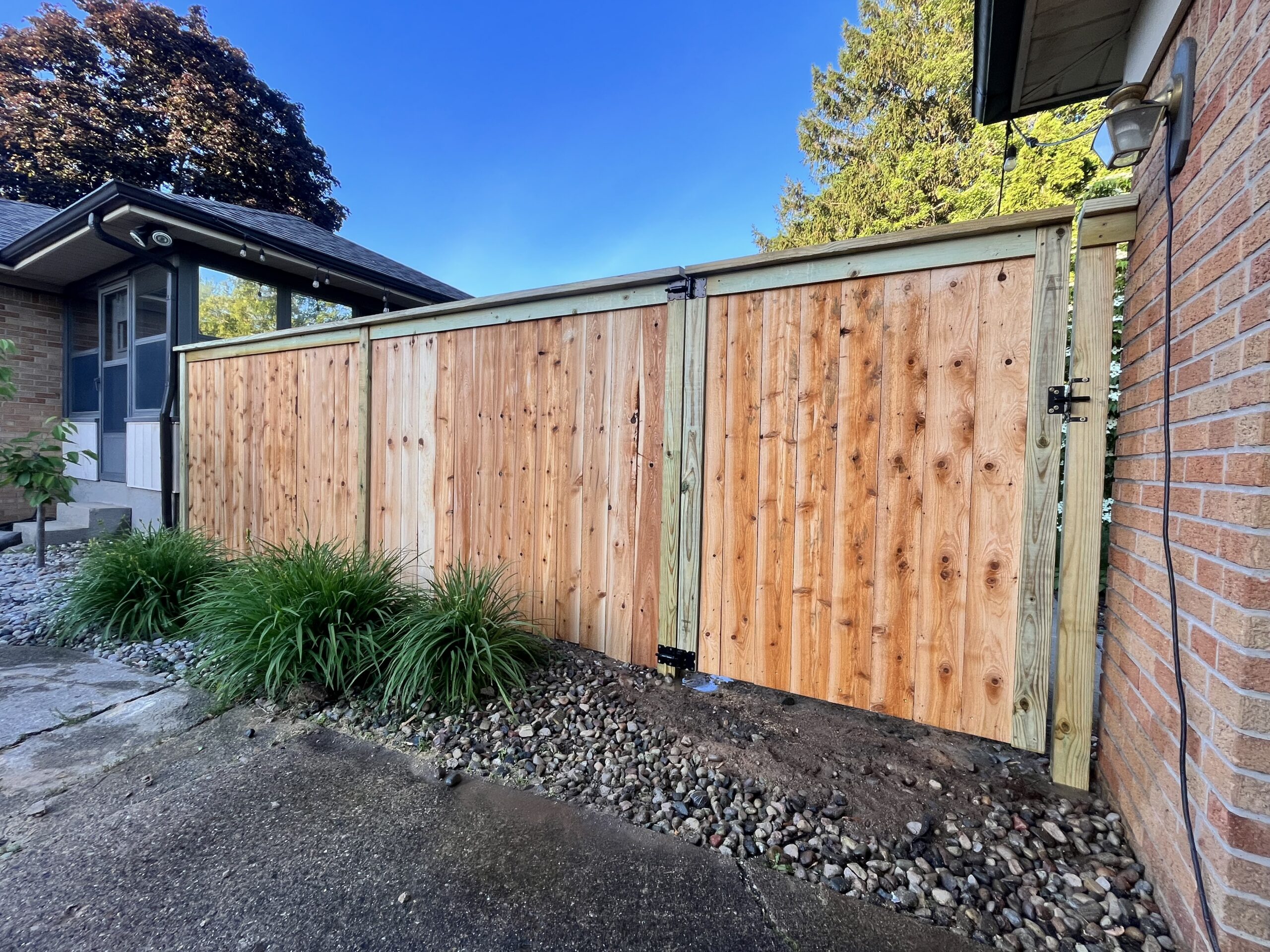
Materials and Comparisons
Wood vs Vinyl Fence for Michigan Homes
Side-by-side comparison of the two most popular residential fence materials on cost, maintenance, repairability, and durability.
Read GuideReady to Plan Your Fence Project?
Compare your options, then request quotes from available fence contractors serving Grand Rapids and West Michigan.