Fence Gates
What Are the Different Types of Fence Gates?
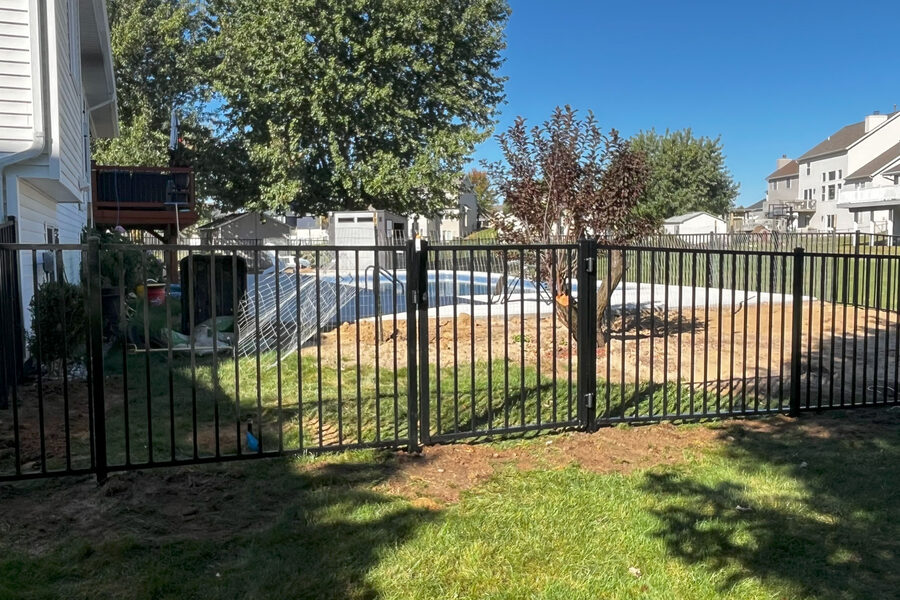
The most common fence gate types for residential properties are walk gates (single swing), double-swing gates, and driveway gates. For larger openings or sites where swing space is limited, sliding and cantilever gates are alternatives. Automated gates add an opener system to any gate type. The right type depends on the opening width, available space for gate swing, terrain, security requirements, and budget. [1]
Walk Gates
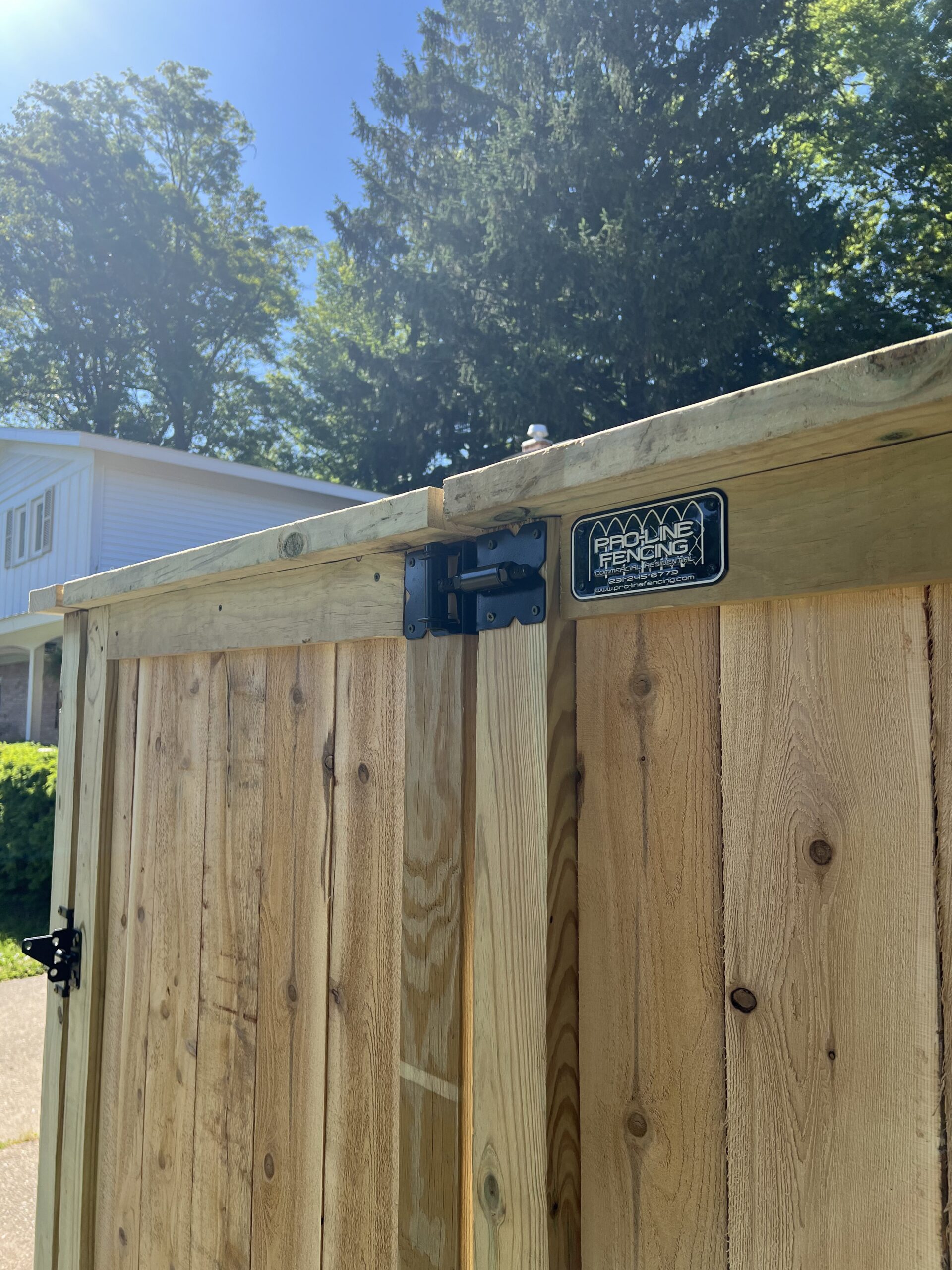
A walk gate, also called a pedestrian gate or man gate, is a single panel hung on two hinges on one gate post, with a latch post on the opposite side. It is the most common gate type installed on residential fences and is available in all standard fence materials. [1]
Walk gates are used for side-yard access, backyard entry, and any pedestrian opening that does not require vehicle clearance. Standard walk gate widths correspond to the panel widths of the fence system being used, making them straightforward to source from the same manufacturer as the fence.
Walk gates can swing inward or outward. Swing direction should be planned before posts are set so that hinges are placed on the correct side of the post for the intended swing.
Double-Swing Gates
A double-swing gate uses two panels, each hung from its own hinge post, meeting at the center of the opening. Double gates are used for openings that are too wide for a single walk gate or when matched panels are preferred for a symmetrical appearance.
Double-swing gates require more hardware than a walk gate of equivalent opening width. Each panel has its own set of hinges. A center drop rod or cane bolt holds one panel fixed against the ground or a top strike. A latch secures the second panel to the first when closed. The center closure hardware is a critical component; a double gate without proper center hardware will allow one or both panels to move independently.
Driveway Gates
Driveway gates cover a vehicle-width opening and are typically swing gates in residential applications. Because of the wider span, driveway gate panels are heavier, and the hinge and latch posts must be sized and footed accordingly. [1]
A driveway gate that swings inward requires a clear area inside the fence at least as wide as the gate panel for the gate to open fully. On narrow driveways or sites with limited inward space, an outward-swinging gate or a double-swing configuration can reduce the inward clearance requirement.
Driveway gates are often paired with automated openers because the frequency of use for a vehicle gate makes manual operation inconvenient. See the Gate Installation and Repair page for driveway gate service information.
Sliding Gates
A sliding gate moves laterally along a track parallel to the fence line rather than swinging on hinges. The gate panel rolls on a ground track using wheels or rollers and is guided at the top to keep it vertical.
Sliding gates are used when there is not adequate swing space for a swing gate, when the grade at the gate location would interfere with a swinging gate arc, or when a very wide opening makes a single-swing panel impractical. The ground track must remain clear of debris, ice, and snow for the gate to operate. In Michigan winters, keeping the track clear requires maintenance.
Sliding gates require fence space on one side of the opening equal to the gate width for the gate to retract fully. This space must be available before a sliding gate is specified for a site.
Cantilever Gates
A cantilever gate is a sliding gate without a ground track. Instead of rolling on a track at grade, the gate panel is suspended from a cantilevered support structure and balanced by a counterbalance section that extends beyond the opening on the hinge side.
Cantilever gates are used where a ground track is impractical, such as over a paved surface where a track channel would be a tripping hazard, or where snow and debris would consistently obstruct a track. The trade-off is that the counterbalance section requires open fence space beyond the opening equal to a portion of the gate width.
Cantilever gates use more complex hardware than a tracked sliding gate and are typically found in commercial or higher-specification residential applications. They can be automated with the appropriate operator type.
Automated Gates
An automated gate is any gate type fitted with an electric operator. The operator drives the gate open and closed in response to a control signal from a remote transmitter, keypad, intercom, vehicle loop detector, or other access device.
Swing gate operators and slide gate operators differ in their drive mechanism. The correct operator type must be specified for the gate type it will drive. Operator sizing depends on gate weight, width, and expected cycle frequency. Entry system accessories add capability and require wiring and configuration beyond the basic operator. [1]
For cost information on automated gates see How Much Does It Cost to Put a Gate on a Fence?
Pool Gates
Pool gates are walk gates installed on pool enclosure fences. They are distinguished from standard walk gates primarily by their required hardware. Pool enclosure gates are typically required by local codes to be self-closing and self-latching, meaning the gate returns to the closed position automatically and the latch engages without manual action. [1]
The specific hardware requirements for pool gates vary by municipality. Confirm the requirements in effect for your property with the City of Grand Rapids or your jurisdiction before selecting pool gate hardware. Aluminum fence systems with matching pool gate kits are a common residential pool enclosure solution because aluminum is weather-resistant and pool-safe configurations are available from manufacturers.
Gate Options by Material
Wood gate panels can be built or purchased in nearly any configuration. Wood offers design flexibility and can be custom-sized for non-standard openings. Wood requires periodic maintenance including painting or sealing and is subject to frame racking as the material moves seasonally. [1]
Vinyl fence gate panels are manufacturer-specific and must be sourced from the same manufacturer as the installed fence system. Vinyl gates use system-specific post hardware and are available in the configurations offered by the specific manufacturer.
Aluminum ornamental fence gates are weather-resistant and do not rust. Aluminum gate kits are available in standard system configurations from fence manufacturers. The hardware is designed to work with aluminum fence post profiles from the same manufacturer.
Chain link fence gates use a steel frame with chain link fabric. Chain link gates are available as walk gates, double gates, and sliding gates using standard chain link hardware. [1]
Gate Type Comparison
| Gate Type | Typical Use | Space Requirement | Best For |
|---|---|---|---|
| Single swing (walk gate) | Pedestrian access | Space equal to gate width on swing side | Side yard, garden, residential entry |
| Double swing gate | Wider openings | Space on both sides for each panel | Driveway, equipment access |
| Driveway swing gate | Vehicle entry | Full gate width on swing side | Residential driveways |
| Sliding gate | Wide or vehicle access with limited swing space | Track space along fence line | Limited swing space, sloped sites |
| Cantilever gate | Same as sliding without ground track | Counterbalance space beyond opening | Areas where ground track is impractical |
| Automated gate | Any gate with opener | Per gate type plus operator clearance | Regular-use vehicle entry, security |
| Pool gate | Pool enclosure | Walk-gate swing space | Pool safety code compliance |
Choosing the Right Type
Selecting the right gate type starts with the opening width and its intended use. A pedestrian opening in a residential fence calls for a walk gate. A vehicle opening typically calls for a driveway swing gate or, if swing space is constrained, a sliding or cantilever gate.
After determining the basic gate type, consider the available swing or track space. A swing gate that cannot open fully because of an obstruction on the swing side is a functional problem that should be resolved in the planning stage, not after installation.
Terrain at the gate location affects type selection. A sloped driveway that would prevent a swing gate from opening fully may require a sliding gate instead. Grade changes along the fence line where a gate is planned should be evaluated before type selection is finalized.
Security and automation requirements affect both type and hardware selection. A gate that will be operated by vehicles multiple times per day benefits from an automated operator and robust hardware specification. A pedestrian gate used occasionally may not warrant the cost of automation.
For service in the Grand Rapids area see Gate Installation and Repair in Grand Rapids. To connect with a contractor see Find a Fence Contractor. For information on adding a gate to an existing fence see Can You Add a Gate to an Existing Fence?
Frequently Asked Questions
What is the most common type of residential fence gate?
Single-swing walk gates are the most common type on residential properties. They are used for side-yard and backyard pedestrian access in all fence materials and are available in standard widths. [1]
What is the difference between a swing gate and a sliding gate?
A swing gate hangs on hinges and rotates on a vertical axis to open, requiring clear space equal to the gate width on the swing side. A sliding gate moves laterally along a track or cantilever structure parallel to the fence. Sliding gates are used when swing space is not available. Both types can be automated. [1]
What type of gate is best for a sloped driveway?
Sloped driveways create a challenge for swing gates because the gate panel sweeps an arc and may contact the slope. A sliding or cantilever gate avoids this by moving parallel to the fence line rather than sweeping an arc over the grade. Some swing gates are available with adjustable hardware for moderate slopes. Confirm options with your fence manufacturer for the specific site conditions. [1]
Can any fence material be used for any gate type?
Not always. Gate panel and hardware availability depends on the fence material. Vinyl gate panels are typically manufacturer-specific. Wood can be custom-built as nearly any gate type. Aluminum ornamental gates are available in standard system configurations. Chain link is typically configured as swing or slide. Confirm gate options with your specific fence manufacturer before planning a non-standard configuration. [1]
Sources
Sources were selected for relevance, authority, and practical homeowner use. Requirements and recommendations may change, so confirm current local rules before beginning a project.
- . "Consumer Resources." https://www.americanfenceassociation.com/.
Related Guides
Ready to Plan Your Fence Project?
Compare your options, then request quotes from available fence contractors serving Grand Rapids and West Michigan.