Fence Gates
Can You Add a Gate to an Existing Fence?
In most cases, yes. A gate can be added to an existing fence by cutting an opening and installing proper gate posts with concrete footings. The feasibility depends on the fence material, whether existing posts are in locations that allow a correctly-sized opening, whether adequate gate post footings can be installed, the terrain at the gate location, and how well the gate material can be matched to the existing fence.
Opening Width
The first planning consideration is the desired gate width. Standard walk gates are typically 3 to 4 feet wide for pedestrian access. Wider openings for equipment or vehicles require larger gate panels, heavier posts, and more substantial hardware.
The opening must be positioned so that the gate posts land in locations that do not compromise adjacent fence panels. In many fence systems, panels span between posts at set intervals. Cutting an opening between two existing line posts can leave both adjacent panels intact. Cutting through a panel mid-span requires removing and trimming or replacing that panel, adding scope to the project.
Confirming that the desired opening width fits within the existing fence spacing before cutting is an important first step.
Gate Posts
Gate posts must be heavier, set deeper, and anchored in more concrete than line posts. [1] Line posts carry only the static load of fence panels bearing against them. Gate posts carry the dynamic swinging load of a gate plus the leverage of a cantilevered panel on every cycle of opening and closing.
Simply attaching hinges to an existing line post is generally not an adequate solution. Even if a line post appears solid, it is typically not sized or footed to handle repeated gate load. Over time, the post will lean or rotate and the gate will sag.
When adding a gate to an existing fence, installing correctly-sized gate posts with proper concrete footings is the most important structural step. This is also typically the most significant cost component of a retrofit gate project.
Wood Fences
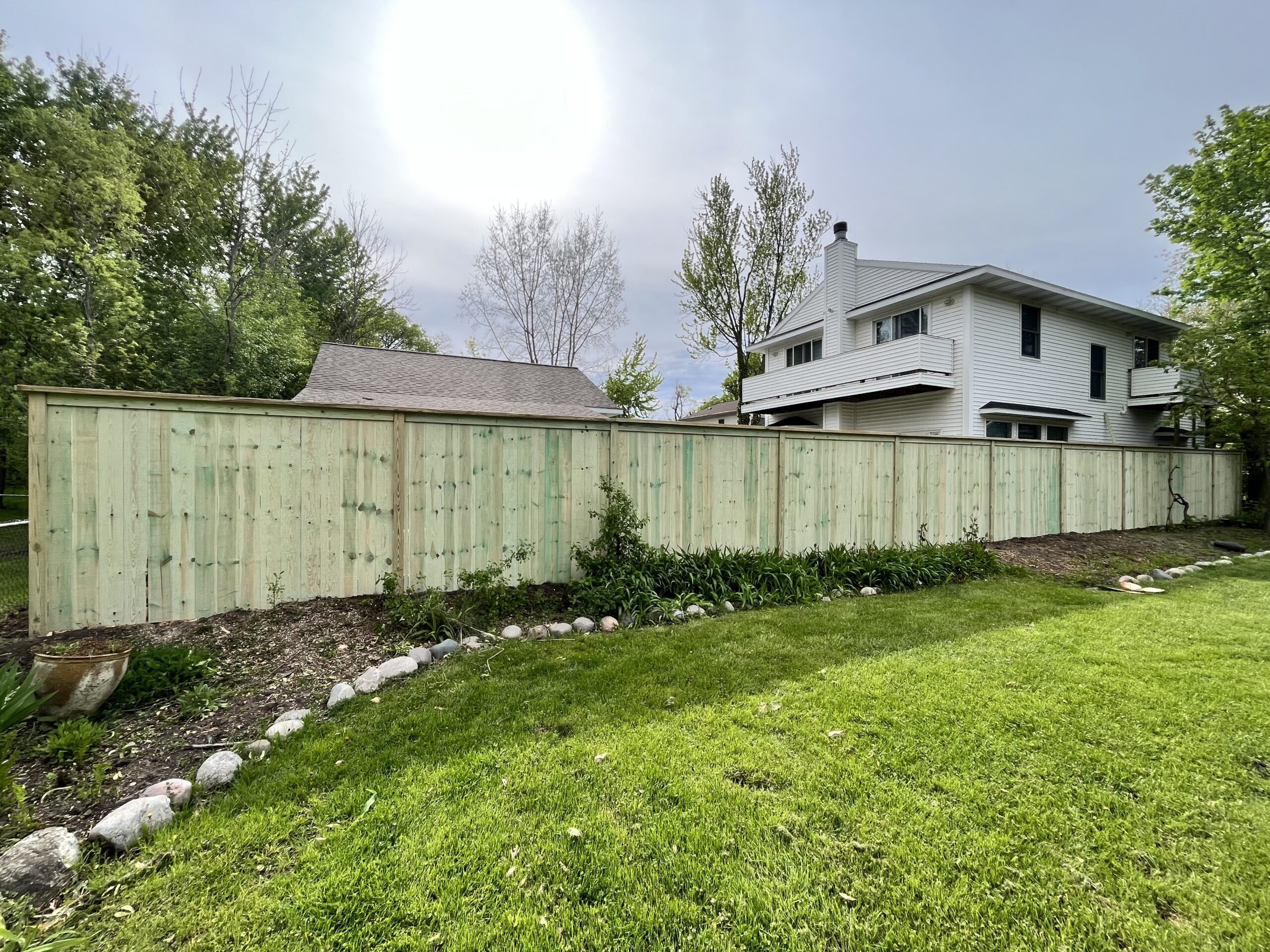
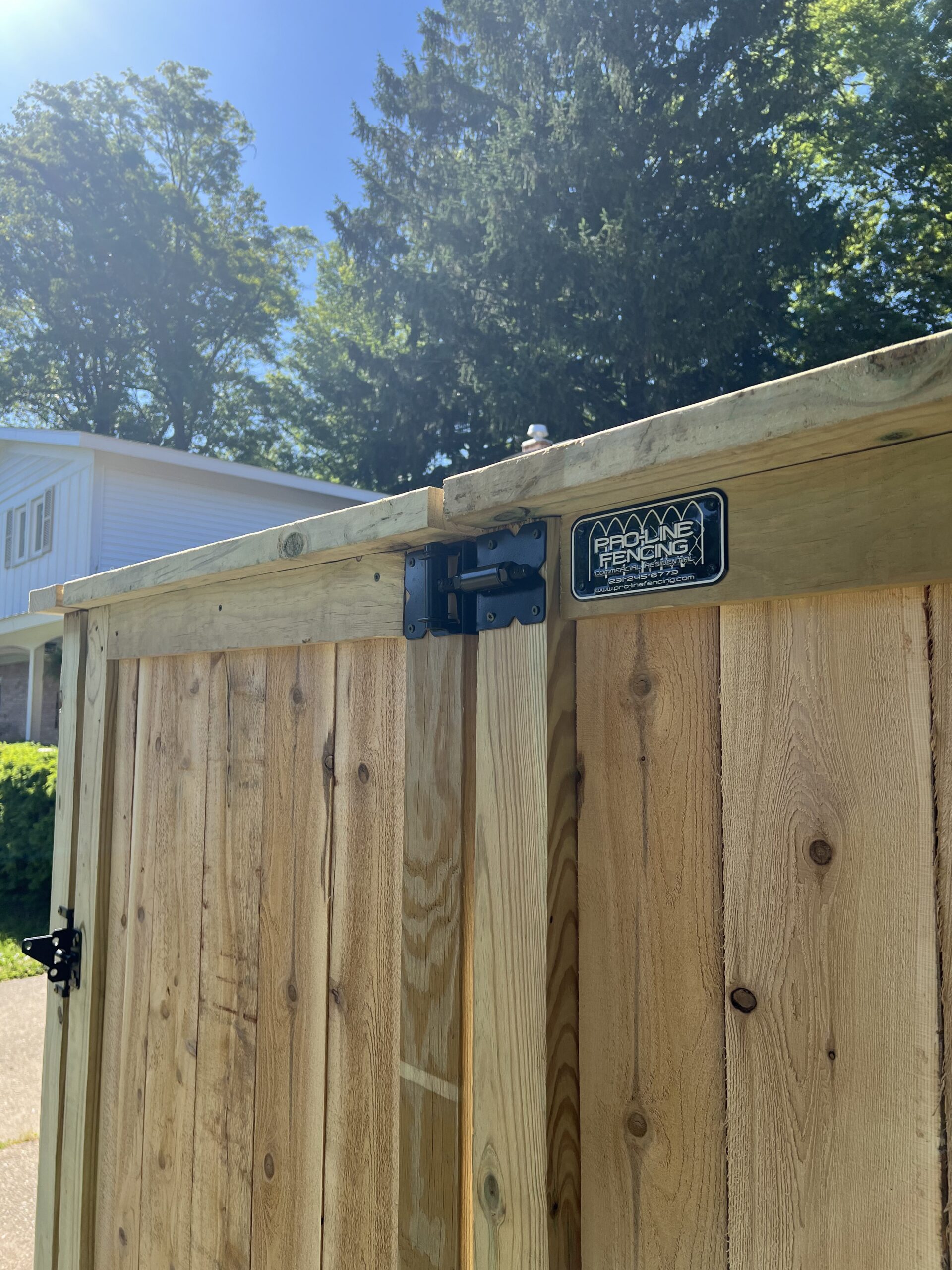
Adding a gate to an existing wood fence is one of the more straightforward retrofit gate projects. A wood gate panel can be built or purchased to match the height, picket style, and spacing of the existing fence. New gate posts are set in concrete at the correct spacing for the gate panel width and hardware.
The existing fence panels adjacent to the new opening are trimmed or replaced as needed. Because wood is cut and assembled on site, a skilled carpenter can achieve a close visual match to the existing fence style.
Wood gate frames should include diagonal bracing to resist racking. A properly braced gate frame extends the service life of the gate and reduces the risk of the latch falling out of alignment.
Vinyl Fences
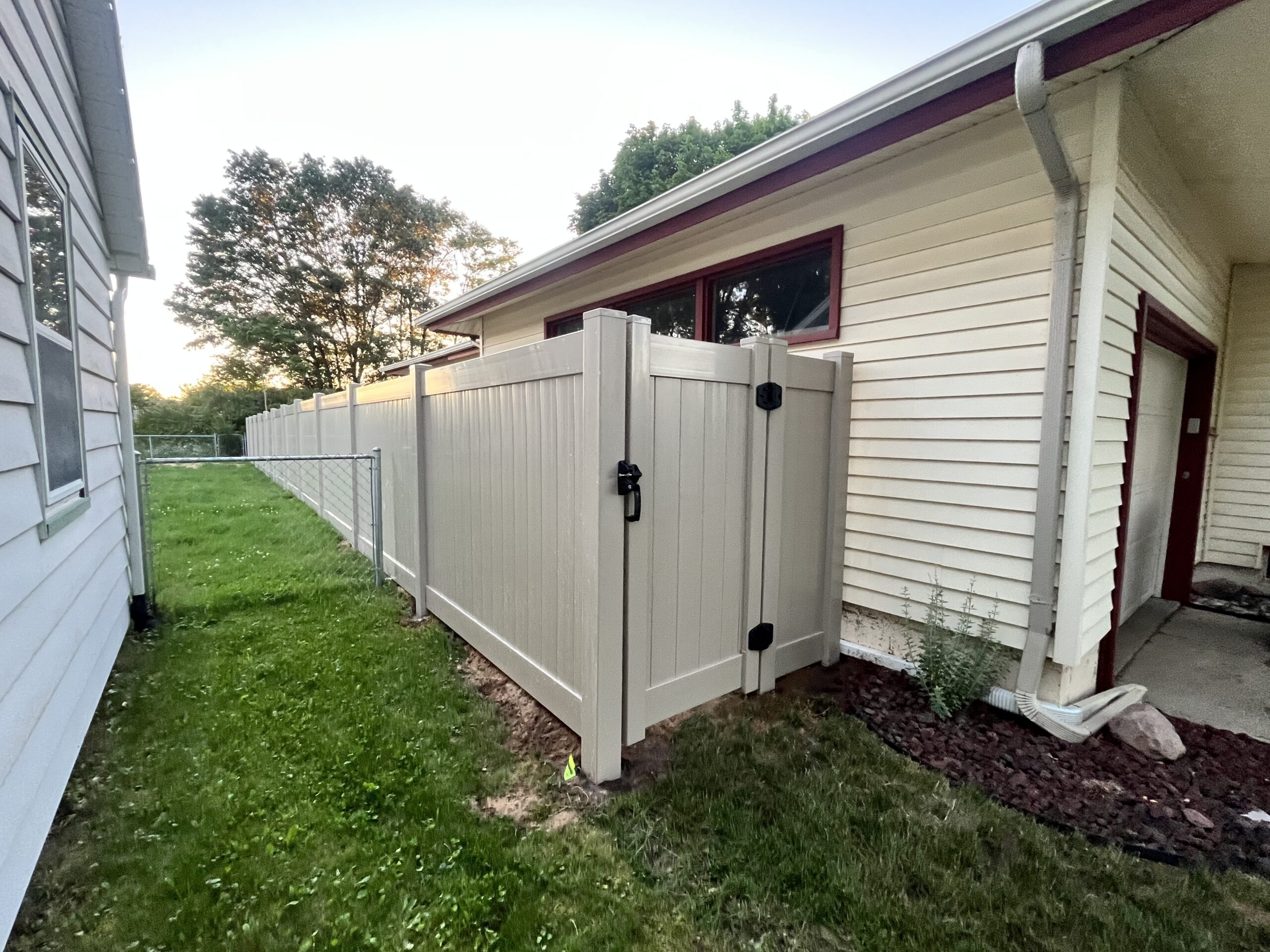
Vinyl fence systems use manufacturer-specific components. Gate posts, gate panels, hinges, and latches for a vinyl fence are designed to work together as a system from a specific manufacturer. [1] Adding a gate to an existing vinyl fence requires sourcing a gate kit from the same manufacturer as the original fence, or a manufacturer whose components are compatible with the installed system.
Using hardware or gate panels from a different manufacturer may result in mismatched appearance, incompatible post sizes, or hardware that does not function as intended. Before purchasing materials for a vinyl gate retrofit, confirm the fence manufacturer and obtain matching gate components.
Aluminum Fences
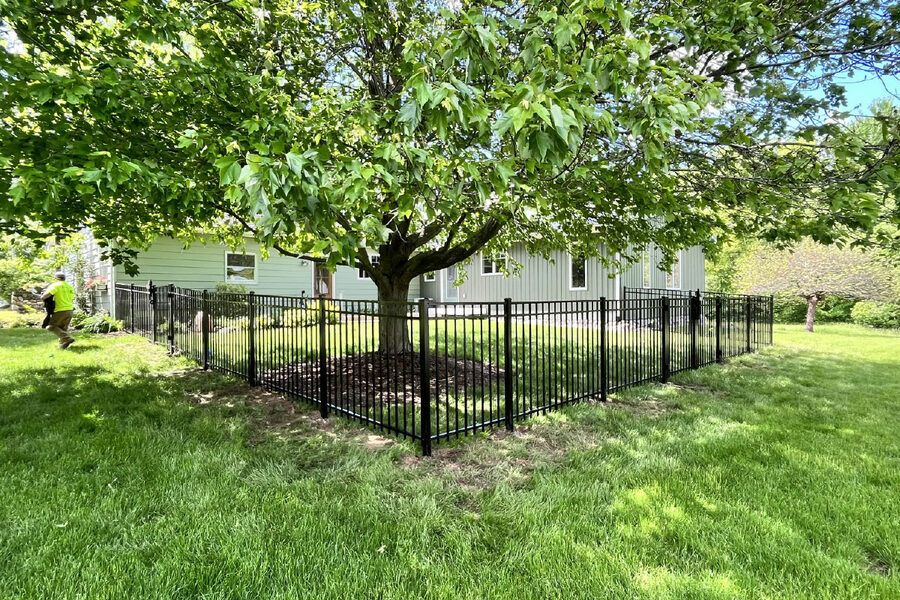
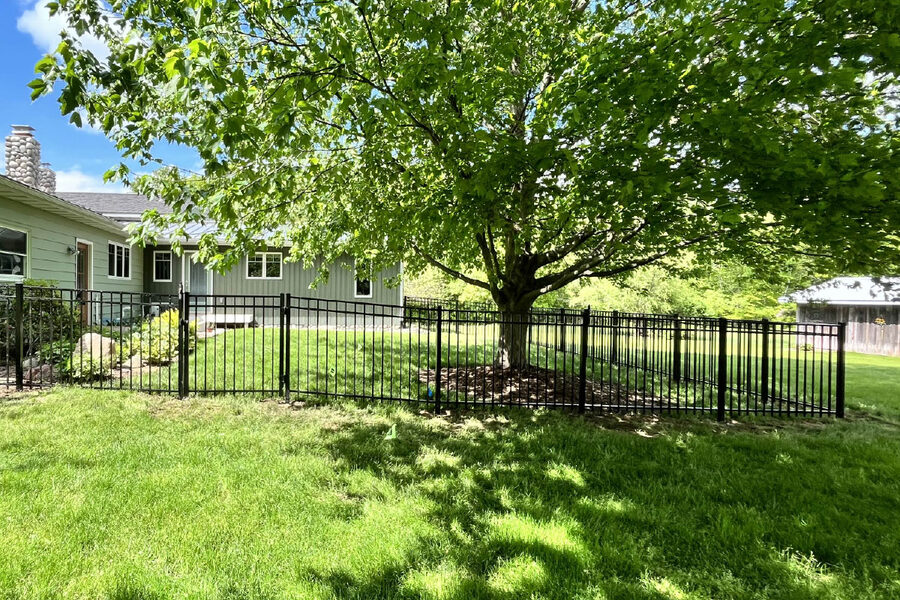
Aluminum ornamental fence systems similarly use manufacturer-specific gate hardware. Gate posts for aluminum fences are typically larger than line posts and have specific hardware attachment points for hinges and latches. [1] Gate panels are available in standard widths that match the fence panel dimensions.
As with vinyl, the gate components should come from the same manufacturer or a verified compatible source. Aluminum gate hardware is available in standard residential and commercial grades. Matching the hardware grade to the gate size and frequency of use is part of a proper installation.
Chain Link Fences
Chain link fence gates use a welded steel frame with chain link fabric stretched over it, secured with tension bands and clips. The frame is hung on heavy-duty hinges that attach to a larger-diameter gate post. A fork latch or other chain link gate latch secures the free end.
Chain link gate posts are available in standard sizes for residential and commercial applications. Adding a chain link gate to an existing chain link fence involves setting new gate posts in concrete, cutting the chain link fabric and removing top rail from the opening, and hanging the gate panel.
Slopes and Grade
A swing gate sweeps an arc as it opens. On flat ground, the bottom of the gate needs only enough clearance to clear the surface. On sloped ground, the lowest point of the gate arc may strike the rising grade before the gate reaches a fully open position.
Moderate slopes can sometimes be managed by raising the gate slightly, accepting a larger gap at the bottom, or trimming the grade at the arc path. Steeper slopes may make a swing gate impractical. In those cases, a sliding gate that moves parallel to the fence rather than sweeping an arc is a more appropriate solution for the site.
Confirming the grade at the planned gate location before settling on a swing gate design avoids discovering slope conflicts after posts are already set.
Hardware and Swing
Gate hardware includes hinges, latches, self-closing springs, and any security accessories. Hardware must be selected to match the gate weight, material, and intended use. Undersized hinges are a primary cause of gate sag over time.
Self-closing hinges or spring closers are required on pool enclosure gates in most jurisdictions and are useful on any gate where latching is safety-critical. Confirm local requirements with your contractor if the gate will be part of a pool enclosure.
For more on hardware and gate problems, see What Are the Most Common Fence Gate Problems?
Gate Swing Space
A swing gate requires clear space equal to its width on the swing side. A 4-foot gate swinging inward needs 4 feet of clear space inside the fence on the swing arc. Obstructions including steps, landscaping, or other structures within the swing arc prevent the gate from opening fully.
Sites with limited swing space may require a gate that swings outward, a narrower gate than originally planned, or a sliding gate. Outward-swinging gates present their own considerations including swing over public sidewalks and whether the latch hardware is suitable for the swing direction.
For detail on clearance requirements see How Much Gap Does a Fence Gate Need?
When a New Section May Be Easier
In some situations, replacing a section of fence rather than cutting into the existing fence is the more practical approach. This may be the case when no existing posts are near the desired gate location, requiring new gate posts to be set far from any existing posts and leaving an awkward panel gap. It may also apply when the existing fence at the planned gate location is degraded, making it worth replacing rather than cutting into. Difficult terrain, buried utilities near the planned post locations, or a desire for a significantly different gate style than the existing fence can also make a new fence section the better starting point.
For cost context on gate installation see How Much Does It Cost to Put a Gate on a Fence? For permit requirements see the Grand Rapids Fence Permit Guide. To connect with a contractor see Find a Fence Contractor.
Frequently Asked Questions
Can I turn part of my fence into a gate?
Yes in most cases. A gate can be installed by cutting the appropriate opening and installing proper gate posts with concrete footings. Simply attaching hinges to an existing line post is generally not adequate; line posts are not designed for gate loads. [1] Gate opening size, material match, and post footing quality determine durability.
Can I use a fence panel as a gate?
A fence panel is not a gate. Gate panels are built with a structural frame that supports the panel weight when hanging on hinges. A fence panel lacks this frame and would rack, sag, or fail when used as a hinged gate. Gate panels for most fence materials are available from manufacturers and are built to function as gates. [1]
Do I need a permit to add a gate to an existing fence in Grand Rapids?
Adding a gate opening to an existing fence in Grand Rapids may require a permit depending on scope. The City of Grand Rapids issues fence permits and changes to a permitted fence may fall within permit requirements. Confirm current requirements with the City of Grand Rapids Building Safety department before cutting your fence. See the Grand Rapids Fence Permit Guide for more context.
What is the minimum gate opening width?
There is no single universal minimum. A gate wide enough to serve its intended purpose is the practical minimum. Walk gates are typically at least 3 feet wide for comfortable pedestrian passage. The opening width should match a standard or available gate panel size to avoid custom fabrication. [1]
Sources
Sources were selected for relevance, authority, and practical homeowner use. Requirements and recommendations may change, so confirm current local rules before beginning a project.
- . "Consumer Resources." https://www.americanfenceassociation.com/.
Related Guides
Ready to Plan Your Fence Project?
Compare your options, then request quotes from available fence contractors serving Grand Rapids and West Michigan.