Materials and Comparisons
How Long Does a Vinyl Fence Last?
Typical Vinyl Fence Lifespan
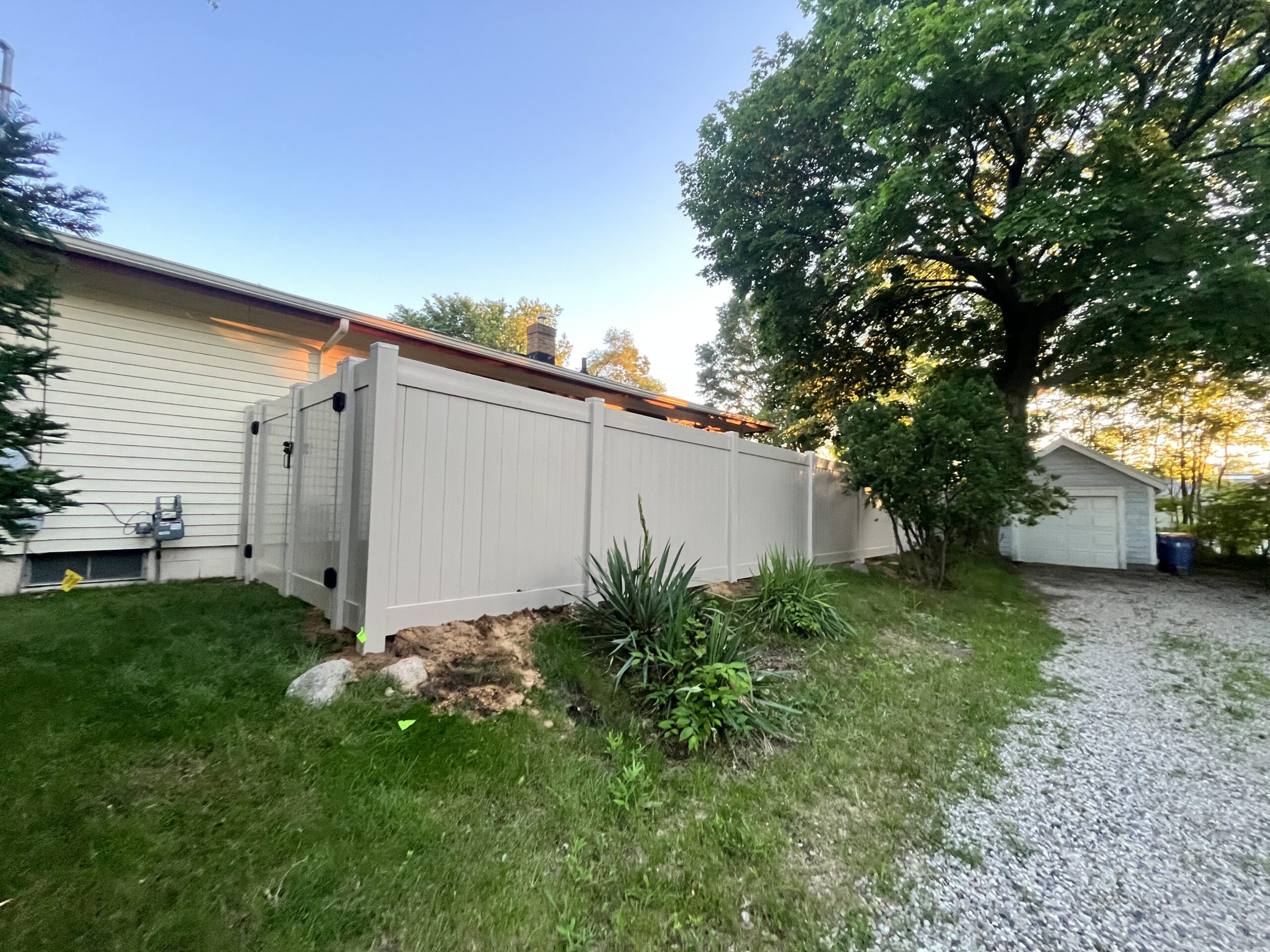
Vinyl fencing is often marketed as lasting 20 to 30 years or more. [1] Industry sources and manufacturers frequently cite this range, and it reflects real-world performance on well-installed fences in moderate climates. Whether a specific vinyl fence installed in West Michigan reaches or exceeds that range depends on the grade of the material, the quality of the installation, how Michigan weather affects it over time, and how well it is maintained.
It is important to distinguish between a manufacturer's lifespan claim and a guarantee. Manufacturers cite expected performance under typical conditions. The actual service life of any specific fence depends on site-specific factors that vary between properties and climates. Treating a marketed lifespan as a firm promise leads to unrealistic expectations. Treating it as a useful planning estimate — with appropriate attention to the factors below — is more accurate.
What Affects How Long Vinyl Lasts
Six factors have the most influence on how long a vinyl fence performs before it needs significant repair or replacement.
Material grade and quality. Vinyl fence products span a wide range of quality tiers. Economy-grade vinyl uses thinner profile walls and less UV stabilizer than premium-grade products. Thinner walls are more prone to cracking under impact and become brittle faster in cold temperatures. Premium-grade vinyl with thicker profiles and more UV inhibitor resists both mechanical damage and sun-driven degradation more effectively. Grade is reflected in specifications — wall thickness, UV stabilizer content, and impact resistance ratings — rather than just price.
Installation quality, especially post depth. In Michigan, fence posts must be set below the frost line to prevent frost heave. [3] The frost line in the southern Lower Peninsula, including Kent County, is approximately 42 inches. Posts set shallower than the frost line are subject to heaving over repeated freeze-thaw cycles, which shifts the fence out of alignment and stresses the panel-to-post connections. A well-installed vinyl fence with posts below the frost line will outlast one where posts were set too shallow, regardless of the quality of the panels themselves.
UV exposure. Vinyl contains pigments and UV stabilizers to resist sun-driven degradation. South-facing fence sections receive more UV exposure than north-facing sections and may show earlier fading or chalking. High-quality vinyl with more UV stabilizer fades more slowly and retains its original color longer.
Impact damage. Vinyl does not dent like wood and does not deform like chain link, but it can crack or shatter under sufficient impact — particularly in cold temperatures when the material is more brittle. A falling tree limb, vehicle impact, or a strong force at a stress point (such as mid-panel or at a connector) can fracture vinyl. Damage from impact is not a warranty defect and is repaired by section replacement.
Soil conditions near posts. Even though vinyl posts do not rot the way wood posts do, the soil and concrete around the base of vinyl posts are subject to the same freeze-thaw forces as any other post footing. Poor drainage around post footings and inadequate concrete depth both contribute to post movement over time.
Original installation method. Fences installed without adequate concrete, without proper post depth, or with posts that were not plumb from the start degrade faster than properly installed fences. The post is the structural anchor; everything else follows its condition.
Michigan Weather and UV
Michigan's climate presents specific challenges for vinyl fence that differ from the warmer-climate marketing assumptions that many vinyl fence lifespan claims are based on.
Freeze-thaw cycling is the most significant factor. West Michigan experiences extended periods of below-freezing temperatures followed by thaw, often multiple times per winter. [3] This cycling stresses post footings and soil, which can shift posts over time even on fences with adequate post depth. The panels themselves also contract in cold temperatures, which can make them more brittle at the seam and connector points.
Temperature swings are significant. A fence that experiences minus-10-degree winter lows and 90-degree summer highs undergoes substantial thermal expansion and contraction across the year. Vinyl expands in heat and contracts in cold. This repeated movement stresses panel connections, which is why quality connectors and properly installed fence panels are more durable than cheap alternatives under Michigan conditions.
UV exposure in summer is meaningful in West Michigan, though less intense than in sunbelt climates. South-facing sections that receive direct sun all day experience faster color change than north-facing sections or panels shaded by vegetation. Premium vinyl with more UV stabilizer handles this more effectively than economy-grade material.
Ice storms can cause localized impact damage when ice-laden branches fall onto fence sections. This is an event-driven failure mode rather than a material degradation mode, and is not unique to vinyl. Any fence material can be damaged by a falling branch.
Manufacturer Warranties
Most vinyl fence manufacturers offer limited lifetime warranties or 30-year limited warranties on their residential products. [2] These warranties typically cover manufacturing defects such as cracking, peeling, or discoloration under normal conditions, not damage from impact, improper installation, or normal weathering.
CertainTeed's Bufftech vinyl fence line, as one example among several manufacturers, offers a lifetime limited warranty that covers defects in material and workmanship. [2] Specific terms vary by product line and are subject to change; always request the current warranty documentation from your specific supplier before purchase.
Common warranty exclusions across most manufacturers include:
- Damage from impact, vandalism, or accidental causes
- Damage caused by improper installation
- Normal weathering, including gradual color change and chalking
- Damage caused by chemical exposure or improper cleaning products
- Damage caused by acts of nature such as storms, floods, or earthquakes
What a warranty covers is specific to the manufacturer and product. The label "limited lifetime warranty" is used by many manufacturers but the coverage behind that label varies considerably. Read the actual warranty document for any fence you are considering, not just the marketing summary.
Warranty vs Actual Lifespan
A manufacturer warranty and a fence's actual service life are related but not the same thing. A warranty defines what the manufacturer will cover if specific defects occur. It does not define when the fence will fail or become unserviceable.
A vinyl fence can outlast its warranty period — finishing 35 or 40 years of service in good condition. It can also develop problems that the warranty does not cover: storm damage, color change that the homeowner finds cosmetically unacceptable, or post heave due to installation depth. The warranty does not help with those scenarios.
Conversely, a fence can experience a covered warranty defect early — a manufacturing flaw in a panel that causes premature cracking — and the warranty provides a resolution. The warranty is a product guarantee for specific conditions, not a prediction of lifespan.
When evaluating vinyl fence options, look at both the warranty terms (what is actually covered) and the manufacturer's specifications (profile thickness, UV stabilizer content, impact ratings) to assess likely long-term performance. A detailed specification sheet is more useful than a warranty length alone.
Maintenance and Longevity
One of vinyl fence's primary selling points is its low maintenance requirement compared to wood. Maintaining a vinyl fence does not require staining, sealing, or painting. But it is not entirely maintenance-free.
Periodic washing removes dirt, algae, and mildew that accumulate on vinyl surfaces, particularly on north-facing sections that stay damp. Soap and water with a soft brush is adequate for most cleaning. Avoid abrasive cleaners or pressure washing at close range, which can damage the surface finish. Most manufacturers recommend annual or biannual washing.
Annual inspection helps catch developing issues before they worsen. Items to check:
- Post plumb and stability — any post that has shifted or tilted since the last inspection
- Panel connections — panels that have worked loose from rails or connectors
- Surface cracking — stress cracks at panel edges, connector points, or post bases
- Color change — areas of significant yellowing or chalking relative to adjacent panels
- Gate function — hinges, latches, and alignment
Keeping debris from piling against the fence base reduces moisture exposure at the post footings. Mulch, soil, and leaf buildup against the base of vinyl posts traps moisture and, over time, can accelerate deterioration of the post-concrete interface even though the vinyl itself does not absorb water the way wood does.
Signs of Early Failure
Early failure in vinyl fence, meaning degradation that occurs significantly before the end of the expected service life, typically shows up in predictable ways.
Cracking at stress points. Hairline or visible cracks at mid-panel, at connector points, or at the top cap are a sign of material brittleness. This occurs faster in economy-grade vinyl in cold climates. Cracking at this stage is a repair opportunity; left unaddressed, cracks propagate.
Yellowing or chalking. Some degree of color change is expected over time. Rapid or uneven yellowing, particularly on sections with high UV exposure, can indicate lower UV stabilizer content in the material. Chalking — a powdery surface residue — is another form of UV-driven surface degradation.
Warping panels. Panels that bow, cup, or warp significantly may have been installed with inadequate expansion room, or may be higher-temperature configurations where cheaper material is approaching its thermal limits. Some panel movement is normal with seasonal temperature change; persistent warping indicates a problem.
Post movement. Posts that have shifted from plumb indicate frost heave or settling at the footing. This is an installation or site condition issue, not a material failure of the vinyl itself, but it affects the fence's structural condition.
Panel separation. Sections that have separated from rails or connectors without obvious impact cause indicate that the connections have loosened, posts have shifted, or that the initial installation left insufficient tolerance for thermal movement.
Repair vs Replacement for Aging Vinyl
Repair versus replacement decisions for aging vinyl fence follow the same general logic as for other fence materials: isolated damage is generally worth repairing; widespread or structural failure tips toward replacement.
Individual panel replacement is practical when:
- The posts and rails are sound and properly set
- The damaged section is limited to one or two panels
- Replacement panels that match the existing profile and color are available
Parts matching becomes harder as a fence ages. Vinyl fence profiles and color formulations change across manufacturer product lines. A fence installed 15 years ago may have panels that no longer have an exact match available from current production. A close match may be acceptable cosmetically; an exact match may require sourcing through specialty suppliers or accepting visible variation.
Replacement is more appropriate when:
- Multiple posts have heaved or failed, affecting the structural baseline of the fence
- Cracking or color degradation has spread across a significant portion of the fence
- The fence is older than its expected service range and the homeowner wants a fresh start with updated material specifications
- Matching replacement panels is no longer feasible due to discontinued profiles
For fence repair services in Grand Rapids, see the fence repair page. To compare new fence costs, use the Fence Cost Calculator.
Vinyl vs Wood Lifespan
Wood privacy fence, when maintained, typically lasts 15 to 20 years in West Michigan before posts and rails reach the end of their useful life. Cedar, with its natural decay resistance, tends to outperform untreated pine in ground contact applications. Regular maintenance — staining or sealing every 3 to 5 years — is required to achieve the upper end of that range. [4]
Vinyl fence, when properly installed with posts below the frost line and made from premium-grade material, can last 20 to 30 years or more without the same maintenance demands. [1] It does not require staining or sealing, and it does not rot.
The lifespan advantage of vinyl over wood is meaningful but conditional. It depends on installation quality, material grade, and site conditions. A well-installed cedar fence with consistent maintenance can perform for 20 years. A poorly installed economy-grade vinyl fence with posts above the frost line may fail structurally before that same cedar fence does.
Lifespan is one input in the decision between wood and vinyl. For a more complete comparison that includes appearance, maintenance, cost, and Michigan-specific performance, see the Wood vs Vinyl guide. For vinyl fence specifics, see the vinyl fence page. For a full comparison of expected service life across all four fence materials, including installation and maintenance factors, see the Which Fence Material Lasts the Longest guide.
Frequently Asked Questions
Is a vinyl fence considered permanent?
Vinyl fence is considered a long-term installation rather than a temporary one, but no fence is truly permanent. Vinyl is often marketed as lasting 20 to 30 years or more with proper installation. [1] It will eventually need repair or replacement as material degrades, posts shift, or profiles become unavailable for matching. Calling it long-lasting is more accurate than calling it permanent.
Does vinyl fence fade or yellow over time?
Some degree of color change is normal over a long lifespan. UV stabilizers in vinyl slow but do not eliminate color change from sun exposure. Premium-grade vinyl with more UV stabilizer fades more slowly than economy-grade vinyl. South-facing sections exposed to more direct sun change faster than north-facing sections. Rapid or uneven yellowing early in the fence's life may indicate lower-quality material.
Can a damaged vinyl fence be repaired?
Yes, in many cases. Individual cracked or broken panels can be replaced if the posts and rails are sound and replacement panels that match the profile and color are available. Gate hardware, top caps, and post caps are among the most straightforward repairs. Older fences may face challenges matching discontinued profiles. See the Fence Repair Cost guide for more on vinyl repair scope.
Is vinyl fence more durable than wood in the long run?
Vinyl typically lasts longer than wood with less ongoing maintenance. Wood fence in West Michigan typically lasts 15 to 20 years with regular maintenance including staining and sealing. [4] Vinyl, when properly installed with posts below the frost line and made from premium-grade material, is often marketed as lasting 20 to 30 years or more without the same maintenance burden. [1] The comparison depends on installation quality, material grade, and maintenance practices for both options.
What typically voids a vinyl fence manufacturer warranty?
Common warranty exclusions include: damage from impact or vandalism, damage from improper installation, normal weathering and color change, damage from chemical exposure or improper cleaning products, and acts of nature such as storms or flooding. Specific exclusions vary by manufacturer and product line. Always read the actual warranty document, not just the marketing summary, before purchasing. [2]
Sources
Sources were selected for relevance, authority, and practical homeowner use. Requirements and recommendations may change, so confirm current local rules before beginning a project.
- American Fence Association. "Consumer Resources." Trade Association. https://www.americanfenceassociation.com/. Accessed August 2026.
- CertainTeed. "Bufftech Vinyl Fence — Product Information." Manufacturer Documentation. https://www.certainteed.com/fence/. Accessed August 2026.
- Michigan State University Extension. "Michigan Building and Landscape Resources." University Extension. https://www.canr.msu.edu/. Accessed August 2026.
- Western Red Cedar Lumber Association (WRCLA). "Caring for Your Cedar Products." Trade Association. https://www.wrcla.org/. Accessed August 2026.
Related Guides
Materials and Comparisons
Wood vs Vinyl Fence for Michigan Homes
Compare wood and vinyl on appearance, maintenance, cost, durability, and Michigan winter performance.
Read Guide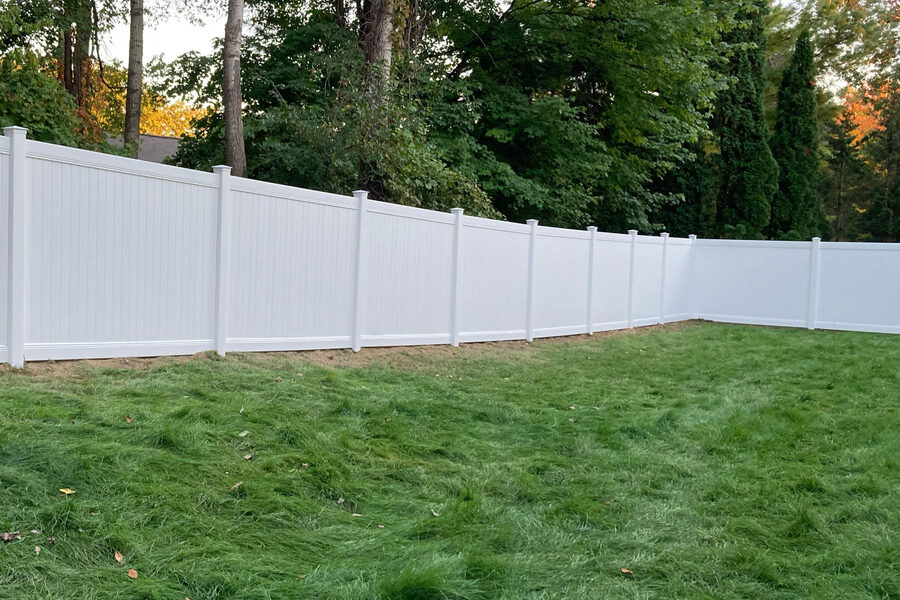
Dogs and Backyard Safety
What Is the Best Fence for Dogs?
Compare fence materials and heights for dog containment, with sections on digging, jumping, and coyote deterrence.
Read Guide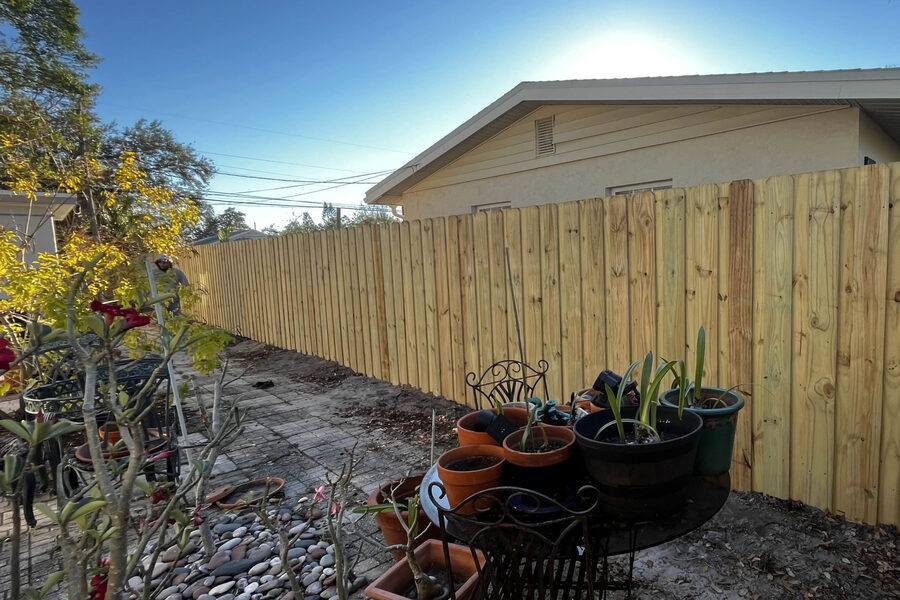
Cost and Budgeting
How Much Does a Privacy Fence Cost?
All the factors that affect privacy fence cost, including material, height, gates, terrain, and removal.
Read GuideReady to Plan Your Fence Project?
Compare your options, then request quotes from available fence contractors serving Grand Rapids and West Michigan.