Installation and Michigan Conditions
Is an 8-Inch Hole Big Enough for a 4x4 Fence Post?
An 8-inch diameter hole provides approximately 2.25 inches of concrete coverage around a 4x4 post's actual 3.5-inch dimension on each side. For moderate-load line post applications, this can be adequate. For gate posts, tall privacy fences, corners, or sites with poor soil or high wind exposure, a larger diameter may provide better structural anchorage. No single diameter fits every application. The right size depends on post load requirements, manufacturer specifications, and hole depth. [2]
Nominal vs Actual 4x4 Dimensions
A "4x4 post" refers to the nominal dimension used in lumber naming. Actual dimensional lumber measures approximately 3.5 inches by 3.5 inches. [2] This distinction matters when calculating how much concrete surrounds the post in a given hole diameter. Using the nominal 4-inch figure instead of the actual 3.5-inch figure slightly overstates how large the post is and understates the available concrete coverage.
For all coverage and volume calculations involving a nominal 4x4 post, use 3.5 inches as the post dimension. The difference is small but adds up across a full fence project with many posts, and using the correct number produces a more accurate material estimate.
Concrete Coverage at 8 Inches
With an 8-inch hole diameter, the hole radius is 4 inches. The post half-width for a 3.5-inch actual post is 1.75 inches. Concrete coverage per side = 4 inches minus 1.75 inches = 2.25 inches. This is the thickness of concrete between the post face and the edge of the hole at each side.
This coverage is generally considered adequate for a standard line post under normal residential loading. Some residential fence contractors prefer 10- or 12-inch holes for increased coverage and a larger footing mass, particularly for taller privacy fences or in areas with softer soils. [1] The 8-inch hole is a common baseline for standard residential installations, but it is not the only acceptable option.
For a detailed look at how hole diameter and depth affect concrete volume and bag counts, see the concrete bags per fence post guide.
When an 8-Inch Hole May Be Adequate
An 8-inch diameter hole is commonly used and generally adequate for the following conditions:
- Standard line posts on flat or gently sloped terrain
- Moderate fence heights, typically 4 to 6 feet
- Non-gate, non-corner post locations
- Stable soil with reasonable drainage
- Applications where the manufacturer's installation documentation does not specify a larger diameter
In these conditions, the 2.25 inches of concrete coverage per side provides sufficient lateral resistance against post tipping under normal wind and static loads. Most standard residential wood, vinyl, and aluminum fence installations in the Grand Rapids area use 8-inch holes for line posts.
When a Larger Hole May Be Needed
Several conditions make a 10-inch or 12-inch hole more appropriate than an 8-inch hole:
- Gate posts. Gate posts carry the weight of the gate plus repetitive dynamic load from swinging. A wider footing provides greater resistance to this torque. [2]
- Tall privacy fences. A 6-foot or taller solid privacy fence in an exposed location carries significant wind load. Higher wind load transfers more lateral force into each post, and a larger footing diameter provides greater rotational resistance.
- Corner posts. Corner posts are subject to tension from two fence runs simultaneously. A larger footing helps resist this combined loading.
- Poor or loose soil. Sandy, loose, or wet soils provide less lateral resistance to the footing. A larger footing compensates by distributing force across a greater soil contact area. [3]
- Manufacturer specification. If the fence system's installation documentation specifies a larger hole diameter, that specification must be followed. Using a smaller hole than specified can affect structural performance and void the product warranty.
Depth and Diameter Work Together
Hole diameter and hole depth address different structural concerns and neither substitutes for the other. [1] Diameter affects how much concrete surrounds the post and the footing's resistance to rotational forces (the post tipping over). Depth determines how far below the frost line the post is anchored and affects resistance to frost heave and vertical pull-out forces.
A wide but shallow hole is not equivalent to a narrower but deeper hole. Both dimensions must be appropriate for the application. In Michigan, adequate depth to reach below the frost line is a critical requirement for any post installation. Increasing hole diameter without also ensuring adequate depth does not solve the frost-heave problem. Conversely, reaching the correct depth with an undersized diameter may leave the post without enough lateral stability.
For a full discussion of depth requirements in Michigan, including frost depth considerations for the Grand Rapids area, see the fence post depth in Michigan guide.
Gate Posts
Gate posts experience repeated mechanical stress that line posts do not. Each time a gate is opened or closed, the post absorbs the dynamic load of the gate swinging at the end of a lever arm. Over time, this repeated loading can loosen a footing that is only marginally adequate. A wider hole with a larger concrete footing provides better resistance to this type of loading and is the standard approach for gate posts in residential fence installation. [2]
Driveway gate posts carry even greater loads than walk-gate posts due to the greater weight and longer span of driveway gates. For driveway gate applications, hole diameter requirements should be confirmed with the gate manufacturer's installation documentation, which may specify 12-inch or larger holes and additional footing depth. See the fence post spacing guide for more on gate-post placement in the overall fence layout.
Auger Sizes
Common residential post-hole auger sizes are 6 inches, 8 inches, 10 inches, and 12 inches. The 8-inch auger is the most commonly used size for standard residential fence line posts. [2] If a larger diameter is warranted by the application, 10 inches is the typical next step for line posts or moderate-load gate posts. Twelve-inch augers are used for heavier gate posts, corner posts on tall fences, or applications where manufacturer documentation specifies that diameter.
A 6-inch hole leaves only 1.25 inches of coverage around a 3.5-inch post per side. This is minimal for structural posts and is generally not used for residential fence posts in standard applications. Most residential contractors use 8 inches as a practical minimum for 4x4 posts. [2]
When renting or borrowing an auger, confirm the bit diameter before drilling. Auger bits can be worn and may drill slightly smaller than their rated size. A slightly undersized hole reduces the already-limited coverage margin for an 8-inch hole. For gate posts and corner posts, using a 10-inch auger provides a meaningful improvement in concrete coverage and footing mass.
For project planning and installation quotes in the Grand Rapids area, see the fence installation page. For post length selection for common fence heights, see the guide on post length for a 6-foot fence.
Frequently Asked Questions
What diameter hole is recommended for a 4x4 post?
Many residential fence contractors use 8-inch holes for standard line posts, providing approximately 2.25 inches of concrete coverage per side. Gate posts, corner posts, or posts under high loads often use 10-inch or larger holes. Manufacturer installation documentation for the specific fence product specifies required or recommended hole diameter. [2]
Is a 6-inch hole big enough for a 4x4 post?
A 6-inch hole provides approximately 1.25 inches of concrete coverage per side around the 3.5-inch actual post dimension. This is minimal for residential fence posts under normal loads. Most professional fence installations use at least an 8-inch hole for 4x4 posts. Confirm requirements with the fence manufacturer and installer. [2]
Does hole diameter matter as much as depth?
Both dimensions matter and serve different purposes. Diameter affects the amount of concrete around the post and the footing's resistance to rotational forces. Depth determines how far below the frost line the post is anchored and affects resistance to frost heave and vertical pull-out. Reducing either dimension below what the application requires reduces the structural performance of the post. [1]
How does hole diameter affect how much concrete I need?
Larger diameter holes require significantly more concrete because volume scales with the square of the radius. Going from an 8-inch to a 10-inch hole at the same depth increases hole volume by about 56 percent, which means more bags. See the concrete bags per fence post guide for a detailed estimate. [1]
Sources
Sources were selected for relevance, authority, and practical homeowner use. Requirements and recommendations may change, so confirm current local rules before beginning a project.
- Quikrete. "Product Information and Installation Guides." Manufacturer Documentation. https://www.quikrete.com/. Accessed August 2026.
- American Fence Association. "Consumer Resources." Trade Association. https://www.americanfenceassociation.com/. Accessed August 2026.
- Michigan State University Extension. "Michigan Soil Frost and Construction Resources." University Extension. https://www.canr.msu.edu/. Accessed August 2026.
Related Guides
Installation and Michigan Conditions
How Many Bags of Concrete Do You Need Per Fence Post?
Calculate bags of concrete required based on hole size depth and post dimensions.
Read Guide
Installation and Michigan Conditions
How Far Apart Should 4x4 Fence Posts Be?
Post spacing factors including panel width material height and layout.
Read Guide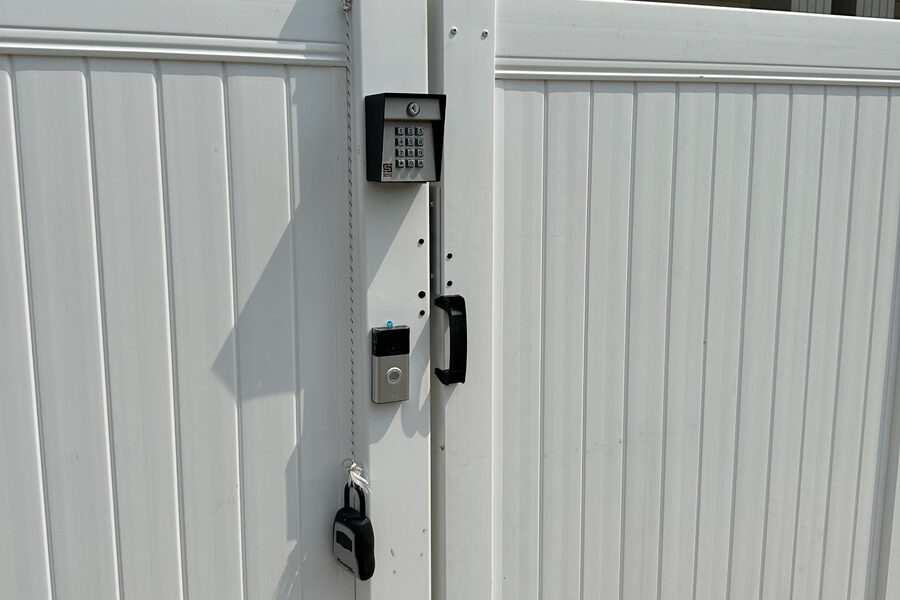
Installation and Michigan Conditions
Do You Use 8-Foot or 10-Foot Posts for a 6-Foot Fence?
How burial depth and frost depth affect the post length needed for a 6-foot fence.
Read GuideReady to Plan Your Fence Project?
Compare your options, then request quotes from available fence contractors serving Grand Rapids and West Michigan.