Fence Gates
How Much Gap Does a Fence Gate Need?
The appropriate gap around a fence gate depends on the gate material, hinge and latch hardware requirements, whether the gate is on flat or sloped ground, and the manufacturer's installation specifications for the specific gate system. No single gap measurement applies to every gate. The relevant clearances are hinge-side gap, latch-side gap, bottom clearance, and for double gates, the center meeting clearance. Each serves a different purpose and the appropriate dimension varies by material, hardware, and site conditions. [1]
Hinge-Side Clearance
The hinge side of a gate requires clearance for the hinge hardware to operate without binding. When the gate swings open, the edge of the gate panel at the hinge side moves back toward the post. If there is no clearance between the gate and the post on the hinge side, the edge of the gate panel will contact the post before the gate reaches a fully open position.
The specific clearance needed depends on the hinge style and how it mounts to the post. Wrap-around strap hinges, bolt-through hinges, and surface-mount hinges all have different geometry that affects how much space is needed between the panel and the post. [1] The hinge manufacturer's installation documentation specifies the intended mounting position and any gap requirements.
Latch-Side Clearance
The latch side of the gate requires enough space for the gate to close fully without the panel binding against the latch post, while still positioning the latch hardware close enough to the strike plate for reliable engagement. Too much latch-side gap means the latch tongue cannot reach the strike plate. Too little gap means the gate binds on the post before the latch engages.
The correct latch-side gap is determined by the latch hardware specification. [1] Adjustable latch hardware accommodates a range of gate positions. Fixed latches require more precise gap setting at installation. Hardware manufacturer instructions specify the intended gap range for the particular latch model.
Bottom Clearance
Bottom clearance is the gap between the bottom edge of the gate panel and the ground surface directly below it. This clearance must be sufficient for the gate to swing through its full arc without the bottom edge contacting the ground at any point in the swing.
On a perfectly flat installation, the minimum bottom clearance at the lowest point of the gate arc determines whether the gate drags. The specific clearance that is appropriate depends on the terrain, the expected settlement or grade change over time, and any instructions from the gate manufacturer. [1] A gate installed with minimal bottom clearance in summer on dry soil may drag after a winter of frost movement or after grade settles.
Sloped Ground
On sloped ground, the gate sweeps an arc and the lowest point of that arc is not directly below the hinge but partway through the swing. If the ground rises toward the low end of the swing arc, the gate will contact the slope before fully opening.
A gate on sloped ground requires more bottom clearance on the low side than the same gate on flat ground, or the grade must be cut to provide clearance along the gate arc. In some cases neither option is practical and a sliding gate that moves parallel to the fence line rather than sweeping an arc over the grade is the better solution for the site.
Snow and Debris
In Michigan, snow accumulation at the base of a gate creates a practical clearance challenge. A gate that clears the ground by a minimal amount in bare-soil summer conditions may be completely blocked after snowfall. Experienced contractors in West Michigan account for expected snow accumulation when setting bottom clearance so that the gate remains operable through the winter. [1]
Leaves, mulch, and debris can also accumulate at the gate bottom and reduce effective clearance. Locations where debris collects benefit from slightly more bottom clearance or regular maintenance to keep the arc path clear.
Wood Movement
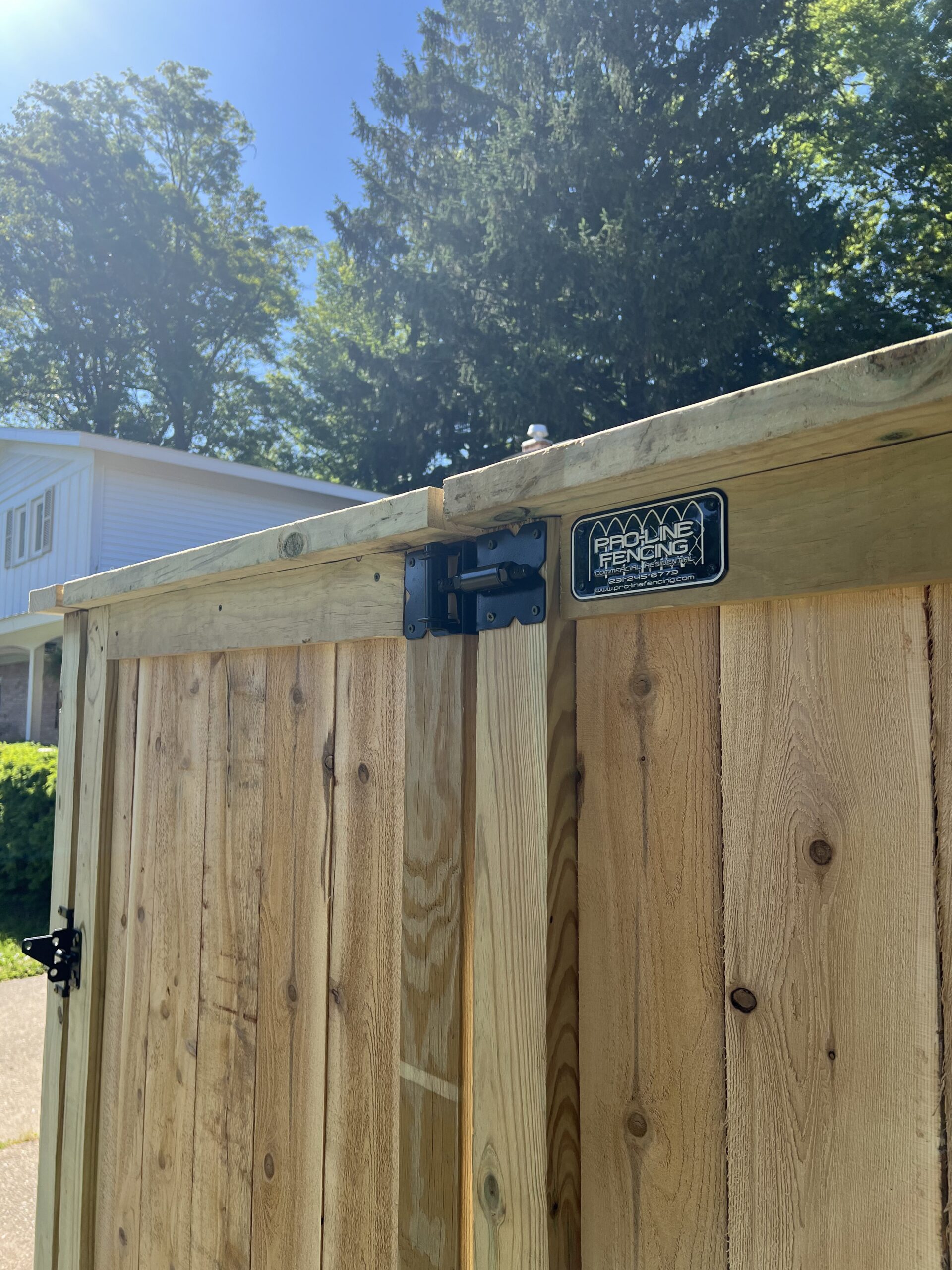
Wood absorbs moisture and expands in wet conditions, then dries and contracts in dry conditions. A wood gate fitted with tight clearances in dry weather may bind against posts or drag on the ground when the wood swells in wet fall or spring conditions.
Installing a wood gate with a small additional allowance for seasonal expansion reduces the likelihood of seasonal binding without making the gate appear poorly fitted in dry conditions. This allowance is in addition to the functional clearances required by the hinge and latch hardware.
Vinyl and Metal Systems
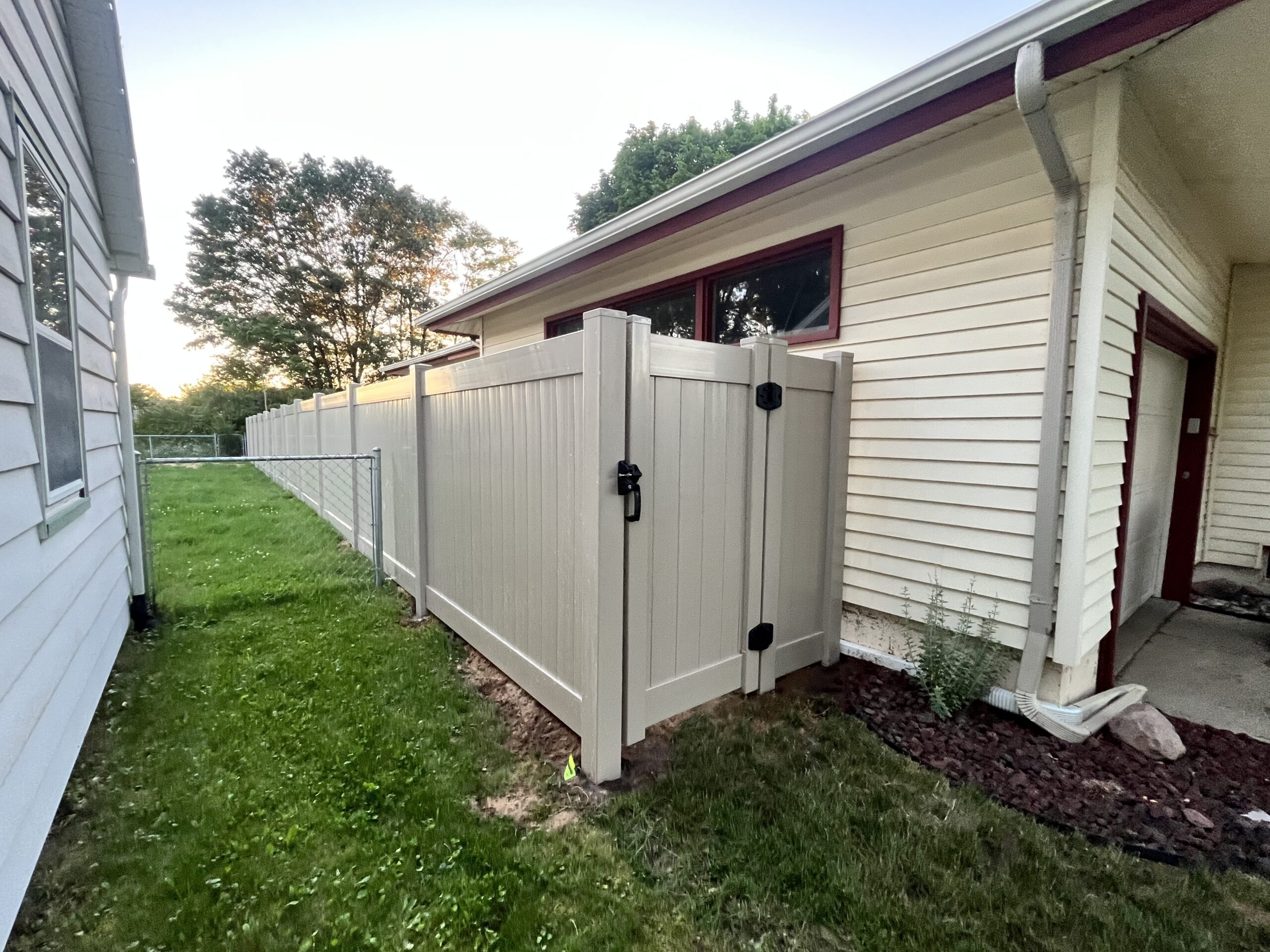
Vinyl fence gates and aluminum or steel ornamental gates use clearances specified by the manufacturer for the particular gate system. These specifications account for the thermal expansion properties of the material, the hardware geometry, and the intended function of the gate. [1] Following the manufacturer installation documentation for the specific gate model is the most reliable approach for these systems.
Substituting different clearances from non-manufacturer sources risks either a gate that binds in warm weather or gaps that exceed what the latch hardware can span. For installation and repair assistance, see Gate Installation and Repair in Grand Rapids.
Double-Gate Center Clearance
A double gate has two panels that meet at the center of the opening. The center meeting clearance is the gap between the two panel edges when both panels are in the closed position. This clearance must be small enough for the center latch or drop rod to span the gap and engage both panels, but large enough that the panels do not bind against each other when closing.
The specific center clearance that works depends on the center hardware being used. A drop rod that fits through a stake in the ground has different gap requirements than a surface latch that spans the two panels. Hardware manufacturer instructions specify the intended center gap for the particular hardware model.
Signs the Gap Is Wrong
A gate with too little clearance binds or drags, the latch fails to engage because the panel contacts the post before closing, or the gate is stiff to operate due to hinge-side binding. These problems may appear only seasonally in a wood gate if the clearances were set without allowance for swelling.
A gate with too much clearance may have a latch that cannot reach the strike plate, visible gaps that are larger than expected for the fence style, or a gate that moves excessively in wind because the latch side has too much play before engaging. For detail on diagnosing gate problems see What Are the Most Common Fence Gate Problems? For adding a gate to an existing fence see Can You Add a Gate to an Existing Fence? To connect with a contractor see Find a Fence Contractor.
Frequently Asked Questions
Why does my gate stick in winter?
Gates that work correctly in summer may stick in winter for two reasons. Wood gates expand and contract with moisture and a gate fitted tightly in summer may bind when wood swells in wet fall or spring. Gate post movement from frost heave can also shift the hinge-post relationship enough to create binding. [1] Both issues can be mitigated with appropriate clearances at installation and posts set below the frost line.
How big should the gap be under a fence gate?
There is no single universal measurement. Bottom clearance should allow the gate to swing freely over the ground surface and any expected snow accumulation while still serving the gate's intended purpose. Manufacturer installation instructions for the specific gate system are the most reliable reference. [1]
Does a double gate need more clearance than a single gate?
The clearance requirements for each panel of a double gate are similar to a single gate on the hinge and latch sides. The additional consideration is the center meeting clearance between the two panels, which is specific to the center latch or drop-rod hardware used.
Can I reduce the gap after my gate is installed?
Adjustable hinge hardware allows the gate position to be moved on the hinge post to close a gap that is larger than intended. Latch strike plates can be repositioned to adjust the latch-side gap. Reducing bottom clearance typically requires repositioning the gate on the hinges or adjusting hardware. [1]
Sources
Sources were selected for relevance, authority, and practical homeowner use. Requirements and recommendations may change, so confirm current local rules before beginning a project.
- . "Consumer Resources." https://www.americanfenceassociation.com/.
Related Guides
Ready to Plan Your Fence Project?
Compare your options, then request quotes from available fence contractors serving Grand Rapids and West Michigan.